Indonesian rubber growers switch to oil palm as output slides to 2 million tonnes
Rubber plantation area in Indonesia has shrunk 17% in five years as farmers chase better returns from palm oil, a shift that could tighten global rubber supply.
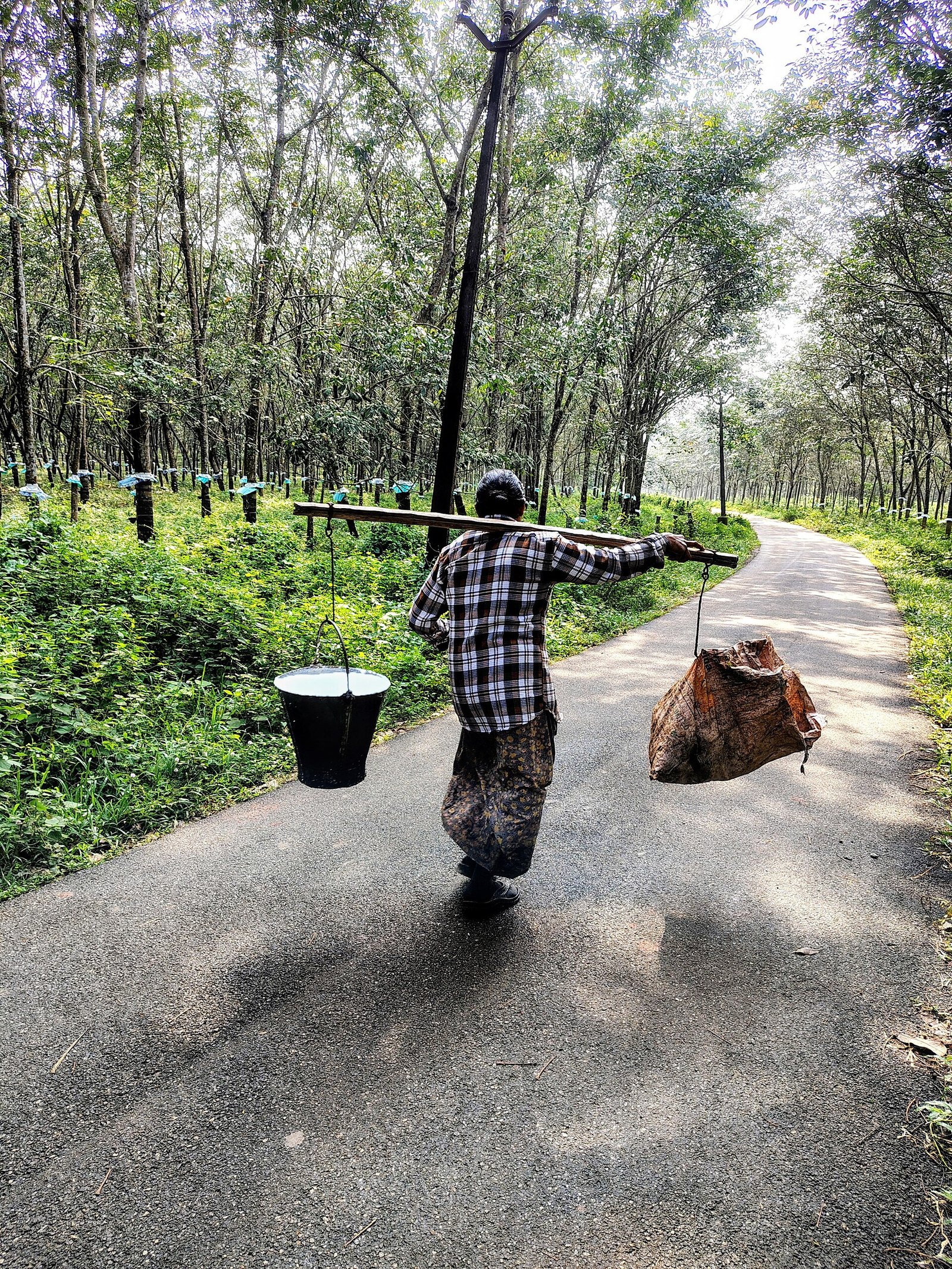
Indonesia, the world's second-largest rubber supplier at 14% of global output, is seeing a wave of farmers abandon rubber for oil palm — a shift that could tighten global supply of a commodity used in everything from automobiles to healthcare.
Agriculture ministry data shows the land area under rubber declined 17% over five years, from 3.78 million hectares in 2021 to an estimated 3.13 million hectares in 2026. Production has fallen from more than 3 million metric tonnes in 2021 to a projected 2 million tonnes this year.
"Harvesting is done twice a month, we sell the fresh fruit bunches, and get cash. It doesn't need constant daily supervision like rubber," Sumaryono told Reuters by phone from his plantation in Banyuasin regency, South Sumatra, Indonesia's top rubber-producing region.
Rubber is harder to farm: trees take five to seven years to generate returns and require tapping every other day, a growing challenge as the number of skilled tappers declines, said Rubber Services Singapore 1877 director Kevan Mitchell.
Arif Susanto, head of rubber farmer association Apkarindo, said up to 500,000 hectares may already have shifted from rubber to oil palm in South Sumatra alone. "The main trigger is simple: prices," he said.
Rubber prices, though recovering over the past two years, entered a protracted slump after a record high in 2011. Palm oil prices surged to a record during the pandemic and are now supported by biofuel mandates.
Kastolani, 63, who moved to palm after four decades in rubber, converted seven of his 11 hectares in the past two years, citing ageing trees, labour shortages and stronger palm prices. Indonesia is the world's largest palm oil producer, with the industry accounting for 8.3% of exports and 3.5% of GDP.
Widyantoko Sumarlin of the Indonesian Rubber Association (Gapkindo) said the shift accelerated over the past seven to 10 years, driven by rising fresh fruit bunch prices and biodiesel demand while rubber stagnated.
"The government is seeking to boost the rubber sector's competitiveness, while urging farmers to consider the long-term economic and sustainability impacts of converting plantations," said Heru Tri Widarto, secretary general of the Directorate General of Estate Crops.
The tyre industry uses around 50% of Indonesia's natural rubber. A Michelin expert, who declined to be named, said Indonesian output had dropped significantly over five years and "the share of sourcing from Indonesia has declined due to limited availability".
Helixtap Technologies CEO Farah Miller said Indonesian SIR20 has traded at parity with, and sometimes a premium to, Thai STR20 in recent weeks — a reversal from last year. Ivory Coast and other West African suppliers have picked up some share ahead of the EU's December 2026 deforestation-regulation deadline.
This article was produced with the assistance of artificial intelligence (AI), in accordance with our editorial policy.