Secret of Antarctica's 'Blood Falls' uncovered
A new study finds the iron-rich brine flowing from Taylor Glacier hosts descendants of ancient marine life trapped beneath the ice for hundreds of thousands of years.
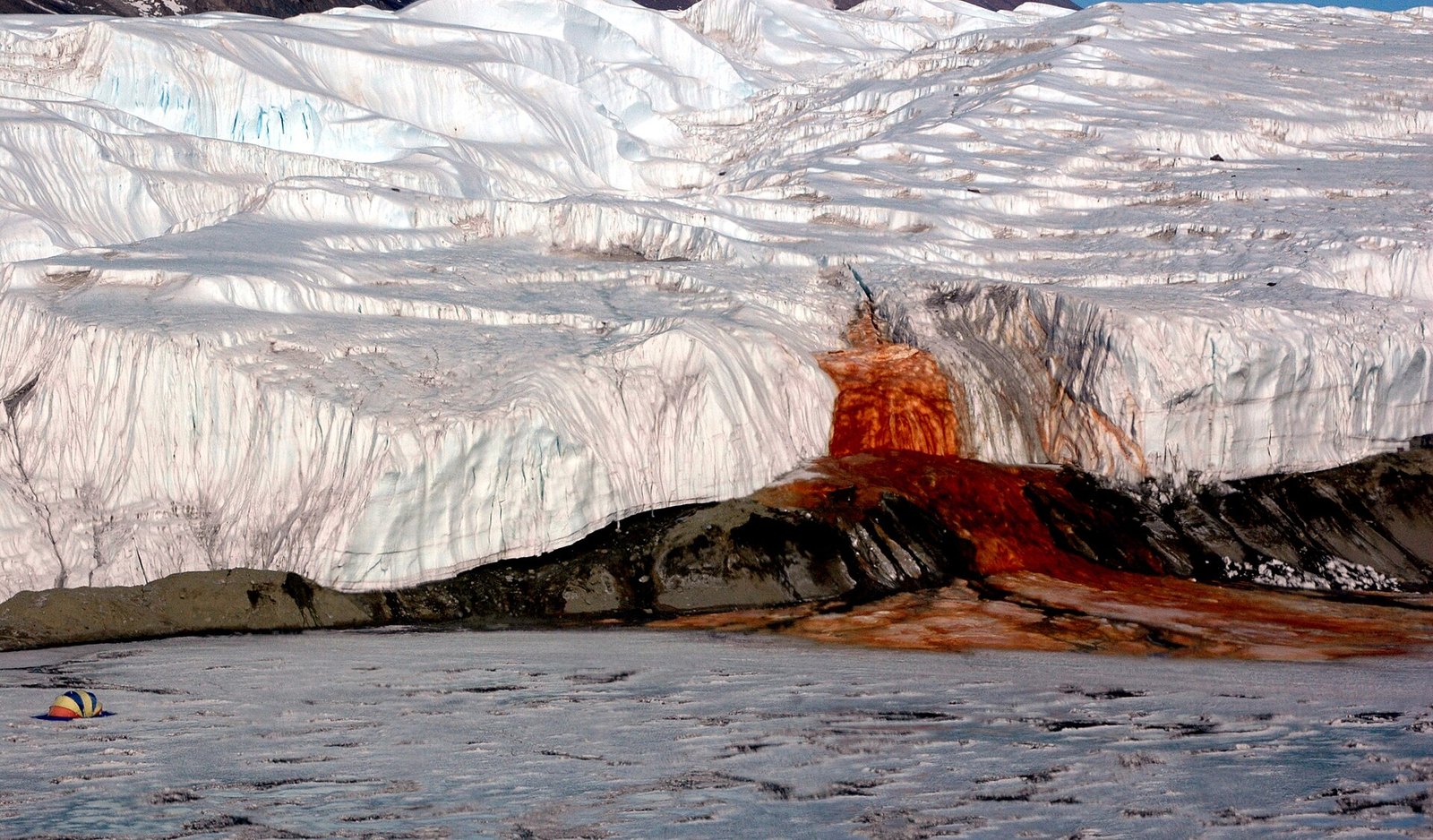
WASHINGTON – Scientists have uncovered the secret behind Antarctica's famous 'Blood Falls', revealing that the site is in fact inhabited by living descendants of ancient marine creatures.
The blood-red waterfall flows from the Taylor Glacier into Lake Bonney and has long fascinated researchers because of its resemblance to blood.
A new study now shows that the iron-rich brine seeping from beneath the ice surface is home to a unique community of marine microorganisms that has been trapped under the glacier for hundreds of thousands of years.
The microorganisms include marine diatoms, haptophytes, dinoflagellates and ciliates — tiny organisms that normally live in ocean waters.
These species are descendants of an ancient marine community that became isolated when the glacier advanced, cutting off the trapped seawater from the open ocean.
The discovery provides the strongest biological evidence yet that the mysterious water originally came from the sea before being sealed beneath a thickening ice sheet.
Writing in the journal Nature Geoscience, the researchers described the site as a rare marine refuge in the polar desert.
"These findings show that the system originating from the subglacial brine at the terminus of Taylor Glacier still retains the biological characteristics of its marine origin, despite having long been physically separated from the ocean," they said, in remarks translated from the original report.
The 'Blood Falls' phenomenon gets its eerie colour from salty, iron-rich water that rusts on contact with air, producing the distinctive blood-red streak along the glacier.
The research team analysed 167 samples of water, sediment, ice and air collected from the McMurdo Dry Valleys and surrounding areas in Antarctica. – AGENCIES
This article was produced with the assistance of artificial intelligence (AI), in accordance with our editorial policy.