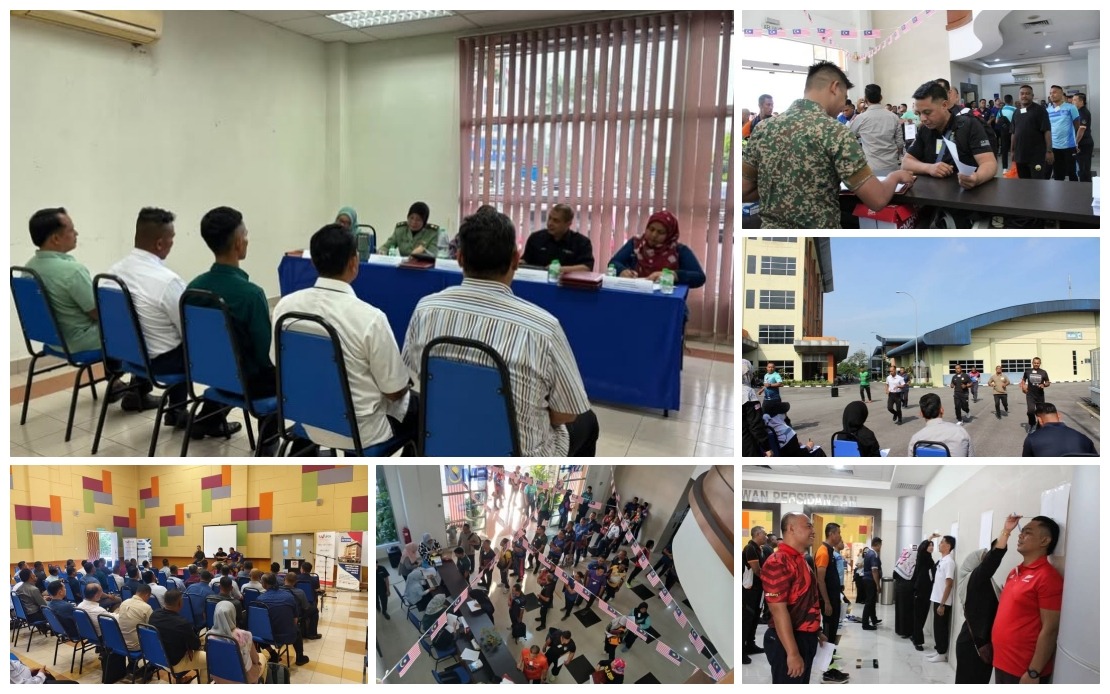
A significant recruitment drive for Malaysia's MARA Junior Science Colleges (MRSM) reached a critical phase last week, as 147 candidates from military backgrounds participated in intensive physical assessment sessions at the MARA Food Technology Incubator in Kepong. The interviews, held on Monday and Tuesday, represent a crucial step in selecting the next generation of residential college wardens who will oversee student welfare and discipline across the MRSM network.
According to MARA Chairman Datuk Dr Asyraf Wajdi Dusuki, all participating candidates had already cleared two rounds of rigorous online screening before receiving their interview invitations. This multi-stage approach reflects the organisation's commitment to identifying individuals with the right combination of background, motivation, and capability to lead residential college communities. The emphasis on previous military service suggests a deliberate strategy to bring discipline and structured leadership to student accommodation environments.
The physical interview process itself incorporated three distinct assessment components designed to evaluate candidates comprehensively. Participants underwent Body Mass Index screening, completed the Bleep Test—a standard cardiovascular fitness assessment—and participated in face-to-face interviews with selection panels. This triangulated approach seeks to ensure that successful wardens possess not only the physical resilience required for demanding residential roles but also the interpersonal skills and judgment necessary for managing complex student dynamics.
The role of MRSM warden extends far beyond traditional discipline enforcement, as Asyraf Wajdi emphasised in his announcement. Wardens are positioned as mentors and quasi-parental figures within the residential college ecosystem, responsible for implementing MARA's broader educational philosophy alongside their pastoral duties. This expanded understanding of the warden's function reflects evolving approaches to student development in Malaysia's residential colleges, moving beyond security toward comprehensive personal growth facilitation.
Successful candidates from this recruitment round are scheduled to assume their duties on July 1, indicating a tight timeline for finalising selections and conducting any necessary orientation. This July start date coincides with the beginning of the new academic calendar at most Malaysian institutions, suggesting that wardens will be in place to welcome returning and incoming students during the critical early weeks of the academic year.
The initiative carries particular significance in addressing longstanding concerns within Malaysian secondary education. Asyraf Wajdi articulated hopes that strengthened warden presence and training would help tackle bullying culture, reduce disciplinary misconduct, and address broader social issues affecting residential students. These concerns reflect documented challenges within boarding school environments, where concentrated student populations and time away from home can create conditions for both positive development and negative behaviours.
The recruitment effort extends considerably beyond the 147 male candidates who recently completed interviews. MARA has separately initiated a parallel process involving 162 female former military personnel, with physical interview sessions scheduled for the following week. This substantial female cohort indicates an institutional commitment to gender balance in warden appointments, though whether this reflects equal distribution across colleges or a general policy shift remains unclear.
The decision to recruit exclusively from military backgrounds represents a deliberate institutional choice with implications for college culture. Former military personnel bring discipline, hierarchical understanding, and structured approaches to authority that may either enhance or, alternatively, create tension within educational environments increasingly emphasising holistic student development. The suitability of this sourcing strategy likely depends on how comprehensively candidates receive training in contemporary educational approaches and child psychology.
For Malaysian families and students, this warden recruitment initiative signals institutional attention to residential college quality and safety—concerns that have generated public discussion following various reported incidents in recent years. Parents selecting between boarding and day school options increasingly consider residential facilities' pastoral capacity as a key differentiator, making warden quality a material factor in school choice decisions.
The broader context of MRSM wardens matters significantly within Malaysia's secondary education landscape. MRSM institutions serve as feeder schools for top-tier universities and professional programmes, attracting academically strong students from across the country. The residential environment at these colleges directly shapes student experiences during formative years, influencing not only immediate academic outcomes but also broader personality development, social skills, and civic orientation.
Implementing systematic warden recruitment with rigorous assessment protocols demonstrates MARA's recognition that residential college management requires sophisticated skill development. Rather than treating warden positions as relatively junior administrative roles filled opportunistically, this process positions them as significant leadership positions requiring evaluated competency across multiple dimensions. This professionalisation of the role could meaningfully improve residential college environments across the MRSM system.
The timing of this recruitment—with interviews concluding in mid-June for July 1 commencement—suggests detailed planning had preceded the formal announcement. The coordination required to schedule 147 candidates plus an additional 162 candidates for separate sessions, arrange assessment logistics, and prepare for onboarding indicates institutional infrastructure dedicated to this staffing priority. Whether MARA possesses comparable recruitment rigour for other critical positions remains an interesting question for observers monitoring the organisation's broader operational approach.
%22%2F%3E%3C%2Fpattern%3E%3C%2Fdefs%3E%3Crect%20width%3D%22100%25%22%20height%3D%22100%25%22%20fill%3D%22url(%23ph3sm85g)%22%2F%3E%3Crect%20width%3D%22100%25%22%20height%3D%22100%25%22%20fill%3D%22url(%23ph3sm85p)%22%2F%3E%3Ctext%20x%3D%2250%25%22%20y%3D%2250%25%22%20text-anchor%3D%22middle%22%20dominant-baseline%3D%22central%22%20fill%3D%22rgba(255%2C255%2C255%2C0.95)%22%20font-family%3D%22Georgia%2C%20'Times%20New%20Roman'%2C%20serif%22%20font-weight%3D%22700%22%20font-size%3D%22226%22%20letter-spacing%3D%22-0.02em%22%3ERussia%3C%2Ftext%3E%3C%2Fsvg%3E)