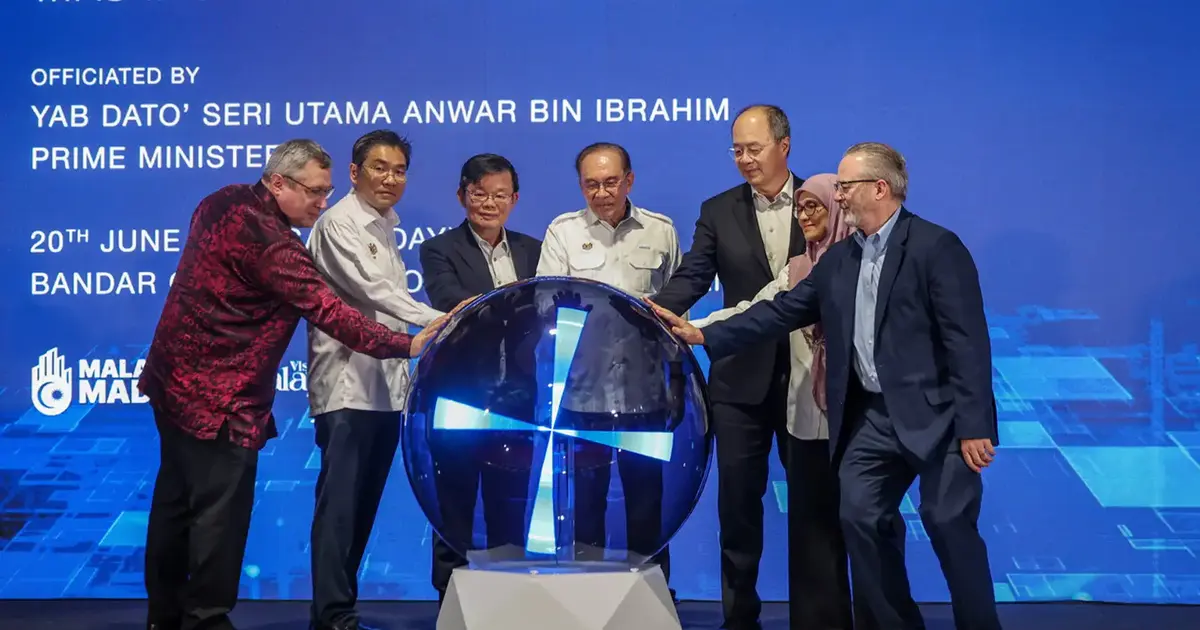
Prime Minister Anwar Ibrahim has moved to strengthen Malaysia's position in the high-value semiconductor ecosystem by appointing an adviser dedicated to fostering deeper collaboration between the country's semiconductor manufacturers and university research institutions. The appointment underscores the government's determination to leverage academic expertise as a competitive advantage in an increasingly sophisticated global market for semiconductors, where innovation and technical talent have become decisive factors.
The adviser will work to bridge a persistent gap between Malaysia's thriving manufacturing base—which has long anchored the country's role in global supply chains—and the research capabilities housed within the nation's universities. This coordination effort reflects an understanding that Malaysia risks remaining locked in lower-margin assembly and testing operations unless it can accelerate the flow of innovations from academic labs to commercial applications. By formalising institutional linkages, the government aims to create structures that will enable faster translation of research discoveries into industry-relevant solutions.
Anwar emphasised that the appointment carries no additional financial burden to the government coffers, a politically significant clarification in an environment of fiscal constraints and public scrutiny over expenditure. This budget-neutral approach suggests the adviser role will be structured within existing institutional frameworks, possibly drawing on personnel already engaged in related policy or coordination functions. The framing reflects broader efforts by the administration to pursue developmental goals without expanding the civil service payroll—a perennial challenge for Malaysian policymakers seeking to balance ambition with fiscal discipline.
Malaysia's semiconductor sector has historically concentrated on manufacturing and assembly operations, generating substantial employment and export revenues but capturing relatively limited value from design, research, and advanced process development. This structural positioning within global value chains has served the economy well during decades of steady demand, but the sector faces mounting pressure from rising competition, geopolitical fragmentation, and a pivot by global leaders toward securing domestic chip supplies. The government recognises that diversifying into higher-value activities—including chip design, process innovation, and specialised manufacturing—requires systematic engagement with universities that possess capabilities in materials science, electrical engineering, and computational research.
The appointment arrives amid accelerating global semiconductor competition. Nations from South Korea to the United States have made enormous public investments in securing technological leadership and manufacturing capacity, while some countries are pursuing self-sufficiency strategies that could reshape regional trade patterns. For Malaysia, which hosts significant operations by multinational semiconductor companies, the challenge is to ensure these operations continue to evolve technologically rather than migrate to locations with stronger indigenous research ecosystems or government incentives. University-industry partnerships have proven effective in other jurisdictions at creating the innovation infrastructure that keeps advanced manufacturing anchored within borders.
Malaysian universities have developed pockets of genuine strength in semiconductor-related disciplines, including materials science, microelectronics, and photonics research. However, these capabilities often remain fragmented across institutions and disconnected from commercial application cycles. The adviser's mandate will likely involve mapping these research assets, identifying opportunities for collaboration on problems facing Malaysian manufacturers, and creating mechanisms for funding, intellectual property sharing, and researcher mobility between campus and industry. Such frameworks have enabled countries like Taiwan and Singapore to sustain competitive advantage in an industry increasingly dependent on continuous innovation.
The initiative also responds to broader shifts in how nations approach economic competitiveness. The traditional model of government setting industrial policy through tariffs and capital allocation has evolved toward facilitating ecosystems where multiple actors—firms, universities, research institutes, and funding bodies—interact dynamically. Malaysia's experience in sectors like petroleum engineering, where Petronas has sustained a collaborative relationship with universities and research institutions, suggests templates that could be adapted for semiconductors. The adviser's appointment represents a step toward formalising such ecosystem governance.
Regional dynamics further underscore the urgency. Vietnam, Indonesia, and the Philippines are all seeking to develop semiconductor capabilities and attract related investments, creating competitive pressure on Malaysia to demonstrate distinctive advantages. Countries in Southeast Asia that can position themselves as hubs for specific semiconductor specialisations—perhaps advanced packaging, chiplet integration, or compound semiconductors—stand to capture disproportionate flows of investment and expertise. University partnerships become critical tools for establishing the technical reputation and human capital networks that multinational investors evaluate when making location decisions.
The adviser role also signals recognition that semiconductor expertise cannot be developed in isolation. Global companies making major investments in semiconductor facilities expect to access ecosystems encompassing skilled workforces, supplier networks, and research capabilities. Universities contribute to all three elements—they train engineers and technicians, their faculty members often consult for industry, and their research projects occasionally spawn spinout ventures. By formally institutionalising connections, the government aims to present Malaysia as a more cohesive and attractive destination for semiconductor firms considering expansion or relocation decisions.
Implementation will require navigating persistent tensions between academic and commercial cultures, including different publication practices, timeline horizons, and intellectual property frameworks. Successful university-industry partnerships elsewhere have required dedicated intermediary structures and funding mechanisms that reduce friction while protecting legitimate interests of both parties. The adviser will likely need to advocate for policy adjustments—perhaps in how government research funding is allocated, how universities assess researcher performance, or how tax incentives reward corporate investments in research collaboration.
The move also reflects Anwar's broader agenda of positioning Malaysia as a technologically sophisticated economy capable of capturing value from advanced manufacturing rather than remaining a low-cost production location. Similar imperatives have driven government investment in artificial intelligence, biotechnology, and advanced materials. The semiconductor adviser represents one component of a larger strategic reorientation toward sectors where innovation, skilled labour, and institutional quality determine prosperity rather than wage competition alone.
Success will ultimately depend on whether the appointment catalyses tangible changes in how universities and semiconductor firms interact. Mere coordination without accompanying policy reforms or funding mechanisms risks remaining symbolic. However, if the adviser role becomes embedded in a broader policy package—including modified research funding criteria, intellectual property arrangements, and incentives for researcher secondments—it could help Malaysia transition incrementally toward greater technological autonomy and value capture in semiconductors, an outcome with significant implications for regional electronics manufacturing competitiveness.

%22%2F%3E%3C%2Fpattern%3E%3C%2Fdefs%3E%3Crect%20width%3D%22100%25%22%20height%3D%22100%25%22%20fill%3D%22url(%23ph49t16g)%22%2F%3E%3Crect%20width%3D%22100%25%22%20height%3D%22100%25%22%20fill%3D%22url(%23ph49t16p)%22%2F%3E%3Ctext%20x%3D%2250%25%22%20y%3D%2250%25%22%20text-anchor%3D%22middle%22%20dominant-baseline%3D%22central%22%20fill%3D%22rgba(255%2C255%2C255%2C0.95)%22%20font-family%3D%22Georgia%2C%20'Times%20New%20Roman'%2C%20serif%22%20font-weight%3D%22700%22%20font-size%3D%22272%22%20letter-spacing%3D%22-0.02em%22%3EAnwar%3C%2Ftext%3E%3C%2Fsvg%3E)