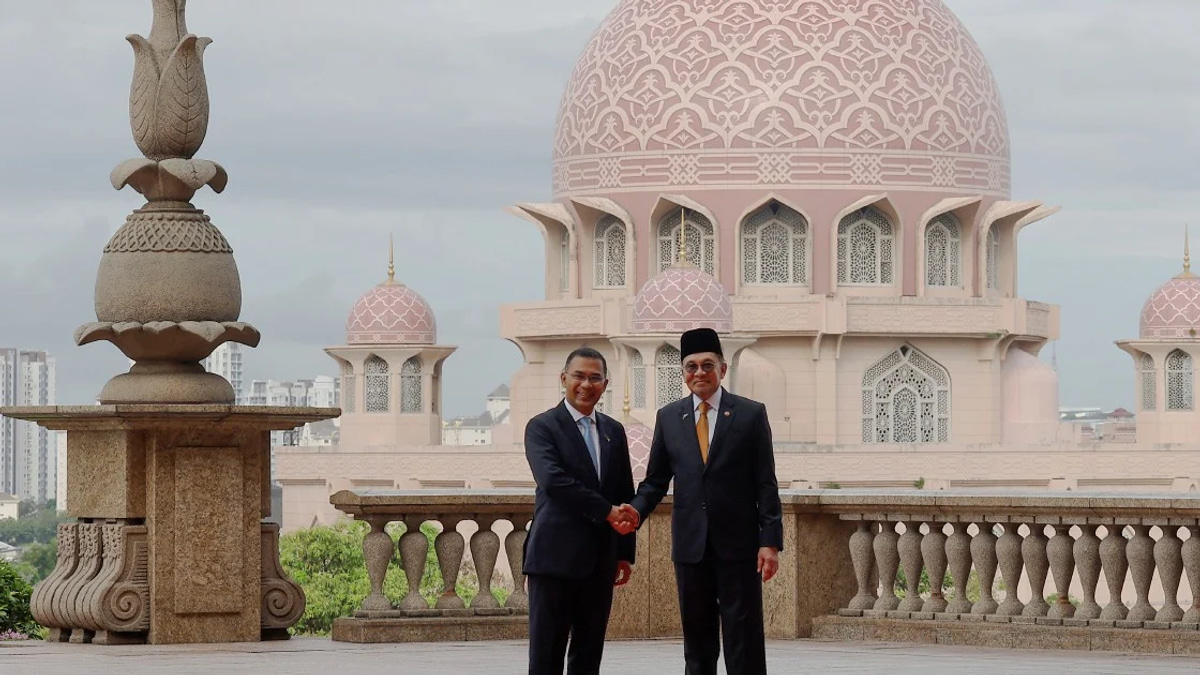
Prime Minister Datuk Seri Anwar Ibrahim is set to unveil the complete roster of candidates fielded by Pakatan Harapan for the 16th Johor State Election, bringing to a close weeks of speculation and internal negotiations within the three-party coalition. The formal announcement will take place at 8 pm at Bukit Gambir Extreme Park field in Johor Bahru, representing the final piece in the coalition's electoral machinery as the state gears up for what many analysts regard as a crucial contest in determining the political trajectory of Malaysia's southern gateway.
The timing of the candidate declaration comes at a pivotal moment for Pakatan Harapan, which must balance its desire to win decisively in Johor—a state that has eluded the coalition since its formation—against the need to accommodate demands from its three constituent parties. The announcement will showcase the top echelon of PH leadership, with DAP secretary-general Anthony Loke and Amanah president Datuk Seri Mohamad Sabu expected to be present alongside Anwar, signalling the unified front the coalition wishes to project to voters and internal stakeholders.
To date, partial candidate lists have trickled out, offering glimpses into the coalition's strategic thinking. The Democratic Action Party, traditionally the strongest opposition force in Johor, has already named five candidates including lawyer Chu Poh Yee for Mengkibol, Nor Zulaila Abd Ghani for Tiram—a private secretary to the Deputy Finance Minister—and Lee Wern Yiing, the Johor DAP Socialist Youth chief, for Johor Jaya. The inclusion of former incumbent Wong Bor Yang for Senai signals an attempt to reclaim ground previously lost, while the nomination of Mohamad Shafwan Ani for Bukit Permai, a special assistant to the Kulai Member of Parliament, reflects the party's effort to field candidates with established political networks.
The People's Justice Party, or PKR, has confirmed Arthur Chiong Sen Sern as its candidate to defend the Bukit Batu state seat, highlighting the party's focus on retaining constituencies where it holds current representation. These piecemeal announcements have kept observers guessing about the final composition of the coalition's full slate, particularly regarding the delicate allocation of seats among the three parties and how Pakatan Harapan has managed inevitable disappointments among potential candidates who did not make the cut.
In remarks posted on social media, Anwar articulated the coalition's broader message to Johor voters, emphasizing that the state requires leadership grounded in integrity, possessing genuine credibility, and demonstrating unwavering commitment to the state's advancement and the prosperity of its residents. This messaging strategy attempts to position Pakatan Harapan as a force for principled governance and substantive development, contrasting implicitly with the incumbent administration. For Malaysian voters weary of political scandals and perception of entrenched interests, such appeals carry particular resonance, though their ultimate electoral impact remains uncertain.
The electoral calendar is now firmly set, with the Election Commission having designated June 27 as nomination day, allowing candidates to formally register their candidacy and campaigns to shift into high gear. Early voting has been scheduled for July 7, accommodating essential workers, security personnel, and others unable to participate on the main polling day. The general election itself will be held on July 11, giving the coalition and its opponents roughly two weeks from the candidate announcement to campaign intensively across all 56 state constituencies.
For Johor specifically, this election represents a significant political moment. The state has remained under Barisan Nasional control or its predecessors for decades, making a Pakatan Harapan victory a historic achievement that would reshape the political landscape of the nation's most industrialized and economically significant state outside the Klang Valley. Control of Johor state government would grant the coalition considerable resources and patronage networks, potentially strengthening its hand in future national politics and demonstrating to Malaysians that electoral change remains possible even in traditionally conservative strongholds.
The coalition's candidate selection process has invariably involved complex negotiations between DAP, PKR, and Amanah, each seeking to maximize representation while respecting the broader goal of presenting a unified front capable of defeating the incumbent. DAP's strength in urban and semi-urban areas contrasts with PKR's more diffuse base, while Amanah brings an Islamic credentials component important for reaching certain demographic segments. The final candidate list will reveal how successfully these three parties have balanced their competing interests and whether they have managed to field candidates capable of connecting with diverse voter constituencies across the state.
For Malaysian observers beyond Johor, the candidate announcements carry implications extending well beyond state-level politics. A strong showing by Pakatan Harapan in Johor would suggest that federal Prime Minister Anwar Ibrahim retains political momentum and that his government's agenda enjoys resonance among voters. Conversely, a disappointing result could embolden Barisan Nasional and complicate Anwar's ability to implement his governance agenda at the federal level. The state election thus functions as an indirect referendum on Anwar's administration and the broader direction of Malaysian politics as the nation approaches the halfway point of the current parliamentary term.
The announcement tonight will conclude weeks of speculation about which political figures would receive candidacy, whose aspirations would be deferred or permanently sidelined, and how Pakatan Harapan would position itself heading into what promises to be a fiercely contested campaign. With the full slate now visible, the substantive battle for Johor's political future enters its decisive phase, with both the coalition and incumbent determined to demonstrate that they alone can deliver the governance, economic development, and social progress that voters across the state demand.
%22%2F%3E%3C%2Fpattern%3E%3C%2Fdefs%3E%3Crect%20width%3D%22100%25%22%20height%3D%22100%25%22%20fill%3D%22url(%23ph154msg)%22%2F%3E%3Crect%20width%3D%22100%25%22%20height%3D%22100%25%22%20fill%3D%22url(%23ph154msp)%22%2F%3E%3Ctext%20x%3D%2250%25%22%20y%3D%2250%25%22%20text-anchor%3D%22middle%22%20dominant-baseline%3D%22central%22%20fill%3D%22rgba(255%2C255%2C255%2C0.95)%22%20font-family%3D%22Georgia%2C%20'Times%20New%20Roman'%2C%20serif%22%20font-weight%3D%22700%22%20font-size%3D%22226%22%20letter-spacing%3D%22-0.02em%22%3EHannah%3C%2Ftext%3E%3C%2Fsvg%3E)