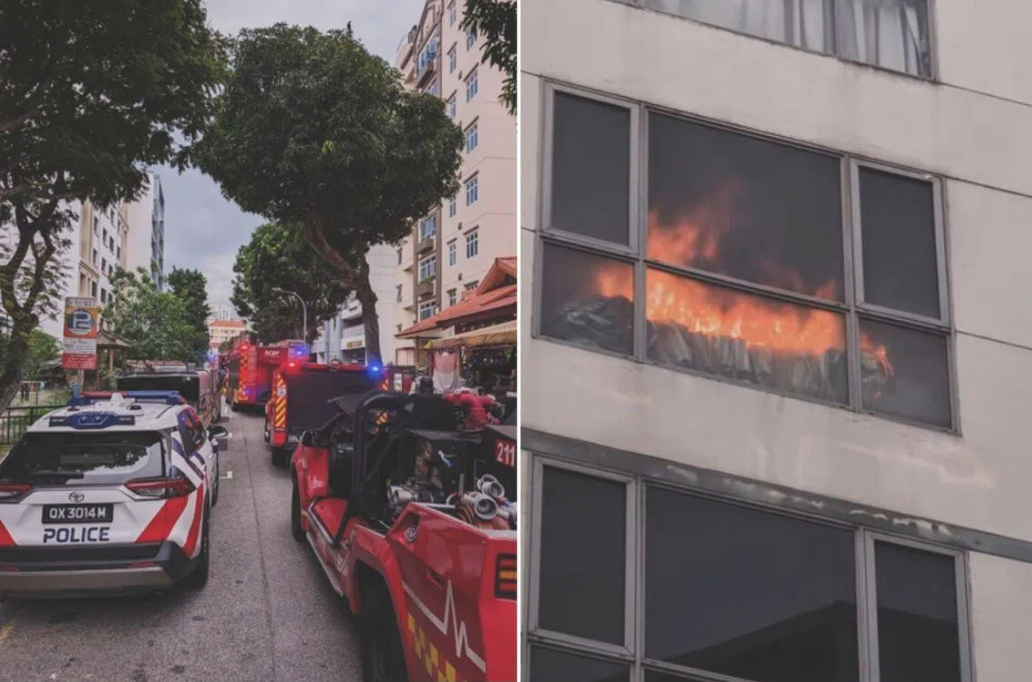
An unattended charging battery for a power-assisted bicycle sparked a fire at a Geylang condominium in Singapore on Sunday evening, forcing authorities to evacuate five residents from nearby units as a safety precaution. The Singapore Civil Defence Force received the alert at 5.35pm for a blaze at 9 Lorong 26 Geylang, identified as Casa Aerata condominium. Police and SCDF personnel swiftly cleared neighbouring units while emergency responders contained the situation, with no injuries reported during the incident.
The fire originated in a seventh-floor unit where a power-assisted bicycle battery was being charged in the living room while unattended. Such incidents underscore an emerging challenge across urban Southeast Asia, where the rapid adoption of electric mobility devices has outpaced public awareness about their proper use and maintenance. The SCDF extinguished the flames using standard firefighting equipment, including a hosereel and a compressed air foam backpack, bringing the situation under control without significant structural damage.
Preliminary investigations confirmed the fire was electrical in nature, originating from the power-assisted bicycle itself. This determination points to underlying issues with battery management and charging protocols that users may not fully understand. Geylang, a bustling district with high residential density, reflects the broader urban landscape where such devices have become commonplace for short-distance commuting, making fire safety education increasingly vital for public safety.
Members of Parliament in Singapore took active roles in managing the emergency. Cai Yinzhou, MP for Bishan-Toa Payoh GRC, rushed to the condominium after witnessing smoke and hearing emergency sirens. He coordinated with residents to clear the area directly below the burning unit in anticipation of structural damage, demonstrating swift community leadership. His actions proved timely, as the intense heat eventually shattered windows in the affected unit, which could have posed additional hazards to people below.
The incident has prompted the Singapore Civil Defence Force to reiterate critical safety guidelines for users of active mobility devices across the nation. Authorities specifically warned against purchasing or using non-original batteries for power-assisted bicycles, personal mobility devices, and similar electric transport equipment. This guidance reflects concerns about counterfeit or substandard batteries that may lack proper safety features, thermal management systems, or quality control standards necessary to prevent thermal runaway and combustion.
Beyond battery sourcing, the SCDF emphasised proper charging practices that many users overlook. Batteries should never be charged for extended periods or left charging overnight, practices that can generate excessive heat and degrade battery chemistry over time. Such cautionary measures are particularly relevant in high-density residential areas like Singapore, where communal charging spaces and unit living arrangements create shared risk environments. A battery fire in a multi-unit building poses dangers not only to the user but to an entire vertical community.
Statistical trends reveal a growing but complex pattern across Singapore's residential fire incidents. In 2025, the SCDF recorded 304 electrical fires at residential premises, of which 34 involved active mobility devices including power-assisted bicycles, personal mobility devices, and personal mobility aids. While the overall number of active mobility device fires declined from 67 in 2024 to 49 in 2025, the composition of incidents shifted notably. Personal mobility device fires, a subset of the broader category, increased from 25 to 31 cases, suggesting that certain device types may pose escalating risks despite overall improvements.
This paradox—fewer total active mobility device fires but more personal mobility device fires—suggests that targeted interventions in one area may be reducing incidents with power-assisted bicycles while another category remains problematic. The data hints at differential adoption rates, usage patterns, and perhaps varying quality standards between device categories. For Malaysian readers, these patterns carry particular relevance as Southeast Asian cities face identical challenges with the rapid proliferation of e-scooters, e-bikes, and other personal electric devices.
The incident at Casa Aerata serves as a cautionary tale for residential communities across the region. In Malaysia, where e-bikes and electric scooters have gained considerable popularity in urban centres like Kuala Lumpur, Penang, and Johor Bahru, similar fire risks exist but receive less systematic documentation. Condominiums and apartment buildings typically lack standardised charging infrastructure or safety protocols, leaving residents to improvise charging solutions in living spaces, bedrooms, and common areas—precisely where fires pose maximum danger to multiple occupants.
Beyond individual user responsibility, the incident highlights systemic gaps in product regulation and consumer education. As active mobility device adoption accelerates across Southeast Asia, regulatory frameworks lag significantly. Many devices sold in the region lack rigorous certification, and retailers rarely communicate proper charging and storage procedures to buyers. The SCDF's preventative messaging, while essential, depends on users having access to information and the motivation to follow guidelines—preconditions not always met in price-sensitive markets.
The broader context suggests that Southeast Asian governments, including Malaysia, should examine Singapore's experience proactively. Developing residential building codes that address active mobility device charging, establishing product safety standards for batteries and chargers, and launching public awareness campaigns could substantially reduce fire risks. Educational initiatives targeting delivery riders and commuters—who use these devices most intensively—may yield particularly high returns in preventing future incidents.
Looking forward, the Geylang fire reinforces that rapid technology adoption without proportional safety infrastructure creates preventable hazards. For Malaysian condo residents and urban commuters, the lesson is unambiguous: invest in original batteries from reputable manufacturers, charge devices during daytime hours in designated spaces, avoid overnight charging, and ensure adequate ventilation around charging equipment. As active mobility reshapes Southeast Asian cities, integrating fire safety into user habits and building regulations becomes not merely advisable but essential for protecting both individuals and communities.