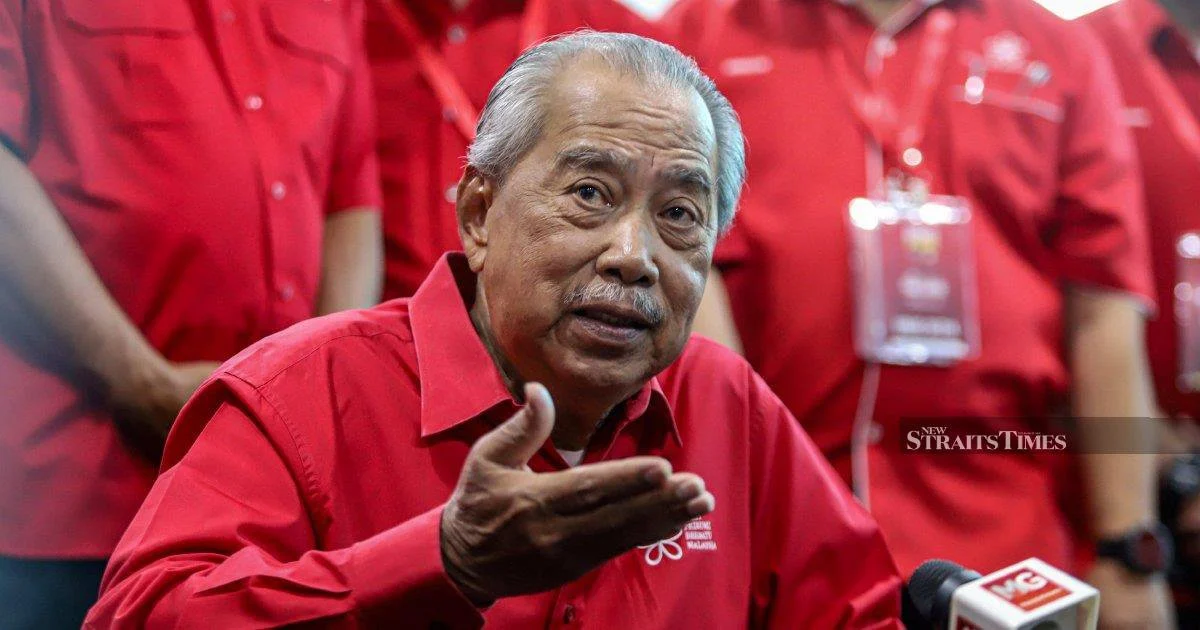
The future of Bersatu within Perikatan Nasional remains assured, according to party president Tan Sri Muhyiddin Yassin, who sought to put to rest ongoing questions about possible shifts in the coalition's composition. Muhyiddin's declaration comes as political observers continue scrutinising the stability of PN, which has become a significant force in Malaysian politics since its formation in 2020 and subsequent role in government formation.
Muhyiddin's unequivocal statement that Bersatu will remain within PN "forever" reflects the party's strategic positioning within the broader coalition framework. The assertion carries particular weight given Bersatu's prominent standing within PN, where the party holds considerable influence over the coalition's direction and policy platforms. Such declarations are typically issued to reassure members, coalition partners, and voters about the party's long-term intentions during periods when political speculation intensifies.
Perikatan Nasional has occupied a complex position in Malaysia's political landscape since its formation, initially emerging as an alternative coalition before becoming instrumental in government formations. The coalition, which includes Bersatu, PAS, and various regional parties, has proven attractive to politicians and voters seeking alternatives to Malaysia's traditional political structures. However, like most political coalitions in the country, PN has faced periodic rumours about potential defections or realignments.
Bersatu's commitment to PN carries implications for the coalition's internal dynamics and its competitive positioning against other political groupings. The party, founded in 2016 and comprising former members from UMNO and other parties, has positioned itself as a reformist alternative within Malaysian politics. Its presence within PN has been crucial to the coalition's ability to articulate a distinct political identity separate from UMNO and other established players.
Political coalitions in Malaysia frequently face speculation about their durability, often triggered by minor disagreements over candidate selection, policy disagreements, or ministerial portfolios. Such periodic questions about coalition stability are virtually inevitable in Malaysia's multi-party system, where coalition partners constantly negotiate their relative positions and influence. Muhyiddin's categorical reaffirmation appears designed to preempt any erosion of confidence in PN's cohesion.
The timing of such statements often reflects attempts to manage party narratives during sensitive political periods. Bersatu, despite its relatively recent formation compared to established parties, has managed to establish itself as a coalition leader rather than merely a junior partner. This elevated status depends partly on demonstrating internal unity and unwavering commitment to its political alliances, factors that directly influence the party's bargaining power during government formations and policy negotiations.
For Southeast Asian observers, Bersatu's commitment to PN illustrates the broader pattern of political coalition formation in the region, where parties frequently shift alliances based on electoral outcomes and strategic calculations. Malaysia's coalition politics operate within a framework where no single party typically commands parliamentary majorities independently, necessitating complex negotiations and alliance-building.
The stability of PN matters not only for its constituent parties but also for Malaysia's broader political equilibrium. As a significant parliamentary presence, PN's internal cohesion influences the country's legislative agenda and government formation possibilities. Any meaningful fracturing within PN would likely reshape parliamentary mathematics and potentially trigger fresh government formation negotiations.
Muhyiddin's assurance regarding Bersatu's loyalty extends beyond immediate political calculations to touch on questions of institutional credibility. Political parties that repeatedly appear unstable regarding coalition commitments risk losing voter confidence and becoming less attractive partners for other political entities. Conversely, parties demonstrating consistent coalition loyalty can accumulate political capital that translates into improved negotiating positions during critical political moments.
The broader context involves ongoing Malaysian voter expectations regarding political stability and coalition reliability. Following the political turbulence of recent years, many Malaysians express preferences for stable governments and coherent political alliances. Statements like Muhyiddin's can be understood partly as attempts to signal reliability to an electorate frequently frustrated by coalition instability and frequent changes in government composition.
Bersatu's entrenchment within PN also reflects the party's calculations about electoral viability. As a relatively new political entity, Bersatu benefits from operating within an established coalition framework that provides organisational support, shared campaign infrastructure, and coordinated parliamentary strategy. These practical advantages make coalition membership strategically valuable beyond purely ideological considerations.
Looking forward, the question of coalition durability will likely remain subject to periodic scrutiny as Malaysian politics continues evolving. However, Muhyiddin's emphatic reaffirmation provides clarity regarding Bersatu's immediate trajectory, at least in terms of formal coalition commitment. Whether such commitments withstand future electoral outcomes and internal political pressures remains among the perpetual uncertainties of Malaysian coalition politics.
%22%2F%3E%3C%2Fpattern%3E%3C%2Fdefs%3E%3Crect%20width%3D%22100%25%22%20height%3D%22100%25%22%20fill%3D%22url(%23ph1d5l8g)%22%2F%3E%3Crect%20width%3D%22100%25%22%20height%3D%22100%25%22%20fill%3D%22url(%23ph1d5l8p)%22%2F%3E%3Ctext%20x%3D%2250%25%22%20y%3D%2250%25%22%20text-anchor%3D%22middle%22%20dominant-baseline%3D%22central%22%20fill%3D%22rgba(255%2C255%2C255%2C0.95)%22%20font-family%3D%22Georgia%2C%20'Times%20New%20Roman'%2C%20serif%22%20font-weight%3D%22700%22%20font-size%3D%22151%22%20letter-spacing%3D%22-0.02em%22%3EPerikatan%3C%2Ftext%3E%3C%2Fsvg%3E)