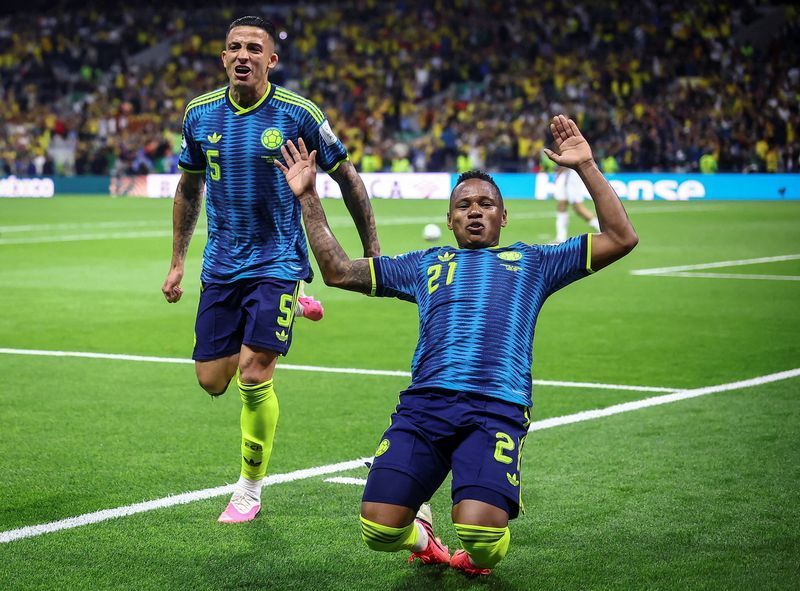
Colombia will attempt to build on their opening World Cup success when they clash with DR Congo on Tuesday, with coach Nestor Lorenzo's squad determined to translate their initial promise into another three points. The South Americans began their Group K campaign with a commanding 3-1 triumph over Uzbekistan, though the margin of victory obscured defensive vulnerabilities that emerged during a troubled second half—issues the Colombian coaching staff recognises must be rectified against increasingly confident opponents.
A victory would secure Colombia's passage to the Round of 32 and simultaneously move them toward potentially claiming top spot in the group, particularly if results elsewhere favour them. Should Portugal stumble against Uzbekistan in their simultaneous fixture, Colombia could cement first place without relying on subsequent matches. This dual incentive underscores the significance of Tuesday's encounter for a nation seeking to make a serious tournament impression after their modest World Cup performances in recent campaigns.
Luis Díaz, the Bayern Munich winger, has emerged as Colombia's standout performer thus far. The 27-year-old commanded attention throughout the Uzbekistan encounter with both a goal and an assist, earning player-of-the-match accolades for his tireless running and directness in dismantling their opening opponents. Lorenzo will hope for similarly influential contributions as his team faces an opponent tactically configured differently from the Asian side they dispatched in their opener.
Captain James Rodríguez, conversely, played a peripheral role in Colombia's victory over Uzbekistan, with the team's attacking thrust primarily funnelled through Díaz's pace and penetrative movement rather than through their nominal leader. Lorenzo's tactical setup clearly maximised his winger's effectiveness, yet questions persist about whether Colombian football can showcase its full repertoire when opponents specifically target these identified weaknesses. The captain's improved involvement would suggest a more balanced and threatening attacking posture against DR Congo.
DR Congo arrives at Tuesday's fixture emboldened by an unexpected 1-1 stalemate against Portugal in their tournament opener—a result that assumes profound significance given the nation's 48-year absence from World Cup football. The Congolese last competed as Zaire in 1974, meaning the current squad represents a generational return to the sport's greatest stage. Yoane Wissa's opening-match goal holds particular symbolic weight as DR Congo's first World Cup goal in nearly five decades, signalling the country's capacity to perform at the highest level after decades of exclusion.
Coach Sébastien Desabre orchestrated a disciplined defensive structure against the Portuguese that frustrated one of the tournament's pre-tournament favourites, simultaneously capitalising on counter-attacking opportunities with remarkable poise for a team playing its first competitive fixture after such a prolonged absence. This balanced performance has generated genuine confidence within the Congolese camp heading into their Group K examination against Colombia—a South American power that, while technically superior, demonstrated defensive frailties that Desabre's tactical sophistication may be positioned to exploit.
Lorenzo has openly acknowledged the distinct challenge posed by DR Congo's direct, transition-oriented approach. Speaking after his team's opening victory, the Argentine coach identified the Congolese emphasis on long-range distribution and rapid counter-attacking as presenting difficulties fundamentally different from the methodical possession game Colombia controlled against Uzbekistan. His candid assessment reflects a coach attuned to tactical variance and potential pitfalls that defensive lapses might exacerbate.
The Colombian manager also highlighted a concerning inefficiency in his team's finishing despite dominating possession during the Uzbekistan match. He suggested that Colombia's territorial superiority occasionally became counterproductive, with sideways and backward passes disrupting attacking momentum at crucial moments. Addressing this clinical deficiency in the final third assumes critical importance against opponents who will deliberately compact defensive lines and invite Colombia to manufacture chances from restricted spaces—an examination of composure and precision that Díaz and Rodríguez must navigate successfully.
Colombia's substantial supporter base will provide a tangible advantage at Mexico City's Estadio Azteca, where thousands of Colombian nationals transformed the venue into an unofficial home ground during the Uzbekistan fixture. With their tournament operations centred in Guadalajara, Colombian fans have demonstrated willingness to travel and create an intimidating atmosphere for opponents. Another substantial contingent is anticipated for Tuesday's encounter, potentially providing psychological benefits as Colombia seeks a more comprehensive and convincing performance against a rejuvenated DR Congo side that has already demonstrated its capacity to surprise established football nations.