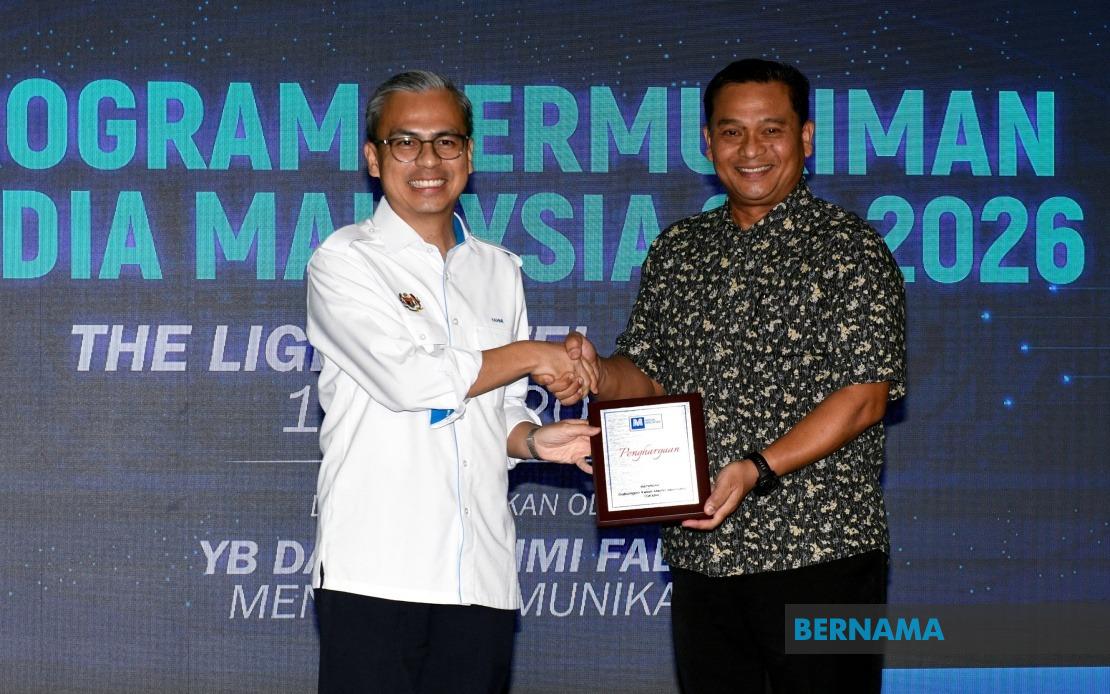
Communications Minister Datuk Fahmi Fadzil has unveiled a financial support package for Malaysia's media fraternity, allocating RM10,000 to each state media club that holds membership with the Malaysian Media Clubs Association (GKMM), alongside a separate RM30,000 grant directed to the association itself for activities and programmes centred on the wellbeing of journalists. The announcement was delivered during the Malaysia Media Retreat Programme 2.0 in Butterworth on June 19, signalling the government's continued commitment to bolstering the country's journalism sector at a time when media organisations face mounting pressures from technological disruption and evolving audience patterns.
Fahmi emphasised that the government expects these financial contributions to be deployed strategically to generate maximum benefit for media professionals working across the nation. The dual funding mechanism — targeting both individual state clubs and the national federation — reflects an approach designed to strengthen journalism at grassroots and institutional levels simultaneously. By routing support through established media club structures, the government seeks to ensure funds reach practitioners in every state, creating a more equitable distribution of resources across the country's diverse media landscape.
The minister underscored the irreplaceable role journalists fulfil within Malaysian society, framing their work as fundamental to the nation's democratic discourse and public understanding. Fahmi articulated a vision in which trained journalists, drawing on discipline, experience and technical skill, serve as essential witnesses to events unfolding across the country. He contrasted this human element with emerging technologies, explicitly stating that artificial intelligence cannot substitute for the investigative instinct, ethical judgment and contextual understanding that professional journalists bring to their craft. This framing positions government support for media practitioners not merely as a welfare gesture, but as strategic investment in institutional capabilities vital for national governance and public accountability.
The allocation carries particular symbolic weight given ongoing global anxieties about journalism's sustainability. Newsrooms worldwide have contracted, advertising revenues have migrated to technology platforms, and trust in media institutions faces episodic challenges. Malaysia's communications sector has experienced similar pressures, with certain publications restructuring operations and some journalists seeking alternative employment. By pledging dedicated funding rather than vague rhetorical support, Fahmi signalled that the government recognises these material challenges and intends direct intervention to preserve journalistic employment and professional standards. The specificity of the figures — RM10,000 per club, RM30,000 for GKMM — suggests these amounts were calculated with particular programmatic objectives in mind, whether training initiatives, professional development, or social insurance arrangements.
Fahmi's remarks acknowledged GKMM's functional constraints while enlarging its perceived significance. Although GKMM operates without formal union status and therefore lacks the collective bargaining apparatus typical of labour organisations, the minister credited the association with an important advocacy function. GKMM serves as a conduit through which media practitioners can articulate shared concerns, surface welfare issues, and communicate aspirations regarding journalism's future trajectory in Malaysia. By affirming this convening role, the government effectively positioned GKMM as an interlocutor between the state and the media profession — a legitimising move that could enhance the association's standing within newsrooms and expand its capacity to mobilise members around collective priorities.
The government's openness to incorporating media industry perspectives into policy development represents another dimension of this engagement strategy. Fahmi cited the drafting of the Malaysian Media Council Act as exemplifying collaborative policymaking in which journalists' voices shaped regulatory architecture from inception rather than reacting to completed legislation. This consultative approach, if consistently applied, could foster media sector confidence in government intentions and create space for addressing industry-specific challenges through reasoned dialogue rather than confrontation. For Malaysian journalists accustomed to occasional tensions with regulatory authorities, such consultation mechanisms offer pathways for constructive influence over the legal and administrative frameworks governing their work.
The announcement arrives amid broader regional dynamics affecting media economics and press freedom. Southeast Asia's journalism sector navigates complex terrain encompassing technological disruption, advertising market fragmentation, and varying degrees of political pressure across different jurisdictions. Malaysia's media environment, while more pluralistic than some neighbours, faces distinct challenges including concentrated ownership patterns and periodic concerns about editorial independence. Government support for professional media clubs could strengthen institutional resilience and professional norms that insulate journalists from short-term commercial or political pressures. Investment in journalist welfare and professional development contributes to sectoral stability and capacity, ultimately enhancing the quality of public discourse and civic information available to Malaysian citizens.
The participation of senior government officials at the Media Retreat Programme 2.0 — including Communications Ministry secretary-general Datuk Abdul Halim Hamzah, Malaysian National News Agency (Bernama) chief executive officer Datin Paduka Nur-ul Afida Kamaludin, and Bernama editor-in-chief Arul Rajoo Durar Raj — underscored official recognition of the gathering's importance. This visible government presence signalled that communications ministry leadership regards direct engagement with media practitioners as integral to institutional responsibility, rather than peripheral relationship maintenance. The convening of such figures alongside journalists created space for bilateral exchange regarding industry concerns, government policy priorities, and the mechanics of media-state relations in contemporary Malaysia.
Looking forward, the sustainability of such support remains contingent on political priorities and budgetary allocations in subsequent fiscal years. While the current commitment demonstrates concrete backing for the media profession, journalists and media organisations would be prudent to view this as an opening rather than a resolution of underlying pressures. The effectiveness of these funds ultimately depends on how state media clubs and GKMM structure their programming to address genuine practitioner needs, whether through professional training, income supplementation, health insurance advocacy, or other welfare initiatives. Success in this regard could establish a template for sustained government support and position Malaysia's media clubs as dynamic institutional actors rather than ceremonial associations.