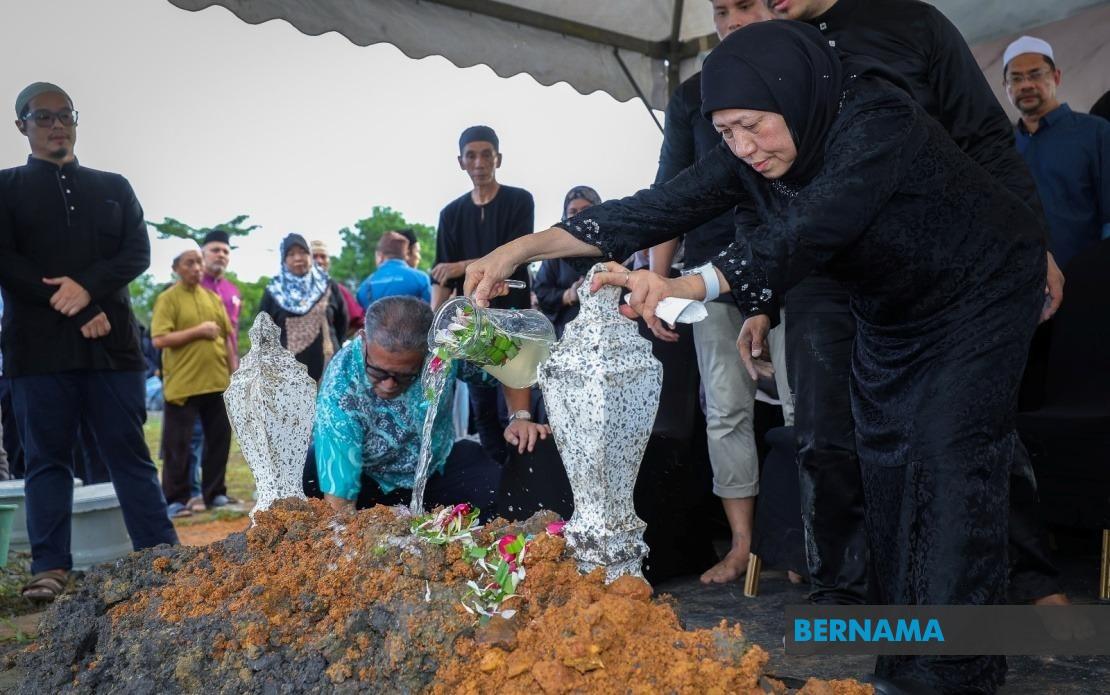
Datuk Kamil Misuari, the spouse of Women, Family and Community Development Minister Datuk Seri Nancy Shukri, was interred at the Samariang Muslim Cemetery in Kuching on Wednesday at 5.15 pm. The funeral brought together approximately 100 family members and close acquaintances who gathered to offer their condolences and pay final respects to the 65-year-old.
Kamil's remains arrived in Kuching following a flight from the capital. The casket touched down at Kuching International Airport at 12.50 pm, after which it was transported to the family home where funeral prayers were conducted in accordance with Islamic tradition prior to the burial ceremony. The arrangements ensured that relatives and friends could participate in the religious observances before the interment took place at the cemetery.
The passing of Kamil marks a significant personal loss for Nancy Shukri, who has held the ministerial portfolio overseeing women's, family, and community development matters. The couple had been married since 1985, maintaining their union for nearly four decades. Their partnership resulted in three children, who now join their mother in grieving the loss of their father. The family's ties to Kuching, evident from the choice to lay Kamil to rest there, underscore the deep roots the household maintains in the Sarawak capital.
As a prominent figure in Malaysia's political and administrative sphere, Nancy Shukri's role in the cabinet has centered on initiatives affecting families, women's welfare, and community engagement across the nation. Her ministerial responsibilities encompass significant social policy matters that touch millions of Malaysian households. The loss of a long-term spouse while maintaining such demanding professional obligations presents a considerable personal challenge during a period typically requiring substantial emotional and practical adjustment.
The funeral proceedings unfolded with dignity and adherence to Muslim customs, reflecting the family's cultural and religious values. The coordination between Kuala Lumpur and Kuching ensured that the deceased could be returned to what appears to be his preferred place of final rest, allowing extended family networks in Sarawak to participate meaningfully in the mourning process. This geographic aspect is notable given that Kuching holds particular significance for the family's identity and heritage.
The attendance of approximately 100 mourners, comprising family relations and intimate associates, demonstrates the breadth of Kamil's personal connections and the respect held for both him and his wife within their community circles. Such turnout, while necessarily restricted compared to what might occur during normal circumstances, reflects genuine ties cultivated over a lifetime of residence and social engagement in the Kuching area.
Kamil's death, occurring at a Kuala Lumpur hospital, concluded a life marked by three decades of marriage to one of Malaysia's senior female ministers. His age of 65 suggests he had completed what many would consider a full lifespan, yet his passing still represents an untimely loss for his immediate family members who remain to process their grief and adjust to fundamentally altered family dynamics.
The timing of the funeral, conducted swiftly following the death, aligns with Islamic funeral practices which typically prioritise burial within a short timeframe. This approach allowed Nancy Shukri and her family to move through the initial phases of mourning while maintaining connection to established religious and cultural protocols that provide framework and meaning during periods of loss.
For observers of Malaysian politics and governance, the event serves as a reminder of the personal dimensions underlying public figures' lives. Ministers and other senior officials, while visible in their professional capacities, navigate the same fundamental human experiences—including loss and bereavement—that affect all citizens. Nancy Shukri's continuation in her ministerial responsibilities amid personal tragedy reflects the resilience often required of those in high-ranking governmental positions.
The funeral at Samariang Muslim Cemetery provided closure and finality to the funeral process, allowing the deceased to be commended to the earth in accordance with his faith tradition. The location in Kuching, rather than in Kuala Lumpur or elsewhere, suggests that Kamil maintained strong connections to Sarawak throughout his life, and that his final resting place holds particular meaning for his family's sense of belonging and continuity.
%22%2F%3E%3C%2Fpattern%3E%3C%2Fdefs%3E%3Crect%20width%3D%22100%25%22%20height%3D%22100%25%22%20fill%3D%22url(%23ph3sm85g)%22%2F%3E%3Crect%20width%3D%22100%25%22%20height%3D%22100%25%22%20fill%3D%22url(%23ph3sm85p)%22%2F%3E%3Ctext%20x%3D%2250%25%22%20y%3D%2250%25%22%20text-anchor%3D%22middle%22%20dominant-baseline%3D%22central%22%20fill%3D%22rgba(255%2C255%2C255%2C0.95)%22%20font-family%3D%22Georgia%2C%20'Times%20New%20Roman'%2C%20serif%22%20font-weight%3D%22700%22%20font-size%3D%22226%22%20letter-spacing%3D%22-0.02em%22%3ERussia%3C%2Ftext%3E%3C%2Fsvg%3E)