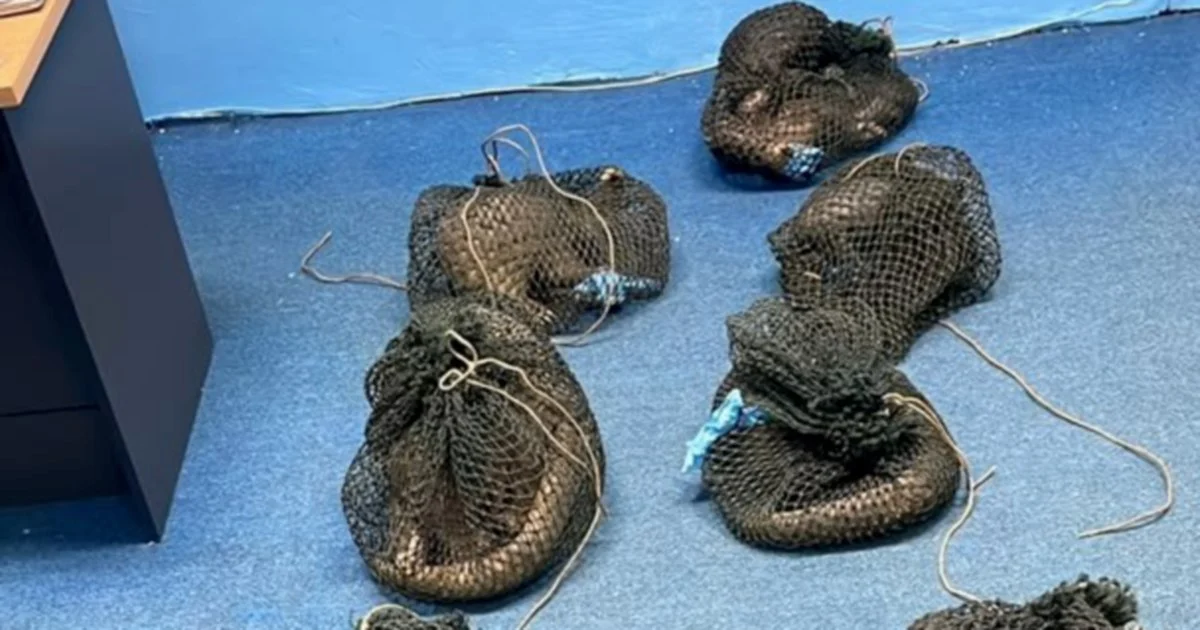
A 27-year-old Filipino national has been taken into custody following a raid on a plantation property in Kampung Paris 3, Kinabatangan, in what enforcement officials are describing as a major breakthrough against wildlife trafficking in East Malaysia. Officers discovered the suspect harbouring ten live pangolins alongside an elephant tusk at the location, evidence suggesting a coordinated smuggling operation targeting some of the world's most protected creatures.
Pangolins represent the most trafficked mammals globally, hunted for their distinctive scales used in traditional medicine and their meat sold as luxury foods across Asia. The scaly anteaters are protected under international treaties and domestic Malaysian law, making their capture, breeding, and sale severe criminal offences. The discovery of ten live specimens in a single property points to organised smuggling networks operating within the region, possibly stockpiling animals for onward transport to larger markets in China, Vietnam, and Thailand where demand remains artificially high despite decades of conservation efforts.
The elephant tusk recovered during the operation adds another layer of concern regarding transnational poaching syndicates. Elephant ivory remains highly valued in certain Asian markets despite international trade bans established under the Convention on International Trade in Endangered Species (CITES). The concurrent possession of both pangolins and ivory suggests the suspect may have operated within a broader trafficking enterprise, potentially coordinating with multiple sourcing networks across Southeast Asia to consolidate shipments destined for international buyers.
Sabah has become a critical battleground in the fight against wildlife crime, given its position as a gateway between the Philippines and Malaysian territory, combined with its vast forest ecosystems that serve as habitat for endangered species. The state's proximity to the resource-rich but poorly regulated Southern Philippines makes it an attractive transit point for smugglers moving contraband southward from Malaysian waters and territories. The Kinabatangan district, straddling the Kinabatangan River that borders international waters, presents particular vulnerabilities given its remote terrain and limited enforcement presence across sprawling agricultural and plantation areas.
The arrest underscores Malaysia's ongoing challenges in combating cross-border wildlife trafficking despite strengthened legislation and increased enforcement operations. The Wildlife Conservation Act 2010 prescribes significant penalties including imprisonment and fines for trafficking offences, yet smuggling networks continue to adapt their routes and methods. The involvement of a Filipino national highlights how trafficking organisations deliberately employ non-local operatives to complicate investigations and diffuse accountability across jurisdictions, exploiting differences in enforcement capacity between countries.
Regional cooperation mechanisms remain critical for disrupting these networks. Malaysia's participation in regional initiatives including the ASEAN Secretariat's wildlife enforcement coordination and bilateral agreements with the Philippines theoretically enables information sharing and joint operations. However, implementation frequently falls short of stated objectives due to limited resources, conflicting priorities, and political sensitivities surrounding transnational enforcement. The actual success of such frameworks in preventing trafficking remains mixed, with high-profile busts often followed by rapid resumption of smuggling activities through alternative routes.
For Malaysian authorities and regional partners, the incident represents both a tactical victory and a systemic reminder of unresolved vulnerabilities. Each major seizure typically represents a fraction of actual trafficking volumes—law enforcement estimates suggest intercepted contraband represents perhaps five to ten percent of total movement. This reality suggests that successful prosecution of individual traffickers, while important for deterrence, addresses only surface manifestations of deeper market demand and organisational sophistication driving the trade.
The economic incentives fuelling pangolin trafficking remain formidable. Poachers earn between RM50 to RM200 per kilogramme of scales, while traffickers command significantly higher margins as goods move through supply chains. The scales themselves sell for RM1,500 to RM3,000 per kilogramme in Vietnamese and Chinese markets, creating powerful profit motives that individual-level enforcement struggles to counter. Parallel conservation efforts targeting demand reduction, particularly traditional medicine market education campaigns in key destination countries, represent longer-term strategic approaches currently underfunded relative to enforcement operations.
The captured pangolins face uncertain futures pending investigation completion and legal proceedings. Malaysian wildlife authorities typically maintain rescued animals in dedicated facilities, though conditions and long-term care capacity remain strained across the region. Rehabilitation and potential reintroduction of trafficked pangolins presents technical challenges, as captive individuals often develop health complications and behavioural issues complicating eventual release into natural habitats. The practical reality of wildlife trafficking frequently means that rescued animals face years of captive existence despite legal protections theoretically guaranteeing their safety.
Sabah's state government and federal authorities must leverage this arrest as an impetus for expanded enforcement resources and enhanced border monitoring capabilities. Current staffing levels for the Department of Wildlife and National Parks (PERHILITAN) Sabah remain insufficient for comprehensive plantation coverage across Kinabatangan and neighbouring districts. Technology solutions including drone surveillance, environmental DNA screening, and real-time intelligence sharing platforms could strengthen detection capabilities, though such investments require sustained political commitment and budget allocations that have historically proven inconsistent.
International dimensions of this case extend beyond immediate diplomatic channels between Malaysia and the Philippines. Demand-side interventions targeting end-user markets in China and Vietnam require cooperative engagement from those governments alongside private sector partners in traditional medicine and fashion industries. Recent commitments from some Chinese traditional medicine organisations to eliminate pangolin scales from approved formularies represent marginal progress, yet enforcement of such commitments remains weak and market alternatives continue evolving. Broader success depends on fundamentally reorienting consumer preferences away from endangered species products—a generational challenge transcending enforcement capacity alone.
The broader trafficking ecosystem capturing this Filipino suspect's apparent involvement extends across multiple Asian jurisdictions and criminal networks operating with remarkable sophistication. Disrupting such systems requires not merely tactical enforcement successes but coordinated regional strategies addressing corruption vulnerabilities, strengthening judicial capacity for complex transnational prosecutions, and sustaining political will across administrations with competing domestic priorities. The Kinabatangan raid demonstrates Malaysia's enforcement capability while simultaneously illuminating the structural limitations constraining regional wildlife protection.