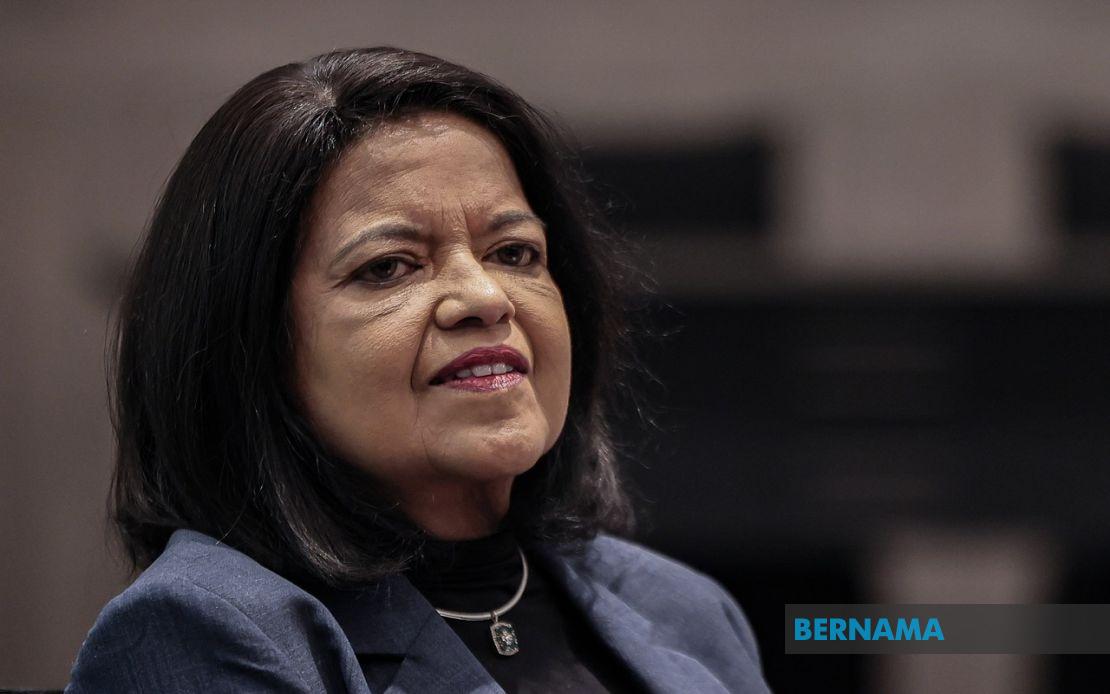
Malaysia's upcoming state elections in Johor and Negeri Sembilan will serve as the testing ground for an ambitious new initiative designed to combat disinformation and restore public confidence in media during campaigns. The Malaysian Media Council has launched a Rapid Response Election Initiative that aims to tackle the growing problem of fabricated content, from forged news graphics to AI-generated material, which can spread rapidly during electoral periods. According to MMC chairperson Tan Sri Nallini Pathmanathan, the proximity of the two elections—Johor scheduled for July 11 and Negeri Sembilan for August 1—provides a valuable opportunity to evaluate and refine the mechanism in real-world conditions, with lessons learned in the first poll informing improvements for the second.
The initiative represents a departure from traditional fact-checking approaches by focusing narrowly on verifying whether specific content genuinely originates from media organisations rather than assessing the truthfulness of political claims or campaign promises. This distinction is significant for Malaysian voters and political observers, as it establishes clear boundaries around what the council will and will not evaluate. The mechanism is designed to address a specific vulnerability in the modern information ecosystem: the ability of bad actors to impersonate established news outlets by creating fake logos, manipulated screenshots, and false attributions that gain credibility through association with trusted brands. In the Malaysian context, where media literacy remains uneven across different demographic groups, such counterfeit content poses particular risks to informed electoral participation.
The operational framework reflects a deliberately distributed approach that engages multiple government agencies and private sector actors in complementary roles. The MMC functions as coordinator but does not itself verify content; instead, individual media organisations will examine disputed material attributed to them and confirm whether it genuinely came from their platforms. The Election Commission serves as the arbiter for disputes related to electoral procedures and election-specific claims, while Bernama, Malaysia's national news agency, handles the distribution of verified information to the public. This arrangement acknowledges that different types of misinformation require different forms of expertise and institutional authority to counter credibly.
Supporting organisations have been assigned specialised functions within the ecosystem. Content Forum Malaysia brings expertise in digital platforms and media literacy campaigns, helping to shape public understanding of how disinformation spreads online. The Department of Community Communications and the National Information Dissemination Centres will ensure that verified corrections reach rural and underserved communities where false information might otherwise circulate unchecked. The Malaysian Communications and Multimedia Commission remains available for cases requiring regulatory action, technical intervention, or engagement with digital platforms themselves. This multi-layered approach acknowledges that combating election-related disinformation is not a task for any single institution but requires coordination across government, media, and civil society actors.
Nallini illustrated the initiative's practical potential with concrete examples of how the system would respond to common disinformation tactics. Consider a fabricated news graphic bearing a major outlet's logo and falsely claiming that a candidate has withdrawn from the race. Under the new mechanism, the media organisation could verify within minutes whether the image originated from their newsroom, issue a rapid public correction, and potentially prevent the false claim from achieving widespread circulation. Similarly, false information about election procedures—such as misstated voting locations or incorrect eligibility rules—can be swiftly referred to the Election Commission for authoritative clarification. This rapid-response capacity is crucial because disinformation's potency depends partly on speed; a correction issued hours later, after misinformation has already reached tens of thousands of voters, is substantially less effective than one deployed before false claims take root.
The initiative arrives at a critical moment in Malaysia's information environment. Synthetic and artificially generated content now pose threats that traditional media literacy campaigns were not designed to address. The technology for creating convincing deepfakes and AI-generated news graphics has become more accessible and affordable, allowing even modestly resourced actors to produce sophisticated disinformation at scale. During election campaigns, when political stakes run high and voters are particularly engaged with media, such content can spread with extraordinary velocity across social media platforms. The Malaysian context includes significant populations that primarily access news through messaging applications and social media rather than traditional news outlets, creating additional pathways for false content to circulate before any correction mechanism can engage.
Accompanying the institutional mechanism is a public awareness campaign built around the phrase "Who Said It? What's The Source?"—part of a multilingual approach that includes the Malay formulation "Siapa kata? Sos mana?" This messaging strategy represents an important recognition that combating disinformation is not merely a technical problem to be solved by institutions but requires cultivating individual critical thinking habits among voters themselves. Rather than instructing people to remain silent or disengage from electoral information, the campaign explicitly encourages reading, sharing, debate, and participation, but invites citizens to pause before accepting claims and consider their sources. This framing acknowledges the reality that voter engagement with campaign information is legitimate and necessary, and that the goal is improving the quality of that engagement rather than reducing it.
For Malaysian readers, this initiative carries implications that extend beyond the immediate electoral context. The mechanisms and partnerships being tested in Johor and Negeri Sembilan may become blueprints for managing disinformation challenges in future national elections, by-elections, and even non-electoral political events. The success of the rapid-response system will depend partly on media organisations' institutional capacity to verify content quickly, which may vary significantly between major outlets and smaller publications. It will also depend on public willingness to adjust information-seeking behaviour in response to awareness campaigns—a factor influenced by underlying trust in institutions and media literacy levels.
The initiative also reflects Malaysia's broader struggle to balance free expression with social stability during competitive electoral periods. By focusing narrowly on verifying whether content originates from media organisations rather than assessing political claims, the system attempts to avoid the appearance of partisan fact-checking while still providing meaningful protections against specific forms of electoral manipulation. However, the distinction between impersonating media outlets and falsely attributing political statements or claims may blur in practice. A fabricated quote attributed to a politician might simultaneously involve false media attribution if the quote is presented as appearing in a news report.
Nallini's emphasis that the initiative does not evaluate political manifestos or campaign claims reflects deliberate institutional restraint, but it also highlights a limitation in the scope of disinformation the mechanism addresses. False promises about policy implementation, misleading representations of a candidate's track record, or exaggerated claims about an opposing party's intentions fall outside the purview of the rapid-response system. These forms of political communication, while sometimes stretching factual accuracy, are generally accepted as legitimate—if sometimes regrettable—features of electoral competition in democracies. The MMC's initiative therefore concentrates on a narrower category of disinformation: the fabrication of ostensibly neutral factual content, particularly false claims about election procedures and false impersonations of media outlets.
The operational test in Johor and Negeri Sembilan will reveal whether this institutional architecture functions effectively under real campaign conditions. Key questions will include how quickly media organisations can verify content, whether the Election Commission's involvement in procedure-related claims enhances public confidence, and whether the public awareness campaign successfully cultivates more critical information evaluation habits. The system's credibility will depend substantially on whether all participating institutions are perceived as operating according to consistent, transparent, and non-partisan standards. If the mechanism becomes viewed as serving particular political interests, its effectiveness will be substantially undermined, regardless of its technical sophistication.
The initiative also reflects international trends in democratic societies grappling with election-related disinformation. Governments and media organisations worldwide have experimented with rapid-response fact-checking, media literacy campaigns, and coordination between institutional actors to counter false claims during campaigns. Malaysia's approach, with its emphasis on verifying media attribution rather than assessing truth claims more broadly, represents one particular strategy on a spectrum of possibilities. The practical lessons learned from the Johor and Negeri Sembilan experience may inform similar initiatives in other Southeast Asian democracies, where rapid digital information spread and varying levels of media literacy create comparable challenges.
Ultimately, the success of the Rapid Response Election Initiative will be measured not merely by whether it identifies and corrects false content, but by whether it contributes to public confidence that the electoral process itself is conducted fairly and that citizens can access reliable information on which to base their voting decisions. In a region where elections remain hotly contested and where media landscape fragmentation creates multiple competing narratives about electoral conduct, such confidence is neither automatic nor costless to maintain. The Malaysian Media Council's initiative represents a serious institutional effort to shore up this confidence through practical mechanisms designed for the contemporary information environment.