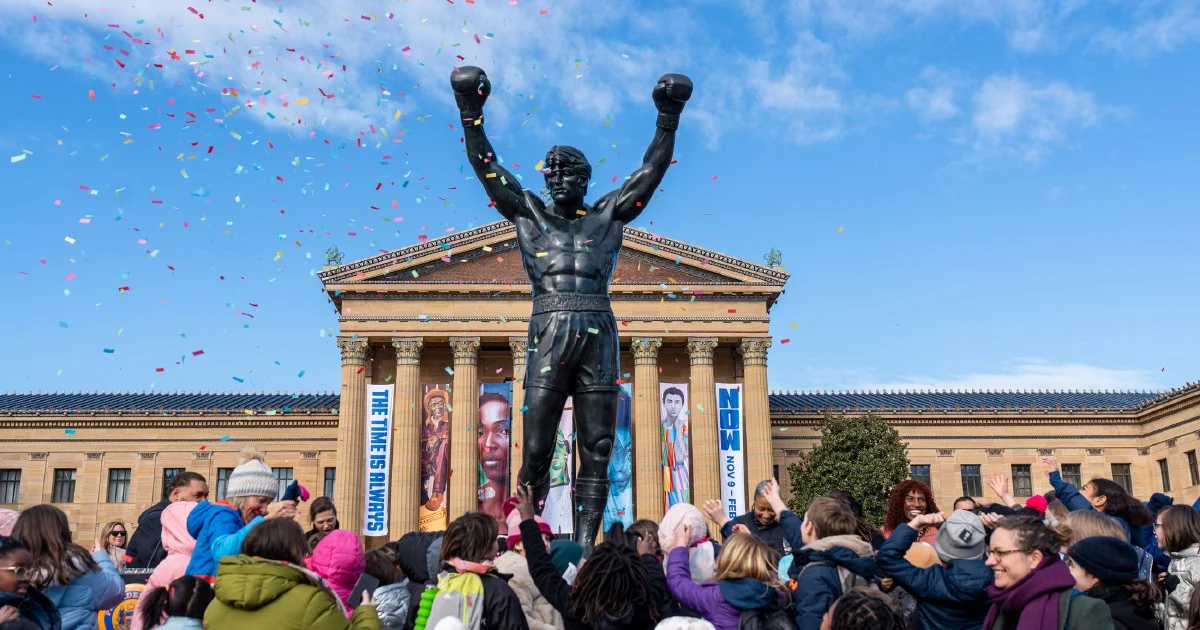
French supporters preparing to descend on Philadelphia for World Cup matches received an unusual caution on Saturday: steer clear of the city's celebrated Rocky Balboa monument. Authorities and local residents have grown increasingly protective of the bronze statue following what appears to be a troubling pattern of sporting defeats and mishaps connected to international teams whose fans have dressed the sculpture in their national colours.
The Rocky Balboa statue, immortalising the fictional boxer from Sylvester Stallone's beloved film series, has become one of Philadelphia's most recognisable landmarks since its installation decades ago. Positioned prominently in the urban landscape, the figure has attracted millions of visitors and increasingly become a focal point for international sports supporters visiting the city. However, this heightened attention has also sparked concerns about the statue's condition and, more superstiously, its alleged link to sporting calamities.
The warning issued to France's travelling supporters reflects a growing body of anecdotal evidence suggesting that teams whose fans have adorned the statue with scarves, jerseys, or other memorabilia have subsequently experienced poor World Cup performances. While such correlations defy rational explanation, the consistency of negative outcomes has given the idea sufficient credibility that local officials now actively discourage the practice. The curse, if it exists, operates as a form of reverse psychology—by attempting to boost their team's fortunes through symbolic acts at the statue, supporters may inadvertently invite misfortune upon their nation's campaign.
Philadelphia's relationship with sports iconography runs deep. The city has long venerated symbols of athletic determination, and the Rocky statue epitomises the city's working-class ethos and underdog spirit. Yet this cultural reverence has come with an unexpected consequence: the monument has become something of a good-luck totem for visiting sports fans, who believe that leaving their mark upon it might transfer some of Rocky's fighting spirit to their teams. The reality, according to observers who have tracked these incidents, suggests the opposite dynamic at play.
For Malaysian readers familiar with their own regional superstitions surrounding luck and sporting success, the Philadelphia phenomenon offers a curious parallel. Southeast Asian sports culture embraces numerous rituals and beliefs about attracting fortune, and the notion that interfering with a symbolic monument might provoke negative consequences aligns with deeply rooted cultural understandings about respecting significant objects and spaces. The warning to France fans thus speaks to a universal human tendency to seek explanations for unexpected losses through supernatural frameworks.
Several national teams have fallen victim to poor performances in World Cup campaigns following incidents involving the Rocky statue. The pattern has become sufficiently notable that travel guides and unofficial supporter group communications now routinely mention the phenomenon, transforming what might initially seem like a humorous urban legend into a genuine consideration for football fans planning their Philadelphia visits. The statistical coincidence—or genuine curse, depending on one's perspective—has acquired enough cultural resonance to influence actual supporter behaviour.
The French national team approaches the World Cup with considerable expectations and historical pedigree. Adding an additional variable of risk, however minor, represents an unwelcome complication for a squad already navigating the intense pressures inherent in international football competition. Whether France's supporters take the warning seriously remains to be seen, but the very existence of such a caution demonstrates how even the most secular modern sporting events retain surprising connections to superstition and folk belief.
Philadelphia authorities have essentially embraced the mythology surrounding the statue as a protective mechanism. By publicly warning visiting supporters against touching or dressing the monument, they simultaneously protect the statue from damage whilst also leveraging the curse narrative as a deterrent. This pragmatic approach recognises that international supporters will visit the statue regardless of official guidance, but framing the contact as potentially harmful to their own team provides a powerful incentive for restraint.
The Rocky statue phenomenon also reflects broader dimensions of how iconic urban landmarks become cultural artefacts extending far beyond their original commemorative purpose. What began as a tribute to a fictional character has evolved into a complex symbol carrying multiple layers of meaning for different communities and visitors. For sports supporters, the statue represents both a tangible connection to the cities they visit and a potential source of fortune—or, increasingly, misfortune.
As France's World Cup campaign unfolds, observers will undoubtedly monitor whether the team's supporters heed the warning or risk invoking the curse. Regardless of the outcome, the Rocky statue curse has secured its place in World Cup folklore, joining the long list of superstitions that accompany international sporting competitions. Whether grounded in genuine pattern recognition or pure coincidence, such beliefs add an intangible dimension to the already complex psychology surrounding high-stakes football tournaments.
%22%2F%3E%3C%2Fpattern%3E%3C%2Fdefs%3E%3Crect%20width%3D%22100%25%22%20height%3D%22100%25%22%20fill%3D%22url(%23phaey7g)%22%2F%3E%3Crect%20width%3D%22100%25%22%20height%3D%22100%25%22%20fill%3D%22url(%23phaey7p)%22%2F%3E%3Ctext%20x%3D%2250%25%22%20y%3D%2250%25%22%20text-anchor%3D%22middle%22%20dominant-baseline%3D%22central%22%20fill%3D%22rgba(255%2C255%2C255%2C0.95)%22%20font-family%3D%22Georgia%2C%20'Times%20New%20Roman'%2C%20serif%22%20font-weight%3D%22700%22%20font-size%3D%22170%22%20letter-spacing%3D%22-0.02em%22%3EKelantan%3C%2Ftext%3E%3C%2Fsvg%3E)