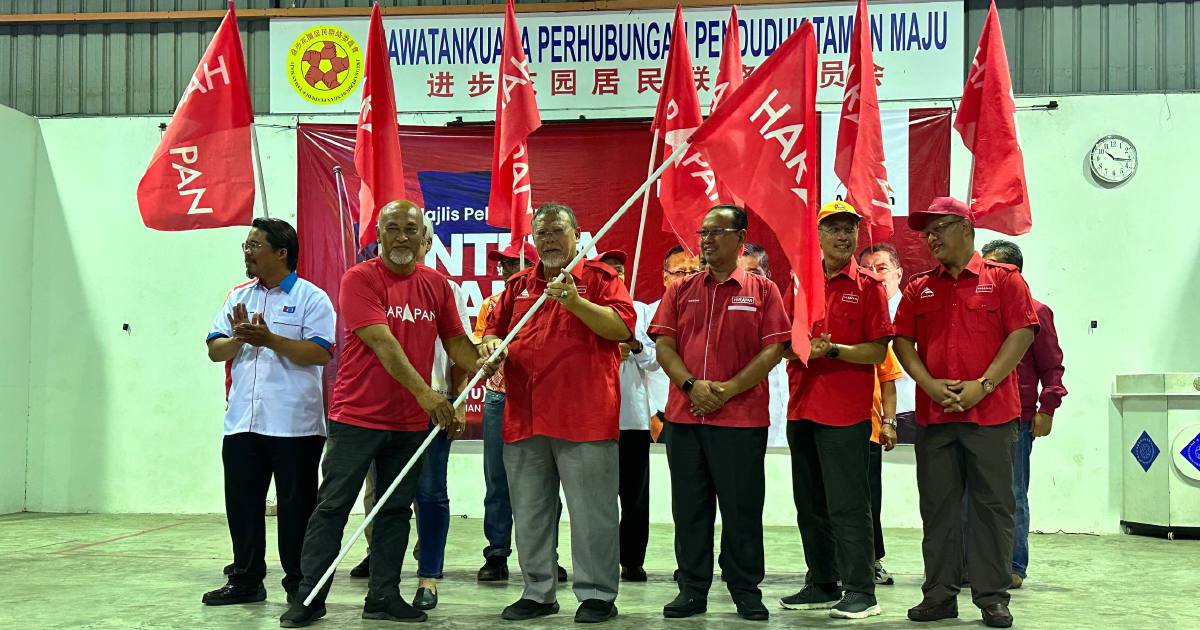
The PKA faction of Johor Amanah has signalled ambitious expectations ahead of the imminent state election, expressing confidence that it will secure at least six seats from the ten constituencies it is fielding candidates in across the northern zone. The party leadership made these assertions during campaign activities in Batu Pahat, underscoring their conviction that recent organisational efforts and grassroots mobilisation have positioned them competitively across their target areas.
The July 11 state election represents a critical juncture for Johor's political landscape, with multiple coalitions and independent actors vying for control of the state assembly. Amanah's focus on the northern corridor reflects both the demographic concentration of voters in that region and the party's assessment of where its ground support remains strongest. The ten seats it is contesting encompass a significant portion of the northern zone's total representation, suggesting the party views this geography as central to its overall electoral prospects.
For Malaysian observers, Amanah's positioning in Johor carries broader implications for the Pakatan Harapan coalition's viability at state level. The party's performance will serve as a barometer of whether the federal opposition alliance maintains traction in peninsular Malaysia's second-largest state, particularly as internal dynamics within and across coalitions continue to shift. Amanah's ability to translate its stated confidence into actual seat gains will influence calculations about Johor's political direction in coming years.
The northern zone's composition makes it strategically vital for any party seeking to dominate state politics. Constituencies in this region typically feature mixed urban and semi-rural demographics, with significant Malay and Indian communities alongside Chinese enclaves. This demographic diversity requires campaigns calibrated to address varied economic concerns and community priorities, from agricultural livelihoods to industrial employment and small business sustainability.
Amanah's electoral strategy appears to rest on consolidating support among three constituencies: established party members, swing voters disenchanted with incumbent administrations, and younger voters seeking alternatives to traditional political establishments. The party's messaging from Batu Pahat emphasised grassroots connection and responsiveness to local concerns, themes designed to resonate with constituencies that may feel neglected by larger, more centralised political machines.
Historically, Amanah has performed variably across different state elections since its formation in 2015. The party's trajectory in Johor will be watched closely by political analysts seeking to understand whether the Pakatan coalition possesses genuine depth beyond its federal strongholds, or whether its state-level presence remains brittle and dependent on transient voter sentiment. A six-seat harvest would constitute a respectable showing but hardly a transformative result in a 56-member assembly.
The timing of Johor's election, occurring well into the Anwar Ibrahim administration's tenure at federal level, allows voters to assess the government's performance across a full range of policy domains. State elections frequently serve as mid-term referendums on incumbent performance, and Johor's verdict on July 11 will carry signals about national political trajectories. Amanah's specific performance will indicate whether the party has successfully carved out a distinct political space or remains overshadowed by larger component parties within the ruling coalition.
Regional considerations also matter. As Southeast Asia's most developed state economically, Johor's political complexion influences not only Malaysian politics but also cross-border dynamics with Singapore and Indonesia. An election outcome that substantially reconfigures Johor's political balance could affect bilateral relations and regional economic coordination, particularly as regional supply chains and cross-border commerce remain sensitive to policy discontinuities.
Amanah's confidence regarding its northern zone performance, if borne out in actual results, would represent a meaningful consolidation of the party's position as a serious contender in state-level politics. The party has invested substantially in organisational development and candidate recruitment across multiple election cycles, and the July 11 contest will reveal whether these investments are yielding electoral dividends. For voters in target constituencies, Amanah's campaign represents a choice between incumbent administration and an alternative vision of state governance, with specific implications for local development priorities and resource allocation.
The weeks leading to July 11 will likely see intensifying campaign activity across all ten contested constituencies, with Amanah's messaging emphasising both local connection and alignment with federal policy directions. The party's actual performance will provide crucial intelligence about voter preferences at state level and about the sustainability of current political configurations as Malaysia approaches subsequent electoral cycles. Whether Amanah's optimism proves justified will become clear when votes are counted.
%22%2F%3E%3C%2Fpattern%3E%3C%2Fdefs%3E%3Crect%20width%3D%22100%25%22%20height%3D%22100%25%22%20fill%3D%22url(%23ph1d5l8g)%22%2F%3E%3Crect%20width%3D%22100%25%22%20height%3D%22100%25%22%20fill%3D%22url(%23ph1d5l8p)%22%2F%3E%3Ctext%20x%3D%2250%25%22%20y%3D%2250%25%22%20text-anchor%3D%22middle%22%20dominant-baseline%3D%22central%22%20fill%3D%22rgba(255%2C255%2C255%2C0.95)%22%20font-family%3D%22Georgia%2C%20'Times%20New%20Roman'%2C%20serif%22%20font-weight%3D%22700%22%20font-size%3D%22151%22%20letter-spacing%3D%22-0.02em%22%3EPerikatan%3C%2Ftext%3E%3C%2Fsvg%3E)