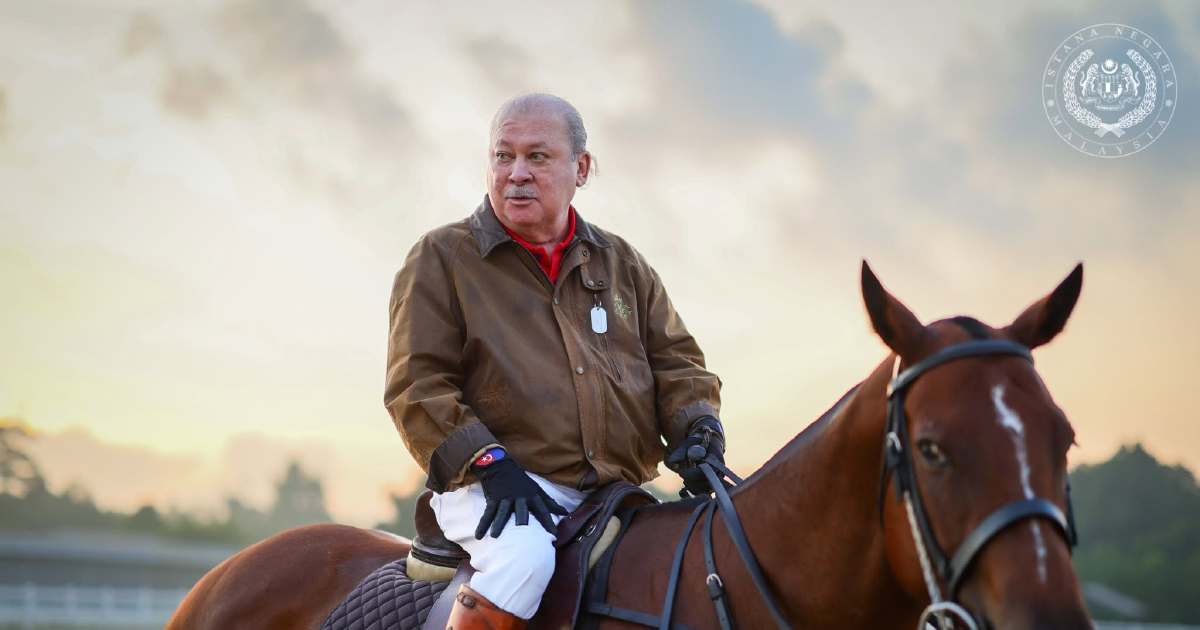
His Majesty Sultan Ibrahim, King of Malaysia, demonstrated unwavering dedication to his fitness regimen by riding horses at the Royal Johor Polo Club in Istana Pasir Pelangi today, moving at a steady and comfortable pace that reflected both his equestrian skill and deliberate approach to physical wellness.
The morning session at the prestigious equestrian venue underscores the monarch's disciplined commitment to maintaining personal health through activities that have long been associated with both leisure and physical conditioning among Malaysia's royal families. Horse riding, a pursuit deeply rooted in the traditions of Johor's sultanate, offers significant cardiovascular and muscular benefits while serving as a meditative practice for many practitioners.
The Royal Johor Polo Club, located within the grounds of Istana Pasir Pelangi, has historically served as a centre for equestrian excellence and royal sporting activities in the state. The facility maintains high standards for horsemanship and animal care, making it an ideal venue for the King's continued engagement with this traditional practice. The club's prominence in Johor's cultural and recreational landscape reflects the enduring importance of equestrian pursuits within the state's heritage.
Maintaining regular physical activity routines is particularly significant for national leaders, as such practices demonstrate commitment to sustained energy and mental acuity necessary for the demands of constitutional monarchy. The King's visible engagement in outdoor fitness activities also sends important public health messaging, particularly in Southeast Asia where sedentary lifestyles increasingly pose health challenges across populations.
The calm and relaxed demeanour observed during today's riding session suggests an approach to fitness that prioritises sustainable wellness rather than intensive strain. This methodical approach aligns with contemporary understanding of optimal health maintenance, where consistency and moderation often yield superior long-term outcomes compared to sporadic intensive efforts. Such practices become especially important as individuals advance in age and responsibility.
Since his installation as Malaysia's sixteenth Yang di-Pertuan Agong in October 2023, His Majesty has balanced the significant ceremonial and constitutional obligations of the nation's highest office with personal wellness activities. These regular equestrian engagements provide essential opportunities for the King to maintain physical fitness while remaining closely connected to Johor, his home state, where he has deep historical roots and continuing responsibilities.
The visible continuance of this routine reassures both the Malaysian public and international observers regarding the King's robust health and capacity to fulfil his constitutional duties. Regular public appearances engaged in physical activities help dispel any concerns about the health and vitality of national leadership, contributing to broader confidence in Malaysia's political stability and institutional continuity.
Equestrian activities hold particular cultural significance across Southeast Asia, representing not merely sporting pursuits but connections to historical traditions and refined horsemanship. In Malaysia's context, such activities link contemporary monarchical practice to centuries of sultanate heritage, particularly within Johor where the institution has wielded both ceremonial and administrative significance throughout the region's modern history.
The Royal Johor Polo Club itself serves broader functions beyond individual recreation, hosting international competitions and social events that promote diplomatic engagement and cultural exchange. The facility's role in supporting the King's regular activities contributes to its standing as a premier equestrian centre within the Southeast Asian region, attracting interest from international horsemanship communities and strengthening Johor's reputation for excellence in sporting and cultural affairs.
For Malaysian observers, the King's sustained engagement with personal fitness activities provides reassuring consistency in institutional leadership. Regular physical exercise by senior figures demonstrates practical commitment to longevity and sustained capability, qualities increasingly recognised as essential for effective governance in demanding contemporary environments. The King's commitment to his morning routine reflects broader values of discipline, dedication, and personal responsibility that align with expectations for national leadership.