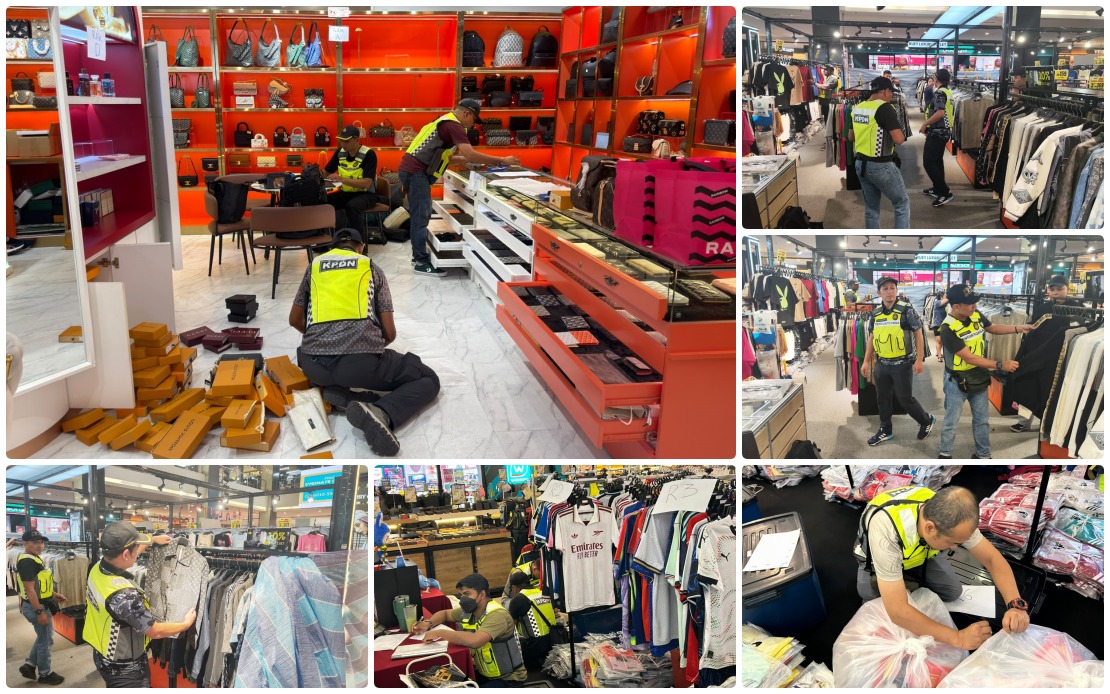
Malaysia's Ministry of Domestic Trade and Cost of Living (KPDN) has dealt a significant blow to counterfeit trading networks operating in Johor Bahru, seizing suspected fake branded goods valued at RM600,000 during coordinated raids conducted on three separate premises. The enforcement action, carried out by the Putrajaya Enforcement Division on June 15, represents an escalation in the ministry's efforts to combat the widespread sale of illegally trademarked products that continue to proliferate across Malaysian retail channels.
According to Datuk Azman Adam, the enforcement director-general of KPDN, the operation culminated from an intensive month-long intelligence-gathering period that tracked traders operating through established supermarket chains whilst simultaneously functioning as wholesalers supplying goods to downstream retailers. This dual-channel distribution approach has become increasingly common among counterfeit operations, which leverage the credibility of mainstream retail environments to reach consumers whilst maintaining networks of smaller merchants who handle direct sales to the public. The scale of such operations underscores the sophisticated logistics involved in moving fake merchandise through Malaysia's distribution infrastructure.
The confiscated inventory reveals the breadth of product categories being counterfeited, spanning fashion accessories including handbags, wallets, and belts alongside luxury consumables such as perfumes and clothing items. The diversity of seized merchandise indicates that these operations maintain supplier relationships capable of sourcing multiple categories of trademarked goods, suggesting connections to transnational counterfeiting networks rather than isolated local production. Business documentation recovered during the raids has been impounded to trace the operational structure and identify upstream suppliers and downstream distribution networks that may have received goods from these premises.
Four local nationals, including the business proprietor and facility manager, have been detained to assist ongoing investigations into the operations. Their cooperation with authorities will prove crucial in determining the full extent of the distribution chain, the duration of illegal trading activities, and the identities of associated parties who may have facilitated procurement, logistics, or retail placement of the counterfeit items. The detention of management personnel signals KPDN's determination to pursue accountability beyond frontline retailers to encompass decision-makers and operational overseers.
The initial examination of seized goods, conducted jointly with representatives of the trademark-holding companies, established reasonable grounds for believing that offences under Section 102(1)(c) of the Trademark Act 2019 were committed. This particular provision addresses the unlawful possession, custody, or control of goods bearing improperly applied trademarks with intent for commercial purposes. The involvement of trademark owners' representatives in the verification process strengthens the evidentiary foundation for prosecution and ensures that brand protection stakeholders actively participate in intellectual property enforcement.
The Trademark Act 2019 framework provides substantial penalties designed to deter participation in counterfeiting enterprises at all operational levels. Individual offenders face maximum fines of RM10,000 per counterfeit item or imprisonment stretching up to three years for initial convictions, with enhanced penalties of RM20,000 per item or five-year imprisonment for repeat offences. Corporate entities confront considerably steeper financial consequences, with initial-offence fines reaching RM15,000 per item and escalating to RM30,000 per item for subsequent breaches, creating powerful financial disincentives for institutional participation in trademark infringement.
For Malaysian consumers, the proliferation of counterfeit goods extends beyond brand deception to encompass genuine health and safety hazards. Counterfeit luxury products, particularly perfumes and cosmetics, frequently employ substandard or harmful chemical compositions that circumvent quality control requirements binding legitimate manufacturers. Consumers purchasing these items unknowingly expose themselves to potential allergic reactions, skin damage, or contaminated substances. The RM600,000 seizure potentially spared thousands of Malaysians from acquiring unsafe products marketed under trusted brand names, demonstrating enforcement's practical consumer-protection dimensions.
From an intellectual property perspective, counterfeiting represents a substantial threat to Malaysian trademark holders and international brand owners operating within the country. The existence of established counterfeit distribution channels operating through supermarket networks indicates demand dynamics and supply-chain vulnerabilities that brand owners must continuously monitor and address through enforcement collaboration. The involvement of KPDN's Putrajaya Enforcement Division alongside private brand representatives exemplifies the partnership model increasingly necessary to combat sophisticated counterfeiting operations.
Datuk Azman Adam's explicit commitment that KPDN will intensify enforcement activities and maintain zero tolerance toward intellectual property violations signals institutional determination to sustain pressure against counterfeit trade. This reinforced enforcement posture arrives as Malaysia seeks to strengthen its intellectual property protection framework, relevant both to domestic brand interests and to international trade obligations under agreements like the Regional Comprehensive Economic Partnership. Consistent enforcement operations communicate to potential counterfeiters that Malaysian authorities possess detection capabilities, investigative resources, and prosecutorial will to impose meaningful consequences.
The geographic concentration of this operation in Johor Bahru, a major commercial hub proximate to Singapore, reflects awareness among enforcement authorities regarding cross-border counterfeiting dynamics. Johor's position as a logistics gateway renders it particularly susceptible to counterfeit goods transiting through regional networks, making localized enforcement efforts strategically important for interrupting supply chains before distribution expands into peninsular Malaysia. Future KPDN operations targeting counterfeiting may increasingly focus on key geographic nodes where international supply chains intersect with domestic retail infrastructure.
Looking forward, the scale and coordination evident in this three-location enforcement action suggests that KPDN possesses expanding investigative sophistication and inter-agency collaboration capacity. The transition from reactive complaint-based interventions toward proactive intelligence-led operations marks institutional evolution capable of addressing counterfeiting as an organized commercial enterprise rather than isolated retail violations. As Southeast Asian counterfeiting networks grow increasingly complex, Malaysian enforcement capability development becomes essential for protecting both domestic business interests and consumer welfare across the region.
%22%2F%3E%3C%2Fpattern%3E%3C%2Fdefs%3E%3Crect%20width%3D%22100%25%22%20height%3D%22100%25%22%20fill%3D%22url(%23ph3sm85g)%22%2F%3E%3Crect%20width%3D%22100%25%22%20height%3D%22100%25%22%20fill%3D%22url(%23ph3sm85p)%22%2F%3E%3Ctext%20x%3D%2250%25%22%20y%3D%2250%25%22%20text-anchor%3D%22middle%22%20dominant-baseline%3D%22central%22%20fill%3D%22rgba(255%2C255%2C255%2C0.95)%22%20font-family%3D%22Georgia%2C%20'Times%20New%20Roman'%2C%20serif%22%20font-weight%3D%22700%22%20font-size%3D%22226%22%20letter-spacing%3D%22-0.02em%22%3ERussia%3C%2Ftext%3E%3C%2Fsvg%3E)