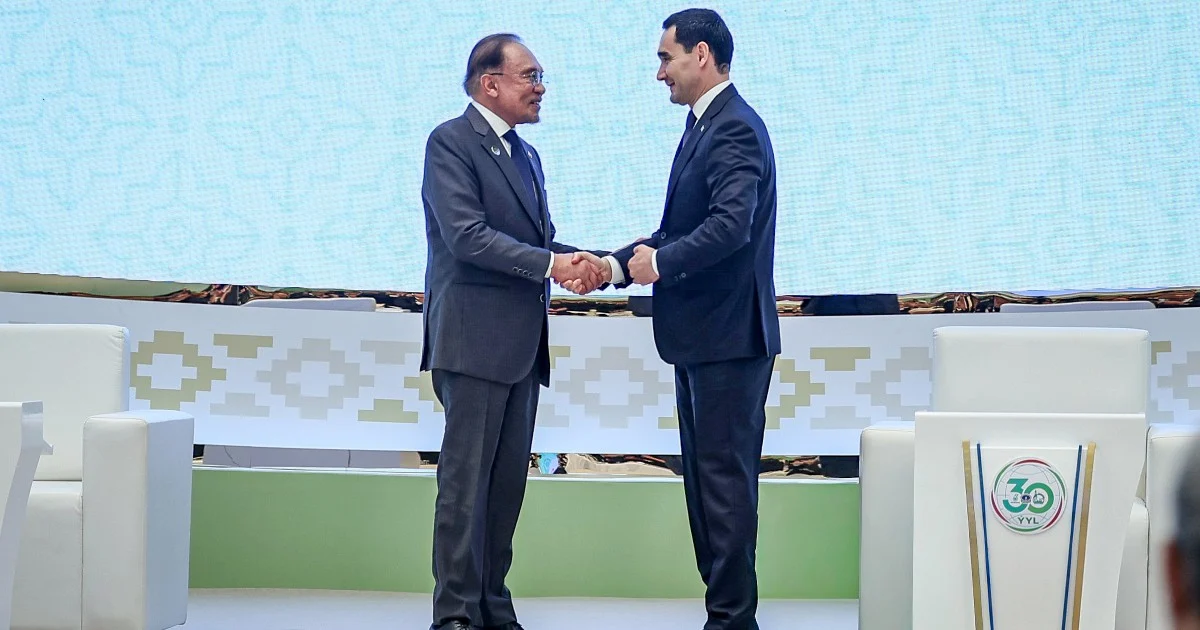
Malaysia and Turkmenistan have signalled their intent to forge a more substantial partnership spanning energy security, trade expansion, and technological advancement, cementing ties through a series of commitments made during Prime Minister Datuk Seri Anwar Ibrahim's official state visit to the Central Asian nation. The visit marks a significant diplomatic development for Southeast Asia's largest economy as it looks to diversify its international relationships beyond traditional trading partners and strengthen positioning in emerging markets across the broader Asian region.
The energy sector forms the cornerstone of the renewed bilateral relationship, reflecting Malaysia's ongoing quest to secure reliable energy sources while Turkmenistan seeks to expand its export markets and technical partnerships. For Malaysia, access to Turkmenistan's hydrocarbon resources could offer strategic advantages as the country navigates evolving global energy dynamics and seeks to balance its domestic consumption needs with longer-term sustainability objectives. Turkmenistan, a nation rich in natural gas reserves, sees Malaysia as an important gateway to Southeast Asian markets and a potential partner for downstream energy investment and liquefied natural gas ventures.
Beyond the energy portfolio, both nations have identified substantial opportunities in trade and investment corridors. The framework for expanded commercial engagement encompasses goods trade, service exports, and joint ventures in sectors where each nation brings complementary strengths. For Malaysian enterprises, Turkmenistan represents an underexplored market with growing demand for manufactured goods, logistics services, and technology solutions. Conversely, Turkmen investors are increasingly interested in Malaysia's relatively mature financial systems, established infrastructure, and positioning as a regional business hub with strong governance frameworks.
Transportation infrastructure development emerged as another pillar of cooperation, addressing the geographic distance between the two nations while facilitating smoother movement of goods and services. Improved logistics connections—whether through air freight corridors, maritime routes via intermediary hubs, or digital supply chain platforms—would lower transaction costs and enable more efficient commerce. This dimension also connects to Malaysia's broader regional infrastructure ambitions and its participation in trans-Asian connectivity projects linking Southeast Asia with Central Asia and beyond.
Educational and cultural exchange programmes form an important but often underestimated element of the partnership framework. By facilitating student mobility, academic research collaborations, and professional training initiatives, both countries can build human capital and foster people-to-people connections that support long-term diplomatic and economic relationships. Such exchanges create networks of professionals and leaders who understand both cultures, smoothing business negotiations and reducing friction in future collaborations.
Technology cooperation represents a forward-looking dimension of the agreement, positioning both nations to benefit from digital transformation and innovation. Malaysia's advanced tech sector, including expertise in fintech, e-commerce, and digital services, aligns well with Turkmenistan's modernisation agenda. Collaborative projects in telecommunications infrastructure, smart city development, and digital governance could accelerate Turkmenistan's development while opening market opportunities for Malaysian technology companies and service providers.
Prime Minister Anwar's personal engagement in the visit underscores Malaysia's commitment to elevating bilateral ties beyond routine diplomatic courtesy. High-level visits signal political will and create momentum for concrete implementation of agreed frameworks, encouraging government agencies and private sector stakeholders to translate commitments into actionable projects and measurable outcomes. The Prime Minister's presence also reflects recognition that Turkmenistan, despite its smaller global profile, occupies an important position in Central Asia with significant resource wealth and strategic geopolitical relevance.
For Malaysian policymakers, deepening ties with Turkmenistan aligns with Malaysia's broader foreign policy objectives of maintaining balanced international relationships and maximising economic opportunities in a multipolar world. As Malaysia navigates relationships with major powers and traditional allies, partnerships with Central Asian nations diversify its diplomatic portfolio and reduce dependence on any single relationship. This strategic diversification has become increasingly important as geopolitical tensions and trade complexities reshape global commerce patterns.
The timing of enhanced Malaysia-Turkmenistan cooperation reflects broader regional trends, including growing interest from Southeast Asian nations in engaging Central Asian countries for trade, energy, and investment purposes. Regional organisations like the ASEAN Regional Forum and emerging platforms for Asia-wide cooperation have created diplomatic space for bilateral relationships that might otherwise receive limited attention. Turkmenistan's gradual opening to international partnerships, though measured compared to some regional peers, has created receptiveness to collaboration with established regional economies like Malaysia.
Implementation of the agreed frameworks will require sustained attention from both governments and active participation by private sector stakeholders. Establishing working groups, regular bilateral consultations, and clear timelines for major projects will help maintain momentum beyond the initial enthusiasm that follows high-level visits. Malaysian companies interested in energy investments, infrastructure development, or technology partnerships should begin exploring opportunities and building relationships with Turkmen counterparts and government agencies.
Looking forward, the Malaysia-Turkmenistan partnership may serve as a foundation for broader Southeast Asian engagement with Central Asia. Successful collaboration in energy, trade, and technology could inspire similar initiatives between other ASEAN members and Central Asian partners, gradually constructing a more integrated Asian economic landscape. For Malaysia specifically, Turkmenistan represents both an immediate source of energy diversification and a symbolic gateway to wider Central Asian opportunities that could reshape its long-term strategic positioning in the Asian region.