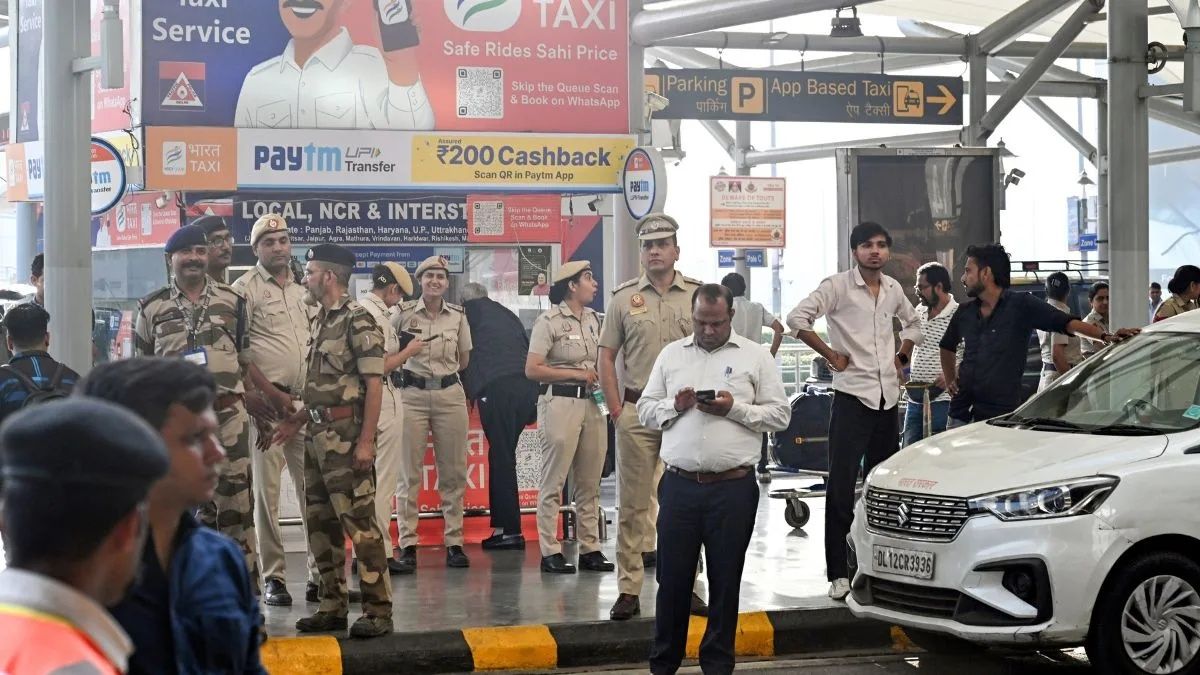
A significant breakthrough in cross-border counter-terrorism cooperation has emerged with the deportation of two suspected operatives from Malaysia to India. Punjab Police, working alongside central security agencies and the Royal Malaysia Police, arrested Gurvinder Singh of Ambala and Manjit Singh of Patiala upon their arrival at Delhi's Indira Gandhi International Airport. The coordinated operation underscores growing security coordination between Southeast Asian nations and India in dismantling overseas networks believed to be funnelling support to banned militant organisations.
According to Punjab Director General of Police Gaurav Yadav, the deportation formed part of a broader intelligence-driven campaign aimed at disrupting international terror-support infrastructure. The operation focused specifically on uncovering how the banned Khalistan Zindabad Force maintained operational capability through external funding channels and coordination mechanisms. Such international networks have become a persistent security concern for Punjab, with terrorist organisations increasingly relying on diaspora funding and overseas operational bases to sustain activities within Indian territory.
The investigation that led to these arrests originated from a series of alarming security incidents targeting Punjab's critical infrastructure. In January this year, authorities detected an improvised explosive device near Sirhind in Fatehgarh Sahib district, followed by another attempted explosion near Shambhu in Patiala district in late April. These incidents, security officials believe, formed part of a coordinated campaign to destabilise the region. The subsequent probe into these terror modules began revealing a complex network of operatives working in concert across multiple locations.
Police investigations into the terror modules uncovered substantial quantities of weaponry and explosives, suggesting a well-resourced operation. The recovered arsenal included an RPG launcher, improvised explosive devices, RDX, hand grenades, sophisticated pistols, and large quantities of ammunition. The scale and nature of these discoveries indicated that the operatives had access to considerable financial resources and international procurement networks. Such sophisticated weaponry and explosives capability points to organised planning rather than isolated militant activity.
Financial investigations proved crucial in tracing the operation's international dimensions. Security agencies discovered that funds supporting the terror modules were being routed through foreign channels rather than domestic sources. This finding prompted authorities to pursue leads extending beyond India's borders, eventually directing their attention to Malaysia as a key operational hub. The existence of formal financial corridors for terror funding reveals how banned organisations have adapted to counter-terror financing measures, creating layered and sophisticated money movements difficult to detect through conventional monitoring.
The two arrested individuals allegedly played central roles in managing this international financial network from Malaysian soil. Investigators believe they were instrumental in coordinating financial transfers to operatives based in Punjab, effectively serving as overseas handlers for the banned outfit. Their positions within the Malaysian-based network suggest they occupied mid-level operational positions, potentially answerable to senior commanders elsewhere. The deportation of these two men is likely to provide security agencies with crucial intelligence regarding the wider command structure and financing mechanisms.
The Dedicated Freight Corridor, a critical national infrastructure project, emerged as a particular target of the suspected terror modules. Railway infrastructure attacks represent a longstanding concern for Indian security agencies, as they can cause mass casualties and create widespread economic disruption. The fact that terror modules were specifically targeting this corridor suggests coordinated strategy rather than random violence. Such targeting of national infrastructure indicates sophistication in threat assessment and operational planning.
The cooperation between Malaysia and India in this case demonstrates the effectiveness of bilateral security arrangements in Southeast Asia. The Royal Malaysia Police's cooperation in identifying, locating, and deporting the suspected operatives shows how regional nations increasingly view counter-terrorism as a shared responsibility. For Malaysia, which hosts significant Sikh communities and has previously dealt with various militant and separatist movements, cooperation on such cases represents prudent border security management. The successful deportation provides a template for future inter-agency cooperation on terror-related matters.
Following their arrival in India, the accused were presented before courts in Patiala and remanded to police custody for interrogation. Law enforcement agencies are now examining their alleged connections with other associates within both Malaysia and India. The interrogation phase promises to yield significant intelligence regarding the wider network of operatives, financiers, and logistical supporters spanning multiple countries. Security officials indicated that investigation efforts continue to map the complete operational structure, from overseas financiers through to ground-level operatives.
The case highlights evolving patterns in militant funding and coordination, where banned organisations leverage international networks to bypass domestic security measures. Rather than relying solely on local fundraising or state sponsorship, groups like the Khalistan Zindabad Force increasingly depend on diaspora networks, cryptocurrency platforms, and informal money transfer systems. Such decentralised financing approaches present new challenges for counter-terrorism agencies accustomed to monitoring traditional banking channels and formal financial institutions.
For Southeast Asian nations like Malaysia, this case carries particular significance given the region's role as a transit hub for both legitimate commerce and illicit activities. The presence of alleged KZF operatives in Malaysia raises questions about how such individuals evade detection and establish operational bases within relatively developed surveillance environments. Future regional security cooperation will likely involve enhanced information sharing regarding suspicious individuals, particularly those suspected of supporting banned organisations.
Security officials in Punjab emphasised their commitment to dismantling terror-support structures and disrupting illegal funding networks. The successful cross-border operation provides momentum for ongoing investigations into other suspected networks. As authorities continue tracing the complete chain of operatives and financiers, they anticipate uncovering additional individuals and coordination points. The interrogation of the two arrested operatives will prove critical in determining the scope and sophistication of international terror-financing networks operating from Southeast Asia.
The deportation represents a tactical success in an ongoing strategic struggle against militant financing and overseas support networks. However, security analysts note that the underlying drivers of separatist militancy in Punjab remain largely unaddressed. Unless root causes of recruitment and radicalisation are tackled alongside law enforcement operations, disrupting one network may prompt regrouping rather than fundamental decline in militant activity. The case thus illustrates both the capabilities of modern counter-terrorism cooperation and the limitations of enforcement-only approaches to complex security challenges.
%22%2F%3E%3C%2Fpattern%3E%3C%2Fdefs%3E%3Crect%20width%3D%22100%25%22%20height%3D%22100%25%22%20fill%3D%22url(%23ph3sm85g)%22%2F%3E%3Crect%20width%3D%22100%25%22%20height%3D%22100%25%22%20fill%3D%22url(%23ph3sm85p)%22%2F%3E%3Ctext%20x%3D%2250%25%22%20y%3D%2250%25%22%20text-anchor%3D%22middle%22%20dominant-baseline%3D%22central%22%20fill%3D%22rgba(255%2C255%2C255%2C0.95)%22%20font-family%3D%22Georgia%2C%20'Times%20New%20Roman'%2C%20serif%22%20font-weight%3D%22700%22%20font-size%3D%22226%22%20letter-spacing%3D%22-0.02em%22%3ERussia%3C%2Ftext%3E%3C%2Fsvg%3E)