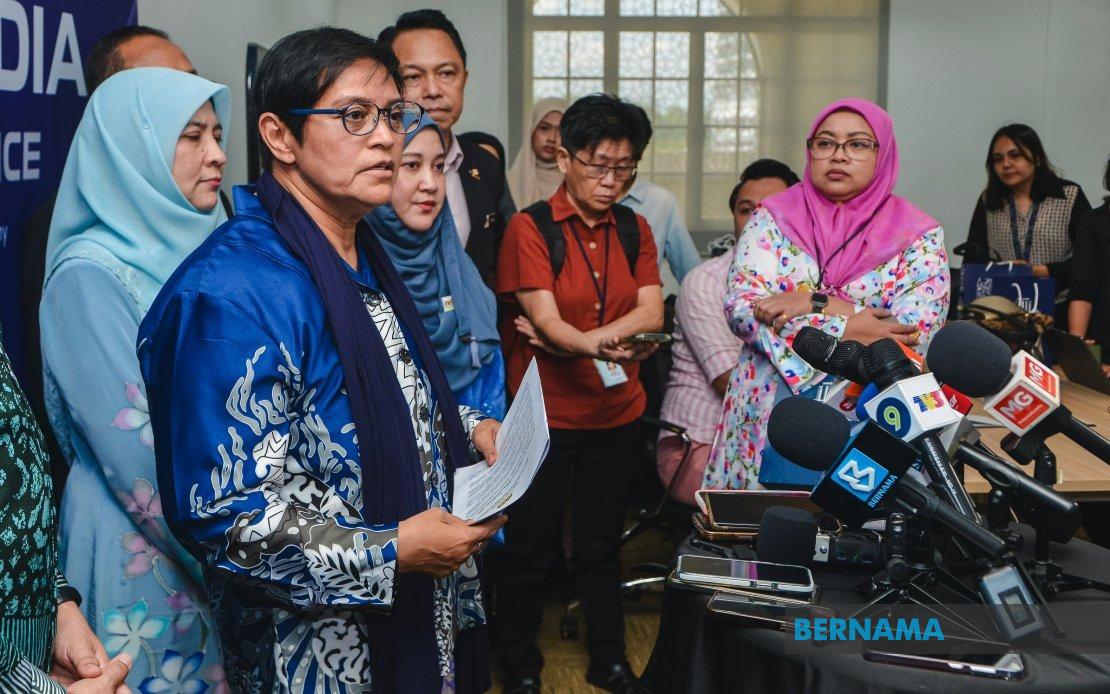
Malaysia has enacted a landmark anti-bullying law that fundamentally reshapes how the country addresses youth misconduct by extending legal accountability to parents and family members. The Anti-Bullying Act 2026, unveiled by Datuk Seri Azalina Othman Said, the Minister in the Prime Minister's Department (Law and Institutional Reform), introduces a novel concept of shared family responsibility that departs significantly from traditional criminal law frameworks where only the perpetrator faces prosecution.
The legislation's most distinctive feature is its provision for parental joint liability, a mechanism that holds mothers and fathers legally responsible alongside their children for bullying incidents. This approach fundamentally alters the legal landscape in Malaysia, as most criminal statutes traditionally focus accountability solely on the individual offender. The new framework extends consequences beyond the bullying child to encompass financial penalties and other sanctions binding on the entire family unit, representing a philosophical shift toward collective responsibility within households.
Under the Act's provisions, parents are not merely morally implicated but legally exposed to financial liabilities, particularly regarding fines and related penalties imposed through the tribunal system. This structure assumes that parental involvement, oversight, and financial consequences will create stronger incentives for families to prevent bullying behaviour before it escalates. Azalina emphasized that the government views this as a mechanism to heighten awareness among families about the gravity of bullying and the tangible legal consequences that extend beyond the child offender.
The impetus for this legislation stems from mounting concern about bullying incidents across Malaysia, with authorities pointing to increasingly alarming trends and tragic outcomes, including fatalities. Schools, dormitories, and online platforms have become sites of bullying that sometimes culminate in self-harm or loss of life, prompting policymakers to consider stronger deterrents and intervention mechanisms. The establishment of the Anti-Bullying Tribunal represents the government's institutional response to this crisis, signalling that bullying will no longer be treated as a minor disciplinary matter confined to school management.
The tribunal's operational structure reflects efforts to maximize accessibility and effectiveness. With 56 appointed members comprising legal experts and specialists in child psychology and welfare, the tribunal combines legal expertise with understanding of adolescent behaviour and dynamics. Rather than centralizing all proceedings in courtrooms, the tribunal operates through a distributed system, leveraging facilities nationwide including school premises, Legal Aid Department offices, and digital platforms to reduce barriers to justice for complainants.
Six designated hearing zones spanning physical and virtual facilities have been strategically positioned across Malaysia to ensure that geographic location does not prevent victims from accessing justice. This decentralized approach acknowledges that bullying often occurs in communities distant from major urban centres, and that victims may lack resources to travel for legal proceedings. The tribunal's capacity to conduct online hearings and satellite proceedings represents modernization of justice delivery, enabling testimony and case management through digital channels where appropriate.
Crucially, the legislation empowers victims to bypass institutional hierarchies by filing complaints directly with the tribunal without requiring permission or intermediation from schools or hostel authorities. This provision addresses longstanding criticisms that institutional management of bullying complaints sometimes prioritizes reputation over victim protection or justice. Victims who experience bullying outside institutional settings—in neighbourhoods, on public transport, or through social media—may now access the tribunal independently, expanding the law's scope beyond the traditional school-focused narrative.
To facilitate complaint submission and case registration, authorities have developed a public online portal enabling victims and their families to initiate proceedings remotely. This digital infrastructure acknowledges that accessibility encompasses not only geographic reach but also ease of engagement with formal systems. Young people and families previously deterred by complex procedural requirements or unfamiliarity with courts may find online registration more approachable, potentially expanding participation in the tribunal system among demographics that historically underutilize justice mechanisms.
The joint liability principle carries profound implications for Malaysian family dynamics and parental legal exposure. Parents must now consider their legal obligations to supervise digital activities, address concerning behaviour early, and engage with anti-bullying prevention. This creates pressure for families to adopt more active monitoring and intervention strategies, though critics may argue it risks criminalizing parenting decisions or placing unreasonable expectations on parents unable to fully supervise adolescent activities. The provision transforms parental responsibility from a moral and social concept into a legally enforceable obligation with financial penalties.
The tribunal's establishment at the Asian International Arbitration Centre (AIAC) headquarters, attended by MARA chairman Datuk Dr Asyraf Wajdi Dusuki, indicates that senior government bodies recognize bullying as a systemic challenge requiring coordinated institutional response. The choice of venue and the calibre of appointments suggest the government intends the tribunal to function with legitimacy and professional rigour comparable to established judicial bodies, rather than as a minor administrative panel.
For Malaysian society, this legislation signals an evolution in how communities address youth misconduct and social harm. The joint liability framework assumes that bullying results not solely from individual pathology but from family environments and supervision patterns. Whether this approach effectively deters bullying or inadvertently punishes families for circumstances beyond their control remains to be determined through tribunal operations and eventual empirical assessment. Early implementation will reveal whether the shared responsibility model achieves its stated aim of raising awareness and preventing incidents, or whether it generates unintended consequences within family units.