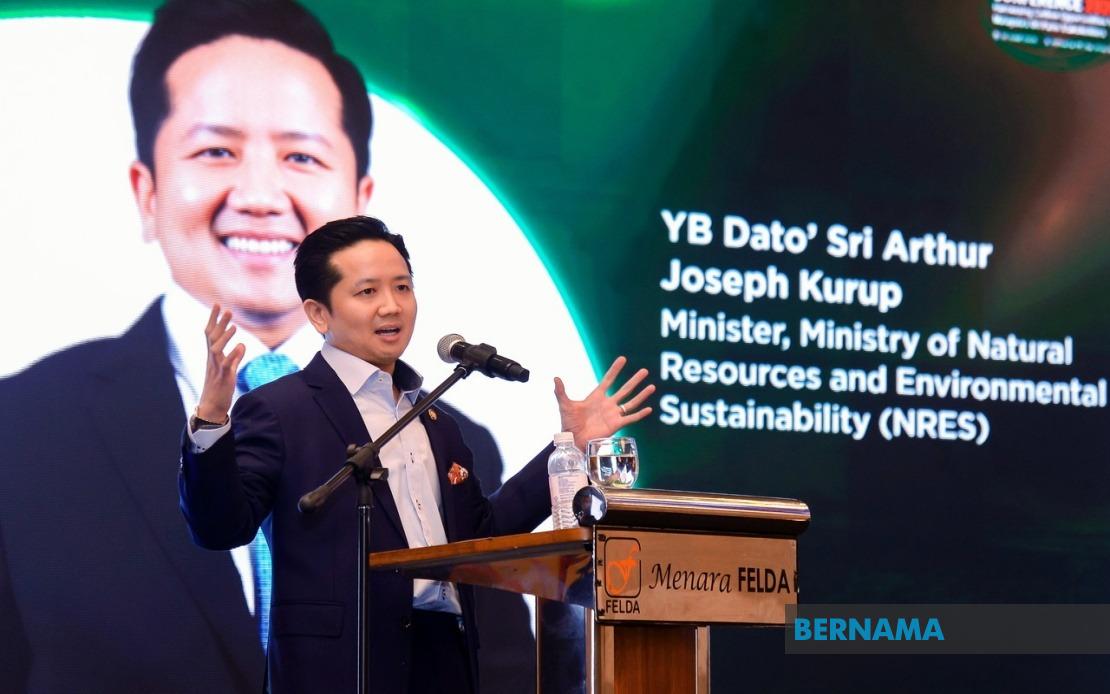
Malaysia's proposed carbon tax remains in a developmental phase as the government calibrates its approach to account for industrial preparedness and the evolving policy landscape, Natural Resources and Environmental Sustainability Minister Datuk Seri Arthur Joseph Kurup said at the Malaysia Palm Carbon Conference 2026 in Kuala Lumpur this week. While the framework continues to be refined, the administration remains committed to eventually implementing the mechanism, though the exact timing will be determined after further consultation and assessment.
The minister's remarks reflect an acknowledgment that rolling out a carbon pricing system requires careful orchestration to ensure minimal disruption to key sectors and to allow businesses adequate preparation time. Rather than rushing implementation, the government is adopting a phased and consultative approach that weighs industry readiness against environmental imperatives. This measured strategy becomes particularly important in Malaysia's context, where the palm oil sector, manufacturing, and resource-based industries form the backbone of economic activity and employment.
Arthur clarified that the government does not envision the carbon tax as a punitive instrument designed to penalise polluters, but rather as an economic tool that incentivises the adoption of cleaner technologies and methodologies. By framing the measure as an incentive mechanism rather than a penalty, the administration hopes to foster voluntary compliance and encourage genuine innovation in green technology uptake across industrial operations. This positioning is crucial for gaining buy-in from business stakeholders who might otherwise view carbon pricing as an unwelcome regulatory burden.
The government is actively examining how revenues generated from the carbon tax should be allocated, with multiple pathways under consideration. Current proposals suggest channelling collected funds towards climate adaptation projects, forest conservation initiatives, and sustainable land management programmes. This approach links the tax directly to tangible environmental outcomes, creating a circular system where the costs imposed on high-emission activities support investments in climate resilience and ecosystem protection. For Malaysian readers, this means the burden placed on industry could translate into improved national capacity to handle climate-related challenges such as flooding, drought, and biodiversity loss.
The strategic allocation of carbon tax revenues underscores the government's broader sustainability agenda and commitment to bolstering the country's resilience to climate impacts. Rather than viewing the tax as merely a revenue-raising device, officials are positioning it as a means to redirect economic flows towards climate security. In Southeast Asia, where climate vulnerability remains acute and climate-related disasters cost economies billions annually, such revenue-focused strategies carry significant weight. Malaysia's approach aligns with international best practices where carbon pricing mechanisms explicitly fund mitigation and adaptation work.
Significantly, the minister's comments contradict earlier timelines that envisioned implementation during the current year. In April, Arthur indicated that the government would reassess the carbon tax proposal, citing concerns about the global energy supply situation and geopolitical tensions as factors warranting review. The potential deferral reflects recognition that introducing such a measure amid global economic uncertainty could amplify pressures on both industries and consumers already grappling with elevated input costs and supply chain complexities. This pragmatic recalibration demonstrates sensitivity to real-world economic conditions beyond idealised policy frameworks.
The carbon tax was originally designed to target selected industrial segments including steel manufacturing, cement production, and the construction sector. These industries represent significant emission sources and capital-intensive operations capable of absorbing adjustment costs more readily than smaller enterprises. By concentrating initial efforts on these key sectors, the government can test implementation mechanisms, assess compliance frameworks, and gather data to inform broader rollout strategies. The staged approach mitigates risks associated with sudden economy-wide price shocks while building institutional capacity for carbon management.
Parallel to carbon tax development, Arthur announced that the National Climate Change Bill is expected to be presented to the Dewan Rakyat during the current parliamentary year. This legislation would establish a comprehensive legal and governance framework for climate action, addressing gaps in current environmental law and providing statutory authority for climate policies including carbon pricing mechanisms. The bill's passage would represent a watershed moment for Malaysian climate governance, moving beyond voluntary commitments towards binding legislative obligations that embed climate considerations into governmental decision-making across all levels.
The National Climate Change Bill carries particular significance for Malaysia's regional standing and international commitments. As Southeast Asia's third-largest economy and a nation with substantial forest resources, Malaysia faces international expectations regarding climate leadership and biodiversity protection. Enacting comprehensive climate legislation would signal seriousness about meeting Paris Agreement commitments while positioning the country as a responsible steward of critical ecosystems. For investors increasingly scrutinising corporate and national sustainability credentials, such legislative frameworks provide the certainty necessary to justify long-term green investments.
The convergence of carbon tax refinement and climate legislation reflects a government seeking to build an integrated approach to emissions reduction that combines market-based mechanisms with statutory mandates. This dual strategy addresses different behavioural incentives: carbon pricing encourages technological change and operational efficiency, while legislation provides enforceable standards and governance structures. Together, they create a more robust architecture for achieving climate targets than either mechanism alone could accomplish.
For Malaysian businesses, the evolving carbon policy landscape demands strategic planning and proactive engagement with government consultations. Early investment in emissions monitoring, efficiency audits, and green technology assessment can position companies advantageously once implementation timelines become clearer. Similarly, investors evaluating Malaysian opportunities should recognise that carbon pricing and climate legislation, while imposing transitional adjustment costs, will ultimately reshape competitive advantages favouring climate-resilient operations. The government's measured approach to implementation provides a window for constructive adaptation rather than disruptive surprise regulation.