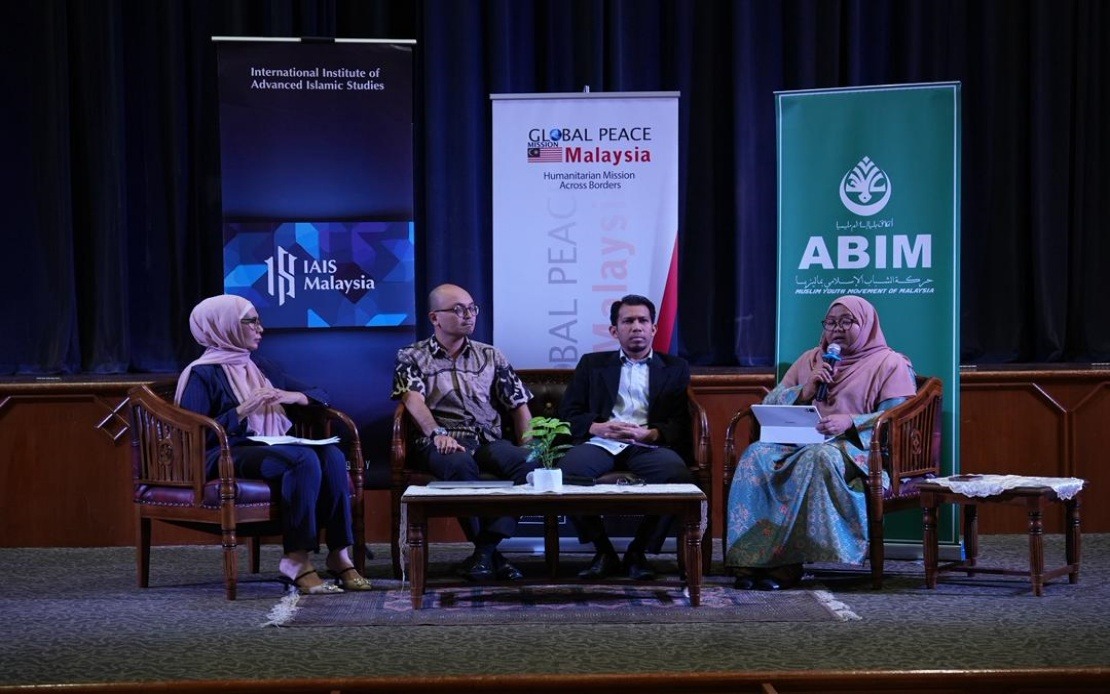
Malaysia's approach to refugee management must move beyond polarisation and toward evidence-based policymaking, according to participants at the Kuala Lumpur: Solidarity with Refugees Conference held on June 20 in conjunction with World Refugee Day 2026. The gathering brought together civil society representatives, academics, humanitarian workers, international officials and community leaders at the International Institute of Advanced Islamic Studies (IAIS) Malaysia to chart a more measured course through one of the country's most contentious social policy challenges.
The conference produced 10 formal resolutions that frame refugee protection not as a choice between humanitarian compassion and national interest, but as complementary objectives requiring sophisticated governance. Rather than treating refugee policy as a binary debate, the resolutions call upon the government to formulate an integrated action plan that simultaneously safeguards border security, protects local community welfare and honours Malaysia's longstanding informal humanitarian commitments. This triangulated approach reflects the reality that Malaysia hosts significant refugee populations despite never ratifying the 1951 Refugee Convention, making the country's de facto refugee management practices a matter requiring coherent institutional oversight.
Angkatan Belia Islam Malaysia (ABIM) president Ahmad Fahmi Mohd Samsudin emphasised that the resolutions emerged from non-governmental organisations working directly with refugee communities rather than from theoretical debate. These groups possess frontline knowledge of both genuine security concerns and the humanitarian dimensions of displacement. By channelling their practical experience into formal recommendations, the conference aimed to provide policymakers with grounded intelligence rather than ideologically driven positions. Ahmad Fahmi indicated that ABIM and fellow organisers intend to present these findings to Members of Parliament and engage further with the Home Ministry and National Security Council, suggesting a pathway toward institutional dialogue on refugee governance.
The conference directly addressed the escalating anti-refugee sentiment evident in Malaysian public discourse and social media, diagnosing it as rooted partly in misinformation rather than legitimate policy concerns. Ahmad Fahmi warned that unmanaged xenophobia targeting refugees risks metastasising into broader societal divisions, potentially affecting other marginalised groups. This concern reflects patterns observed elsewhere in Southeast Asia, where refugee hostility has sometimes served as a gateway for intolerance affecting multiple populations. By reframing the conversation around facts and proportionate responses, organisers sought to prevent refugee issues from becoming a vehicle for deeper social fracturing.
Historical context proves crucial to understanding Malaysia's refugee responsibilities. The country has accumulated decades of experience managing displacement crises from Vietnam, Syria, Bosnia and Palestine, demonstrating both the capacity and precedent for handling vulnerable populations. Yet this institutional memory remains underutilised in contemporary policy discussions, which often treat refugee management as novel and unprecedented. Reviving awareness of Malaysia's humanitarian track record could help ground current debates in demonstrated feasibility rather than speculative fears about absorption capacity or security risks.
Among the resolutions' key provisions was an explicit call to reject all forms of hatred, discrimination and dehumanisation directed at refugees and asylum seekers, while simultaneously acknowledging legitimate public concerns around security, law enforcement and community cohesion. This formulation represents a sophisticated middle path, recognising that security anxieties deserve serious address rather than dismissal as mere prejudice. The resolutions thus validate both humanitarian principles and pragmatic governance, positioning effective refugee management as a technical challenge requiring collaboration rather than an ideological battleground.
Data collection and registration emerged as critical institutional gaps requiring urgent attention. The resolutions urged stronger cooperation between the government, the United Nations High Commissioner for Refugees (UNHCR) and other partners to establish comprehensive refugee documentation systems. Better data creates the foundation for orderly, transparent and evidence-based management, while also countering the speculation and rumour that often fuel anti-refugee sentiment. When governments cannot articulate precise figures, demographic breakdowns or security assessments, public anxiety fills the void with worst-case narratives. Systematic registration would enable Malaysia to move toward fact-based refugee policymaking comparable to international standards.
Public education and media literacy featured prominently in the resolutions, reflecting recognition that misinformation and xenophobic narratives propagate rapidly through social media and informal networks. The conference called for coordinated efforts to combat false claims, hate speech and deliberately misleading portrayals of refugee communities. In the Malaysian context, where social media penetration exceeds 90 percent of the population and viral misinformation can rapidly shape public opinion, such interventions prove essential for preventing policy formation driven by fabricated narratives rather than reality.
The resolutions also addressed the safety and wellbeing of refugee advocates themselves, calling for mechanisms to support NGOs, activists and humanitarian workers facing online attacks, slander and disinformation campaigns. This provision acknowledges that those defending refugee rights increasingly encounter coordinated harassment, particularly on social platforms where anonymity enables cruelty. By institutionalising support for civil society actors, Malaysia could protect space for balanced refugee advocacy and ensure that extreme voices do not monopolise the conversation.
The conference's joint organisation by Global Peace Mission (GPM) Malaysia, ABIM and IAIS Malaysia represented a notably broad coalition spanning Islamic organisations, peace-building bodies and academic institutions. This diversity suggested that refugee advocacy in Malaysia extends beyond traditionally liberal circles to encompass religious communities and organisations with significant grassroots influence. Such breadth could prove valuable in shifting public discourse, as Islamic organisations often command credibility among constituencies sceptical of secular human rights messaging.
Moving forward, the resolutions will serve as reference points for parliamentary discussions and inter-agency coordination between the Home Ministry, National Security Council and humanitarian bodies. Rather than imposing predetermined solutions, the conference framed refugee policy as a matter requiring ongoing stakeholder engagement, evidence gathering and periodic reassessment. This adaptive governance approach acknowledges that refugee situations evolve constantly, requiring institutional flexibility rather than rigid ideological positions. Malaysia's ability to translate conference resolutions into coherent institutional practice will significantly influence regional approaches to refugee protection and integration within Southeast Asia.
%22%2F%3E%3C%2Fpattern%3E%3C%2Fdefs%3E%3Crect%20width%3D%22100%25%22%20height%3D%22100%25%22%20fill%3D%22url(%23phaey7g)%22%2F%3E%3Crect%20width%3D%22100%25%22%20height%3D%22100%25%22%20fill%3D%22url(%23phaey7p)%22%2F%3E%3Ctext%20x%3D%2250%25%22%20y%3D%2250%25%22%20text-anchor%3D%22middle%22%20dominant-baseline%3D%22central%22%20fill%3D%22rgba(255%2C255%2C255%2C0.95)%22%20font-family%3D%22Georgia%2C%20'Times%20New%20Roman'%2C%20serif%22%20font-weight%3D%22700%22%20font-size%3D%22170%22%20letter-spacing%3D%22-0.02em%22%3EKelantan%3C%2Ftext%3E%3C%2Fsvg%3E)