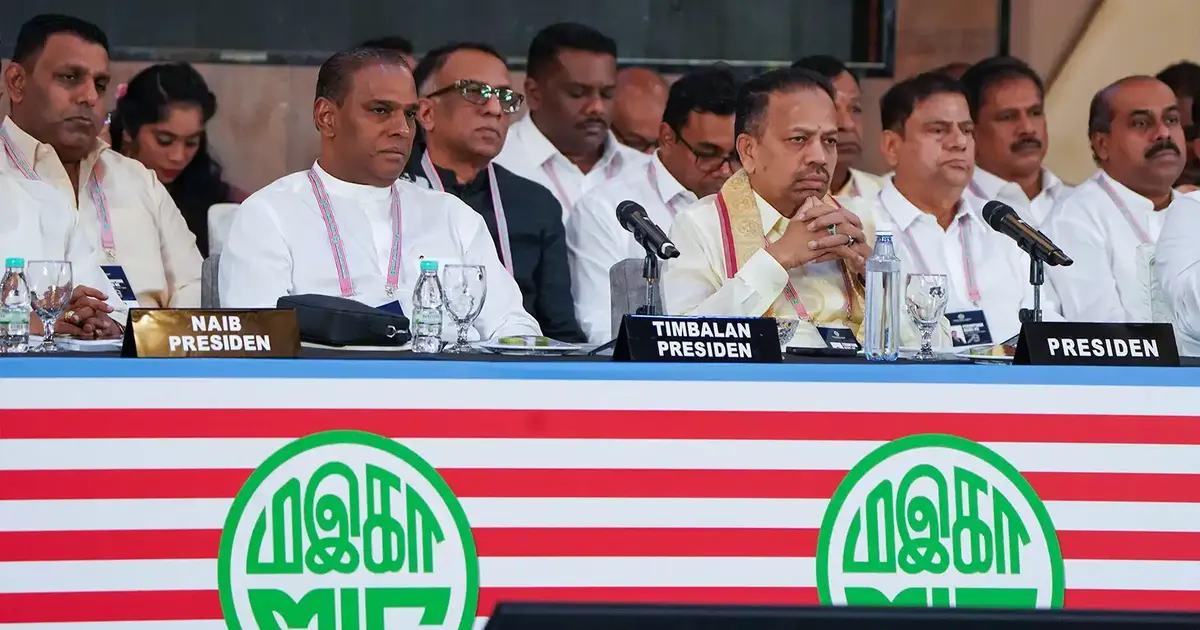
The Malaysian Indian Congress has confirmed its participation in the forthcoming Johor state election with a reduced footprint, defending just two seats while surrendering another to its Barisan Nasional ally Umno as part of a broader realignment within the venerable coalition. This adjustment marks a recalibration of the traditional seat-sharing formula that has governed BN's internal dynamics for decades, reflecting shifting political calculations ahead of what is shaping up to be a closely contested state-level contest.
MIC's original slate encompassed four seats, though the party is now expected to field candidates in only three constituencies following negotiations with Umno over the distribution of electoral territory. The party will mount active campaigns to retain two of these seats while allowing Umno to assume full responsibility for contesting the third, a move that underscores the fine-grained negotiations occurring within BN's component parties as they prepare for the polls. These internal discussions often involve assessments of demographic composition, incumbent performance records, and perceived electability across different constituencies.
The specific inclusion of Bukit Batu among MIC's contested seats carries particular significance, given the constituency's historical importance to the party's presence in Johor. MIC's retention of this seat reflects confidence in either incumbent representation or organisational strength in the area, though the party's decision to contest fewer seats overall suggests strategic concentration of resources where the party believes it commands competitive advantage. Such targeted approaches have become increasingly common as Malaysian political parties seek to maximise their electoral efficiency amid fragmentation of the voter base.
This seat-swap arrangement between MIC and Umno occurs within the broader context of Barisan Nasional's attempts to maintain cohesion and present a united front in state-level contests. Historically, BN's strength has derived partly from its ability to allocate constituencies to component parties in ways that minimise internal competition while maximising the coalition's aggregate performance. However, recent electoral trends have tested these traditional formulas, prompting parties to engage in more granular negotiations about which seats each component can realistically win.
For the Malaysian Indian Congress specifically, the decision to contest fewer seats may reflect both pragmatic assessment of ground conditions and acknowledgment of changing electoral dynamics affecting Indian-Malaysian voters. The Indian community's size, while significant, is geographically concentrated in certain areas, meaning that MIC's competitive advantage tends to be location-specific. By focusing on constituencies where the party perceives stronger grassroots support, MIC may be attempting to improve its seat-winning ratio even as the absolute number of contests it enters declines.
The implications for Malaysian politics extend beyond the immediate Johor context. MIC's reduced electoral footprint in this state election exemplifies broader trends affecting BN's component parties, many of which face pressure from both internal coalition dynamics and external competition from opposition parties increasingly sophisticated at targeting minority communities. The seat-sharing arrangement signals that within BN, calculations about electoral viability have become more ruthless and data-driven than in previous election cycles.
Umno's position as the dominant coalition component is reinforced by this arrangement, as the party gains additional seats to contest while MIC concentrates its efforts. This distribution of resources reflects the relative organisational strength and numerical dominance of Umno within the coalition, though it also highlights potential tensions over representation and influence within BN's framework. Smaller component parties must continually negotiate the balance between maintaining sufficient visibility within the coalition and accepting reduced electoral participation.
The timing of this seat allocation reveals the complexity of coalition management in Malaysian politics. Negotiations over constituency boundaries and seat allocations typically occur months before official campaign periods, requiring careful coordination among party leaderships. These discussions often involve not merely splitting constituencies fairly but also considering which parties possess the resources, candidate quality, and ground organisation to mount competitive campaigns in specific areas.
For Johor voters, particularly those in constituencies now being vacated by MIC in favour of Umno, the practical implications depend heavily on the quality of candidates fielded by whichever party ultimately contests their area. While Umno may enjoy greater organisational resources, MIC's departure from certain constituencies might have represented specific community linkages and representative traditions worth considering. The transition between parties contesting the same seat can alter local political dynamics in ways that extend beyond simple electoral calculations.
The arrangement also reflects shifting considerations about ethnic representation within Johor's political landscape. Umno, while a Malay-dominant party, has increasingly attempted to broaden its appeal and establish credentials with minority communities. By taking on additional seats previously contested by MIC, Umno may be attempting to demonstrate its capacity to serve diverse constituencies, though this strategy also carries risks if Umno is perceived as displacing MIC from the electoral arena rather than complementing it.
Looking forward, MIC's strategic focus on fewer but more defensible seats may yield lessons applicable to its performance in national elections and other state contests. The party's willingness to relinquish ground to coalition partners suggests a recognition that maintaining representation quality matters more than maximising seat count, a philosophy that could influence its broader electoral strategy. How effectively MIC converts this concentrated approach into actual seat victories will significantly shape its bargaining position within BN following the Johor election results.
The seat-sharing arrangement between MIC and Umno ultimately reflects the complex calculus required to maintain a multi-party coalition in Malaysia's competitive political environment. As BN continues navigating challenges from Pakatan Harapan and other opposition forces, the internal negotiations determining which component party contests which seats remain among the coalition's most delicate political manoeuvres, balancing principles of fair representation against pragmatic assessments of electoral viability.