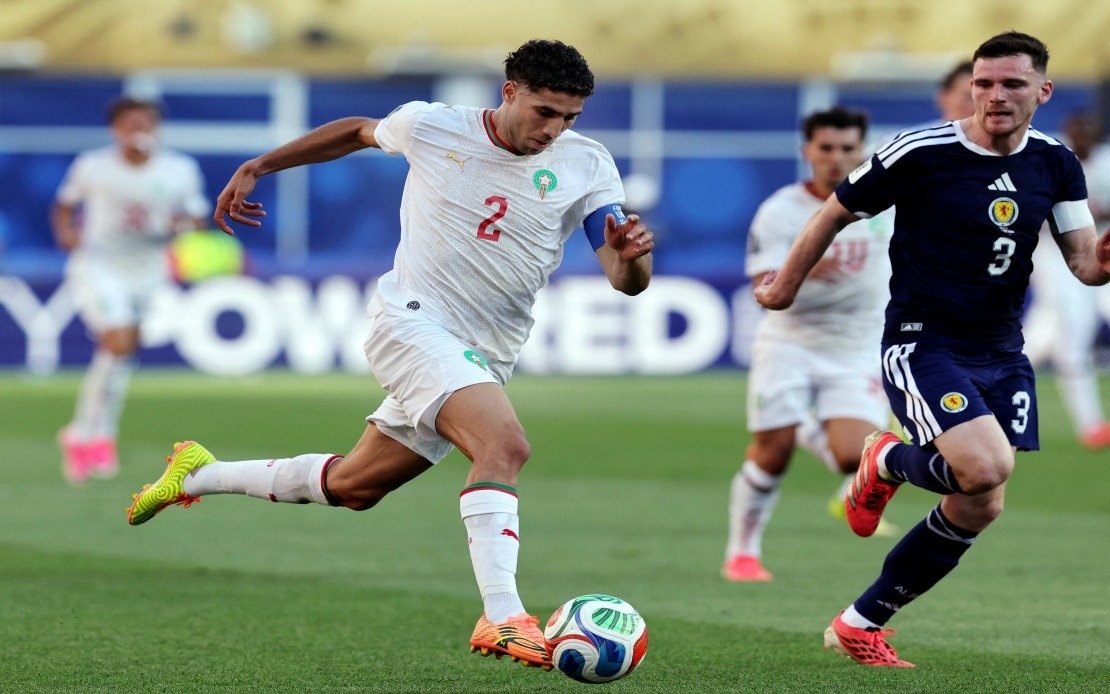
Morocco coach Mohamed Ouahbi moved swiftly to shield his captain Achraf Hakimi from mounting pressure following the Foxborough clash with Scotland on Friday, when sections of the crowd booed the defender amid swirling legal troubles back home in France. The timing of the controversy could not have been more fraught—just hours before the 1-0 victory, a Versailles appeal court handed down a landmark decision requiring Hakimi to stand trial on rape charges involving a 24-year-old woman allegedly assaulted at his Paris residence in 2023.
The French judicial announcement cast a dark shadow over Hakimi's participation in the tournament and triggered an immediate public backlash in the stadium. When match officials read out the Morocco starting XI, hostile sections of the Massachusetts crowd responded with sustained whistling and booing directed squarely at the Paris Saint-Germain right-back. The jeers intensified whenever Hakimi gained possession, turning an international sporting occasion into a platform for expressing disapproval of his legal predicament. Despite the hostile atmosphere, Hakimi completed the full match as Morocco secured a crucial victory in their World Cup campaign.
Ouahbi's response represented a calculated show of solidarity, reflecting a wider tension within professional football between athletes' off-field legal entanglements and their on-field performance. Rather than engage with the allegations or acknowledge the court's decision, the Morocco coach pivoted deliberately toward sporting analysis, effectively attempting to compartmentalize the two domains. His statement emphasised the team's unwavering support for their captain at what he characterised as a crucial moment in both Hakimi's career and Morocco's tournament ambitions.
The coach's commitment to standing behind Hakimi extended beyond mere platitudes. Ouahbi highlighted the defender's quality and mental resilience, noting that Hakimi had performed strongly despite the extraordinary circumstances surrounding the match. This public vote of confidence served multiple purposes—reassuring the player that the national team remained unified, signalling to media and observers that Morocco would not be derailed by external controversies, and demonstrating to teammates that captain and coach alike maintained focus on football.
Hakimi's own response, delivered through social media following the court's trial decision, struck a defiant tone. His assertion that "at last, I will be able to speak" suggested a determination to clear his name through the French judicial process and indicated he viewed the appeal court ruling as an opportunity rather than a setback. The defender has consistently denied the rape allegations, maintaining his innocence since the original complaint emerged. This public statement hinted that Hakimi intended to cooperate fully with the trial process and use it to vindicate himself against charges he contests.
The Versailles appeal court's decision came after Hakimi had challenged an earlier ruling from an investigating judge. The appeals process, while affirming that a trial must proceed, did not prejudge the ultimate outcome. However, for a prominent international footballer at the World Cup, the requirement to stand trial represented significant reputational damage and potential disruption to both his club and international career. The timing proved particularly inopportune, coinciding with what should have been a moment of professional pride during Morocco's World Cup campaign.
Ouahbi's refusal to engage with teammates' potential comments on the case reflected a broader strategic decision to prevent the scandal from fracturing team cohesion. In the charged environment of a World Cup campaign, where focus and unity are essential currencies, allowing the allegations to become a subject of open discussion within the squad risked creating divisions. By establishing clear boundaries around what would and would not be discussed, Ouahbi attempted to maintain psychological equilibrium and prevent the legal controversy from becoming a distraction during matches.
The situation highlighted an ongoing challenge for international football in managing high-profile players facing serious legal allegations. Unlike domestic leagues where clubs maintain greater control over media narratives and squad management, international tournaments thrust these issues into the global spotlight under intense scrutiny. Morocco's participation at the World Cup meant that Hakimi's legal troubles would dominate headlines regardless of the team's efforts to concentrate on football, complicating efforts to shield him from external pressure.
For Malaysian and Southeast Asian football followers, the episode underscored how far-reaching the implications of legal controversies can be for athletes competing on the world stage. Major football tournaments frequently attract players under investigation or facing trial in their home nations, creating complex situations where sporting ability and legal status intersect. Ouahbi's measured response represented one approach to managing such circumstances—prioritising team stability while allowing judicial processes to unfold independently.
The Scotland victory itself provided Hakimi with an opportunity to demonstrate his professional commitment despite extraordinary circumstances. His completion of the full ninety minutes, in an atmosphere explicitly hostile to his presence, testified to considerable mental fortitude. Whether this performance would translate into sustained excellence throughout the tournament remained uncertain, given the looming trial obligations and inevitable ongoing media scrutiny surrounding the case.
As Morocco progressed deeper into the World Cup competition, the Hakimi situation threatened to remain a recurring subplot. Each match would potentially generate fresh debate about his suitability to represent the nation while facing serious allegations. The legal process unfolding in France would inevitably intersect with his sporting commitments, creating ongoing challenges for both the player and the national federation in managing expectations and navigating media attention surrounding his participation.
Ouahbi's steadfast backing of Hakimi reflected a judgment that the captain remained both capable and deserving of continued trust. Whether that faith would be vindicated—either through Hakimi's eventual acquittal in France or through continued outstanding performances on the pitch—would become clearer in the weeks and months ahead.