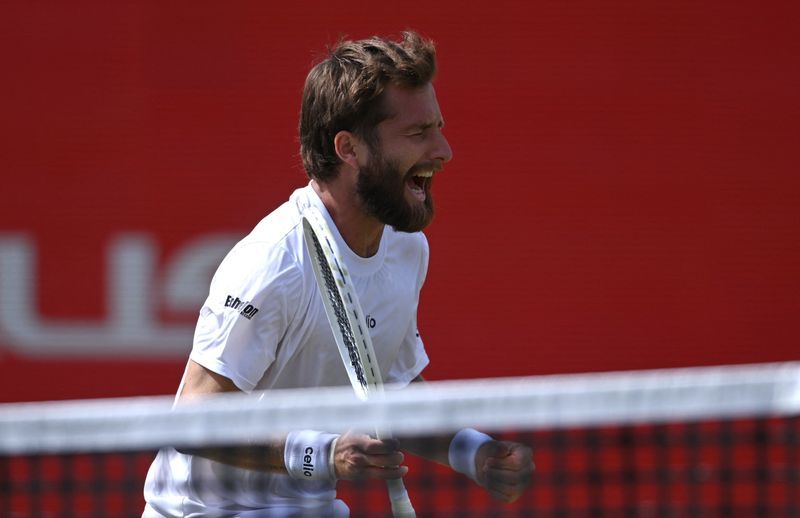
French tennis player Corentin Moutet has forfeited virtually his entire prize earnings from the Queen's Club tournament following disciplinary action taken by the ATP over an expletive-filled broadcast interview. The 27-year-old was hit with a $40,000 fine for unsportsmanlike conduct after swearing repeatedly during an on-court discussion with BBC interviewers immediately following his first-round victory over fellow Frenchman Giovanni Mpetshi Perricard. The substantial penalty has decimated his financial take-home from the prestigious London grass-court event, where he earned $43,000 for advancing to the second round before his subsequent exit.
Moutet's disciplinary issues stemmed from a moment of visible frustration during the broadcast segment. While being interviewed courtside, the world number 36 expressed his exasperation at being aced on match point by a 142-mile-per-hour second serve, employing profanity to articulate his dismay. When the interviewer politely requested that he refrain from repeating the expletive, Moutet proceeded to utter it three additional times before the segment was terminated and formal apologies were extended to both the assembled crowd and television audiences. The incident marked a significant departure from standard professional conduct expected in tennis's most prominent tournaments, where broadcasters maintain strict content standards for international viewership.
The aftermath saw Moutet attempt to reframe the episode through social media, posting on Instagram that he had merely been joking during the exchange. This explanation, however, did not sway the ATP's assessment that his behaviour constituted a breach of the tour's conduct regulations. The governing body proceeded with the fine for unsportsmanlike conduct, though Moutet has registered an appeal against the decision, suggesting he contests the severity of the punishment or the characterization of his actions. Whether the appeal will succeed remains uncertain, but the disciplinary mechanism itself underscores the tour's commitment to maintaining broadcast standards and on-court decorum.
This incident represents merely the latest chapter in Moutet's complicated relationship with professional tennis discipline. In 2022, the Frenchman was defaulted entirely from the Adelaide International after directing abusive language at the umpire during a match against Serbian opponent Laslo Djere. That infraction triggered broader institutional consequences, with the French Tennis Federation subsequently withdrawing its support from Moutet due to persistent behavioural concerns. The pattern of incidents suggests systemic issues around emotional regulation and professional responsibility that have accumulated over several years, raising questions about whether Moutet has addressed the underlying factors contributing to these repeated transgressions.
For Malaysian and Southeast Asian tennis followers, Moutet's situation illustrates the increasingly stringent governance around player conduct in professional tennis. The sport's governing bodies have grown less tolerant of on-court antics and particularly of language that reaches broadcast audiences, reflecting broader societal standards around public discourse. This represents a meaningful shift from earlier eras of tennis when certain behavioural boundaries were more permissive. Players across the region who aspire to compete at the highest levels must navigate these evolving expectations, where financial penalties can now rival or exceed tournament earnings for relatively brief lapses in composure.
The timing and context of Moutet's outburst also merit consideration. Being aced on match point carries particular psychological weight—it represents a moment of total defeat where the opponent's superiority is unambiguous and unassailable. While such frustration is understandable from a human perspective, professional tennis demands that players channel such disappointment into composure, particularly during broadcast moments. The BBC interview format, being immediate and unscripted, created conditions where Moutet's emotional response was captured in real time for global audiences. This immediacy distinguishes such incidents from those occurring during play, where emotional expression enjoys greater latitude.
Moving forward, the Queen's Club incident may carry consequences extending beyond the financial penalty. Tournament organizers and broadcasters now possess a documented record of Moutet's conduct, potentially influencing decisions about interview formats, player participation, or access privileges at future events. Sponsors and equipment manufacturers may similarly reassess their associations with a player whose on-court persona generates negative publicity. These secondary effects can accumulate into meaningful career impacts, potentially exceeding the direct fine in aggregate burden. For professional athletes, particularly those outside tennis's elite tier, such reputational damage can prove decisive in commercial viability and earning potential.
The broader implications for tennis governance merit examination as well. While maintaining broadcast standards and professional decorum remains important, questions persist about whether financial penalties structured as percentages of tournament earnings create equitable consequences across different player earnings levels. A $40,000 fine represents a catastrophic loss for a player earning $43,000 from the event, yet might constitute a manageable business expense for top-ranked players earning millions annually. This structural inequality in disciplinary impact may warrant reconsideration by tour officials seeking to enforce standards consistently across the professional circuit.
Moutet's appeal process will now unfold behind closed doors, with ATP officials reviewing the incident materials and considering whether the fine proportionately addresses the transgression. Whether the fine stands, is reduced, or is overturned entirely, the episode has cemented Moutet's profile as a player requiring careful monitoring by tournament officials and broadcasters. His talent remains evident—competing at world number 36 and advancing through opening rounds at prestigious tournaments like Queen's demonstrates legitimate professional standing. However, the repeated disciplinary incidents suggest that consistent excellence will remain constrained until he develops greater emotional regulation and professional responsibility during high-pressure competition moments.