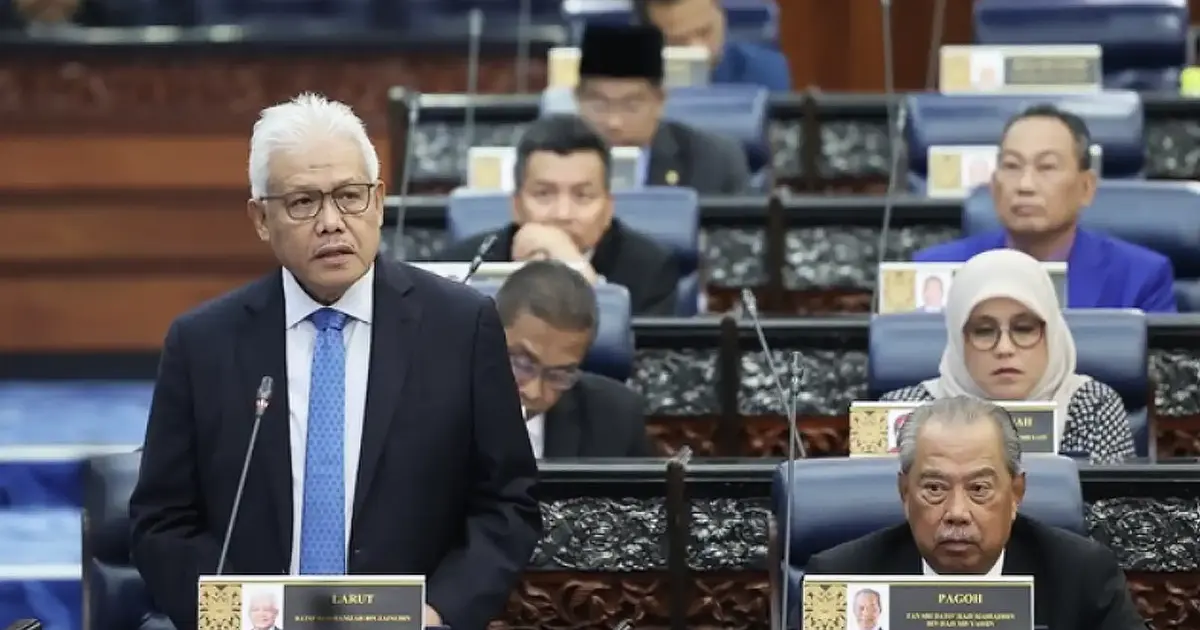
Dewan Rakyat Speaker Johari Abdul has revealed that former Prime Minister Muhyiddin Yassin submitted a request to change his seating position within the parliamentary chamber, a disclosure that underscores shifting parliamentary dynamics following recent political realignments affecting Malaysia's legislative landscape.
The speaker's announcement carries significance beyond the procedural matter of seat allocation, as movements of prominent lawmakers within the Dewan Rakyat often reflect broader repositioning within political coalitions and legislative alliances. Seat arrangements in the chamber typically denote parliamentary groupings and visibility, making such changes noteworthy indicators of changing political configurations.
Simultaneously, Johari Abdul confirmed that he has formally received official correspondence recognising Hamzah Zainudin, the Member of Parliament representing Larut, as the current opposition leader. This recognition represents a critical institutional acknowledgment of opposition leadership following developments that have reshaped the composition of Malaysia's parliamentary opposition bloc.
Hamzah Zainudin's formal designation as opposition leader carries substantial procedural and political consequences within the Dewan Rakyat framework. The opposition leader role grants specific parliamentary privileges, including priority in questioning government ministers, enhanced speaking rights during debates, and leadership responsibilities for directing opposition legislative strategy and scrutiny activities.
The timing of these developments intersects with ongoing transformations in Malaysia's political coalition architecture, where lawmakers have been navigating shifting alliances between major political entities. Understanding these movements requires examining the context of Malaysia's fractious coalition politics, where defections and realignments have characterised parliamentary dynamics over recent parliamentary sessions.
For Malaysian observers tracking parliamentary governance, the speaker's confirmation of Muhyiddin's seat change request suggests the former premier may be repositioning himself within parliamentary arrangements, potentially reflecting evolving relationships within legislative groupings. Such repositioning could indicate strategic recalibration regarding parliamentary visibility, legislative engagement patterns, or alignment with particular faction interests.
The recognition of Hamzah Zainudin as opposition leader formalises what represents a consolidation of opposition direction following a period where opposition cohesion faced challenges. This crystallisation of leadership provides clearer parliamentary lines of accountability and opposition strategic direction as Malaysia's legislative agenda progresses through the current parliamentary session.
These procedural matters acquire heightened importance given Malaysia's Westminster-influenced parliamentary system, where such institutional designations carry tangible consequences for legislative influence, media prominence, and strategic positioning. The speaker's role in administering these arrangements underscores the Dewan Rakyat's institutional function in managing parliamentary alignments and procedural propriety.
Regionally, Malaysia's parliamentary dynamics merit attention from Southeast Asian governance observers, as the region's democracies navigate similar challenges regarding coalition stability and legislative management. Malaysia's experiences with coalition fragmentation and opposition repositioning offer comparative insights for other ASEAN democracies managing multi-party parliamentary environments.
The speaker's public disclosure of these developments reflects institutional transparency regarding parliamentary administration while highlighting the ongoing recalibration characterising Malaysian politics. These announcements provide clarity regarding opposition leadership structures, which proves essential for parliamentarians, media organisations, and citizens seeking to understand legislative representation and oversight mechanisms.
Moving forward, the implications of Muhyiddin's seat relocation and Hamzah's formalised opposition leadership status will unfold through parliamentary proceedings, where legislative priorities, government accountability mechanisms, and opposition effectiveness will demonstrate practical consequences of these structural adjustments. Malaysian political observers should monitor how these changes influence parliamentary debate patterns, legislative initiatives, and opposition scrutiny effectiveness in coming legislative sessions.


%22%2F%3E%3C%2Fpattern%3E%3C%2Fdefs%3E%3Crect%20width%3D%22100%25%22%20height%3D%22100%25%22%20fill%3D%22url(%23ph4q3ccg)%22%2F%3E%3Crect%20width%3D%22100%25%22%20height%3D%22100%25%22%20fill%3D%22url(%23ph4q3ccp)%22%2F%3E%3Ctext%20x%3D%2250%25%22%20y%3D%2250%25%22%20text-anchor%3D%22middle%22%20dominant-baseline%3D%22central%22%20fill%3D%22rgba(255%2C255%2C255%2C0.95)%22%20font-family%3D%22Georgia%2C%20'Times%20New%20Roman'%2C%20serif%22%20font-weight%3D%22700%22%20font-size%3D%22136%22%20letter-spacing%3D%22-0.02em%22%3EPAS-Bersa%E2%80%A6%3C%2Ftext%3E%3C%2Fsvg%3E)