Queen Raja Zarith Sofiah of Malaysia has reaffirmed that mutual respect stands as one of the essential pillars underpinning the social harmony that Malaysians have consistently maintained throughout the nation's history. In remarks shared via the official Facebook page of Sultan Ibrahim Sultan Iskandar, Her Majesty underscored how this foundational value has been instrumental in building and preserving the country's unity while contributing meaningfully to the collective well-being of its diverse population.
The Queen's message carries particular resonance in contemporary Malaysia, where a multi-ethnic, multi-religious society continues to navigate the complexities of coexistence. Her Majesty's emphasis on courtesy and the deliberate cultivation of mutual respect reflects a philosophical approach to social cohesion that extends beyond mere tolerance to encompass active engagement and genuine consideration for one another. This distinction matters significantly, as tolerance alone can feel passive and transactional, whereas the kind of respect the Queen advocates requires conscious effort and a willingness to honour the dignity of others regardless of their background or beliefs.
In addressing the Muslim community specifically, the Queen drew upon Islamic teachings to reinforce her message. She recalled a hadith narrated by Al-Bukhari, in which the Prophet Muhammad is reported to have said: "Whoever believes in Allah and the Last Day should not harm his neighbour. Whoever believes in Allah and the Last Day should honour his guest. And whoever believes in Allah and the Last Day must either speak good or remain silent." This hadith, attributed to Abu Hurairah RA, encapsulates principles that resonate across religious boundaries—the protection of others from harm, the extension of hospitality, and the cultivation of virtuous speech. By invoking this teaching, Her Majesty positioned mutual respect not merely as a civic virtue but as a spiritual and moral imperative rooted in faith.
The Queen's intervention at this moment in Malaysia's national conversation is particularly timely. As the country faces ongoing discussions about religious expression, communal relations, and the boundaries of acceptable discourse in public spaces, Her Majesty's focus on the practical application of respect offers a grounding principle. The teaching about speaking good or remaining silent, for instance, provides an ethical framework for navigating the increasingly polarised terrain of social media and public debate, suggesting that not every thought requires utterance and that the quality of words matters as much as their content.
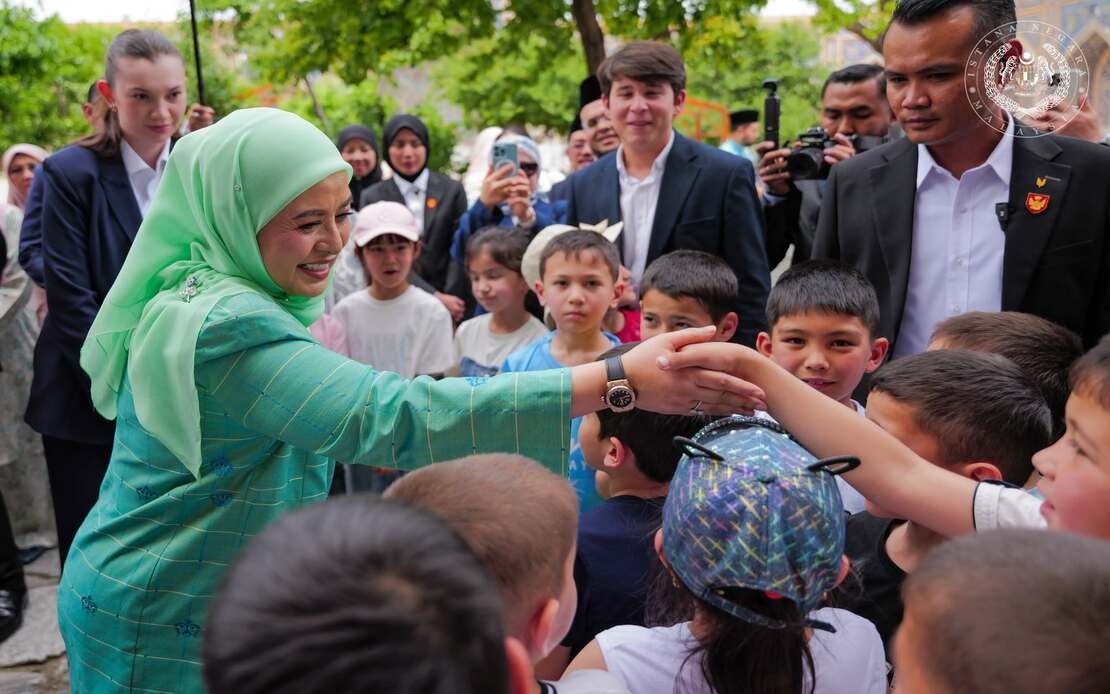
Her Majesty illustrated her commitment to these values through her actions as well as her words. In February, the Queen engaged warmly with more than 100 tourists representing various nationalities at the main entrance of Istana Negara. This interaction demonstrated her concern not only for Malaysia's own citizens but also for visitors to the country, sending a signal about how Malaysia wishes to be perceived and experienced on the international stage. The gracious welcome extended to foreign visitors embodies the inclusive interpretation of respect that Her Majesty advocates—one that does not distinguish between those born within national borders and those temporarily present.
Such gestures carry diplomatic weight in Southeast Asia, a region where soft power and the projection of welcoming cultures influence international perceptions and relationships. Malaysia's positioning as a tolerant, respectful society can strengthen its appeal as a destination for tourism, investment, and cultural exchange. The Queen's personal example of extending courtesy to visitors contributes to this broader narrative, reinforcing messaging that Malaysian society values interaction across difference and treats outsiders with dignity.
The emphasis on mutual respect also addresses practical governance challenges. In a democracy with significant religious and ethnic diversity, the capacity of different communities to engage with one another respectfully determines whether disagreements remain contained within constructive bounds or escalate into social tensions. When leaders articulate respect as a national value and embody it through their conduct, they establish a benchmark that citizens and other officials can reference when making their own choices about how to interact with those who hold different views or maintain different religious practices.
Furthermore, the Queen's message speaks to the relationship between individual conduct and national character. The hadith she cited emphasises personal responsibility—each believer's obligation to refrain from harming neighbours, to honour guests, and to guard their speech. This framing suggests that harmony is not something imposed from above but constructed through the accumulated choices of individuals who decide to treat one another with respect. It places responsibility on ordinary Malaysians to be custodians of the nation's social fabric rather than passive recipients of policy directives.
The timing of Her Majesty's public statement also reflects the palace's willingness to engage in conversations about values and social conduct during a period when Malaysian society is grappling with questions about how to balance diverse interests and beliefs. By speaking directly to these issues, the monarchy demonstrates that the institution remains engaged with contemporary challenges while drawing upon enduring principles and spiritual traditions to guide the nation forward.
For Malaysian readers, particularly those from communities that sometimes feel their concerns about respect and inclusion are overlooked, the Queen's words offer validation that these issues occupy space at the highest levels of national leadership. The message signals that honouring one another across lines of difference is not peripheral to Malaysia's identity but central to what the nation claims to represent. As Malaysia continues to evolve and face new challenges to its social cohesion, the principle of mutual respect—articulated with clarity and demonstrated through tangible action—remains an invaluable resource for building a more harmonious future.
%22%2F%3E%3C%2Fpattern%3E%3C%2Fdefs%3E%3Crect%20width%3D%22100%25%22%20height%3D%22100%25%22%20fill%3D%22url(%23ph3sm85g)%22%2F%3E%3Crect%20width%3D%22100%25%22%20height%3D%22100%25%22%20fill%3D%22url(%23ph3sm85p)%22%2F%3E%3Ctext%20x%3D%2250%25%22%20y%3D%2250%25%22%20text-anchor%3D%22middle%22%20dominant-baseline%3D%22central%22%20fill%3D%22rgba(255%2C255%2C255%2C0.95)%22%20font-family%3D%22Georgia%2C%20'Times%20New%20Roman'%2C%20serif%22%20font-weight%3D%22700%22%20font-size%3D%22226%22%20letter-spacing%3D%22-0.02em%22%3ERussia%3C%2Ftext%3E%3C%2Fsvg%3E)