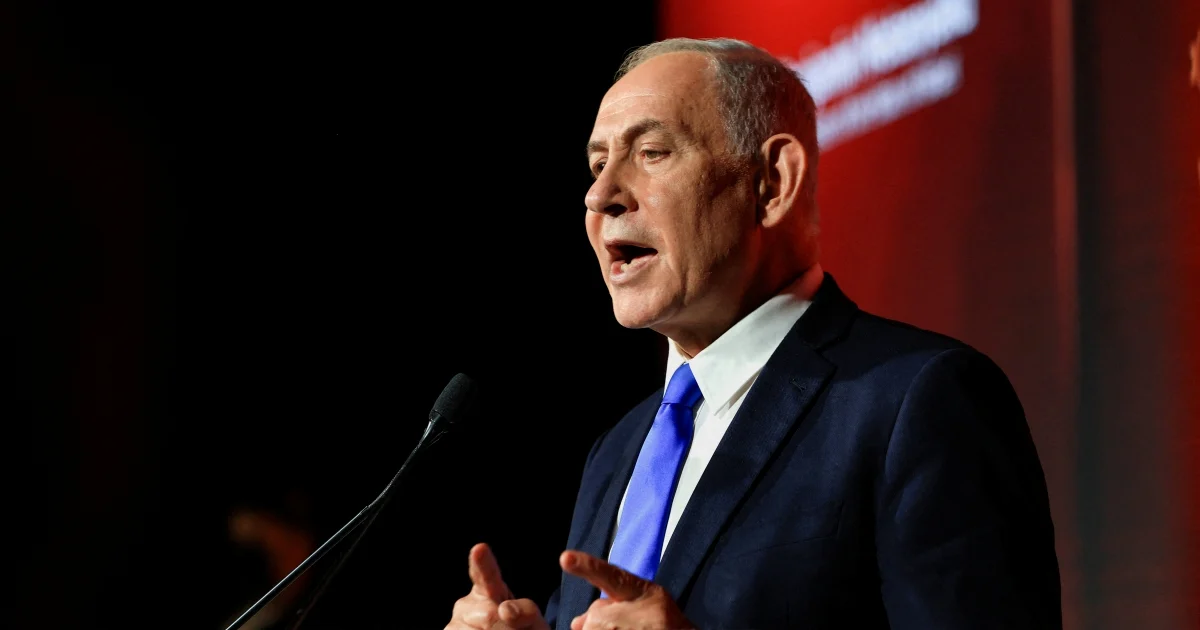
Israeli Prime Minister Benjamin Netanyahu has signalled an open-ended commitment to maintaining military forces in southern Lebanon, indicating that the duration of Israel's presence in the region will depend on conditions on the ground rather than a predetermined timeline. The statement, made on Sunday, underscores the complexity of the current Middle Eastern security landscape and raises questions about the long-term stability of the Lebanon-Israel border region, an area of critical strategic importance to the broader Middle East.
Netanyahu's declaration comes amid heightened regional tensions and reflects Israel's broader security doctrine regarding its northern frontiers. The open-ended nature of the commitment suggests that Israeli military planners are preparing for an extended engagement in southern Lebanon rather than a brief incursion. This approach signals to both Lebanese authorities and international observers that Israel intends to maintain a substantial military footprint until it determines that security threats have been sufficiently mitigated or neutralised.
The issue of Israeli forces in southern Lebanon carries significant historical weight, given previous military interventions and prolonged occupations in the region. Lebanese civilians and government officials have expressed concerns about the implications of an indefinite Israeli military presence, particularly regarding sovereignty and the country's already fragile political stability. The presence of Israeli troops in southern Lebanon also affects regional dynamics involving Hezbollah, the Iran-backed militant group that maintains significant influence in Lebanese politics and society.
Beyond the Lebanon question, Netanyahu reiterated Israel's steadfast opposition to Iran developing nuclear capabilities, a position that has defined Israeli security policy for decades. This dual emphasis—on Lebanon and Iran—reflects how Israel views these issues as interconnected components of a broader regional security challenge. Iran's influence over Hezbollah and its support for various militant organisations throughout the Middle East represent core Israeli security concerns that drive policy decisions in multiple theatres.
The statements reflect the complexity facing policymakers in the region, where military, diplomatic, and strategic considerations intersect. Israel's determination to prevent Iranian nuclear advancement has been a constant refrain regardless of which government holds power in Jerusalem, surviving changes in administration and shifts in domestic politics. This consistency underscores how deeply embedded Iran's nuclear programme is within Israeli strategic calculations.
For Malaysia and Southeast Asian observers, these developments warrant close attention given the region's reliance on stable global energy markets and international trade routes. The Middle East remains a critical region for global commerce, and escalations in Israeli-Lebanese tensions or broader conflict with Iran could have cascading economic consequences affecting commodity prices, shipping routes, and investor confidence across Asia.
The international community faces a delicate balancing act in responding to Netanyahu's pronouncements. Maintaining Lebanese sovereignty while acknowledging Israel's legitimate security concerns requires sustained diplomatic engagement from regional actors and international stakeholders. The United Nations, which deploys peacekeepers along the Lebanon-Israel border through UNIFIL, has particular responsibility for monitoring developments and encouraging compliance with relevant resolutions.
Netanyahu's statements also carry implications for coalition politics within Israel itself. Security and military matters traditionally command broad support across the Israeli political spectrum, though the duration and scope of military operations can generate domestic debate. His unqualified commitment to maintaining forces in southern Lebanon as long as necessary likely reflects calculations about both external security requirements and internal political considerations.
The situation illustrates the fragility of peace arrangements in the Middle East and the ongoing challenge of managing competing security interests across borders. Historical precedent suggests that open-ended military commitments often become entrenched, creating diplomatic complexities for eventual withdrawal or de-escalation. Lebanese stakeholders, including the government and various political factions, must navigate the reality of Israeli military presence while attempting to preserve national dignity and territorial integrity.
Regional analysts suggest that the path forward depends significantly on the actions of various parties, including Lebanese authorities, Hezbollah, Iran, and the international community. Netanyahu's rhetoric, while firm on security matters, leaves room for interpretation regarding the specific conditions that would determine when Israeli objectives in southern Lebanon might be considered sufficiently achieved to warrant withdrawal. This ambiguity reflects genuine uncertainty about what outcomes would satisfy Israeli security requirements.
As the situation develops, Malaysia and other Southeast Asian nations may find themselves called upon to support diplomatic initiatives aimed at de-escalation. The region's commitment to multilateralism and peaceful conflict resolution suggests a role for ASEAN engagement, particularly through existing mechanisms for international cooperation. Economic interdependence between Southeast Asia and the Middle East creates mutual interests in reducing tensions and maintaining stability.
The convergence of Lebanon and Iran issues in Netanyahu's statement demonstrates how security challenges in the Middle East remain deeply interconnected. Israeli policymakers cannot address southern Lebanon in isolation from broader concerns about Iranian regional ambitions and the activities of Iranian-supported groups. This integration of multiple security concerns into a unified strategic framework shapes Israeli decision-making and likely influences the timeline Netanyahu referenced regarding military operations.