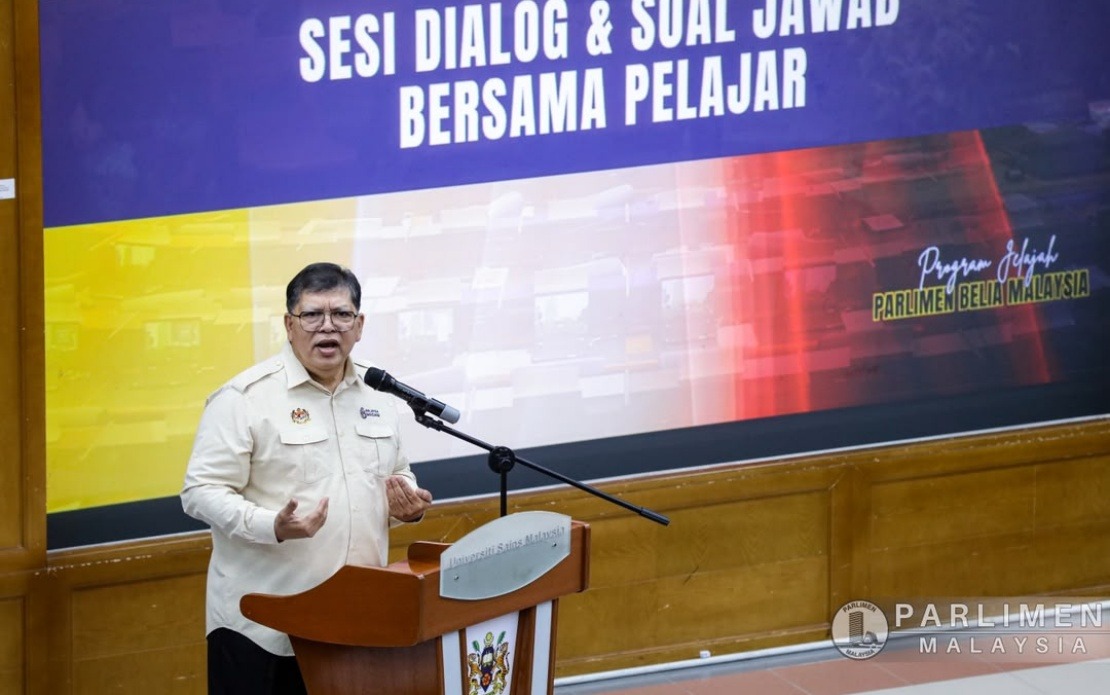
The Malaysian parliament faces a critical responsibility to demonstrate the principles of effective democracy to a new generation of leaders, according to Dewan Rakyat Speaker Tan Sri Johari Abdul. With the Malaysian Youth Parliament set to convene on September 11, Johari has emphasised that Parliament must function not merely as a debating chamber for elected representatives, but as an institution worthy of public respect and trust—one capable of serving as an exemplary model of democratic governance for future generations seeking to learn how national legislatures should operate.
Johari's call reflects a wider concern that the behaviour and procedural standards exhibited within parliamentary chambers carry significant weight beyond their immediate legislative function. In an era of social media connectivity and live parliamentary broadcasts, virtually every statement, gesture, and procedural action undertaken by Members of Parliament reaches audiences far beyond the physical walls of the chamber. This expanded visibility means that young Malaysians observing parliamentary proceedings gain direct exposure to how elected representatives treat one another, engage with opposing viewpoints, and prioritise national interests over partisan advantage. The Speaker stressed that Malaysian Youth Parliament participants—individuals who will eventually hold positions of influence across government, civil society, and the private sector—will absorb lessons about democratic practice through careful observation of their elected seniors.
The emphasis on dignity, order, and integrity-driven proceedings reflects Johari's conviction that parliamentary conduct must exemplify the values he wishes to instil in emerging leaders. He has specifically called for Members of Parliament to embrace debate characterised by factual accuracy, courteous engagement, and genuine solutions-oriented thinking rather than rhetorical point-scoring. Such standards, he suggests, provide the intellectual and behavioural foundation upon which youth participants can build their own understanding of how mature democracies function and how representatives ought to conduct themselves when entrusted with public responsibility.
The Malaysian Youth Parliament itself represents an ambitious institutional innovation designed to cultivate leadership capacity among young Malaysians between 18 and 30 years of age. Structured to mirror the composition and operations of the actual Dewan Rakyat, the initiative comprises 222 seats corresponding to parliamentary constituencies across the country. Rather than functioning as a mock parliament with minimal substantive engagement, the Youth Parliament operates as a genuine legislative forum where youth-led organisations and movements can form political groupings, contest elections, debate policy, and experience the mechanisms of representative democracy firsthand.
The institutional framework distinguishes itself by remaining non-partisan in character and carefully separate from Malaysia's actual party political system. To date, more than ten distinct parties have formed within the Youth Parliament platform, drawing membership from youth organisations formally registered with Parliament Malaysia. This structure permits young people to engage in genuine political competition and coalition-building while maintaining an educational focus uncomplicated by the sectarian interests that sometimes characterise mainstream political contestation. The arrangement allows participants to experience negotiation, compromise, and legislative process without the stakes and historical grievances that burden national politics.
Parliament Malaysia has launched an extensive grassroots recruitment campaign targeting three hundred thousand eligible young Malaysians for registration before the Youth Parliament Elections scheduled for August. The electoral calendar provides specific procedural milestones beginning with nomination day on July 8, followed by official candidate announcements on July 11. A twenty-seven-day campaign period running from July 12 through August 7 permits candidates nationwide to present platforms and build support among their constituencies. The actual voting process, conducted entirely online through the dedicated e-PBMy system, will run for twenty-four hours from ten in the morning on August 8 until ten in the morning on August 9, ensuring accessibility for young people regardless of geographic location.
The opening ceremony and formal appointment of Youth Assembly Members on September 11 will inaugurate a new parliamentary term for the Malaysian Youth Parliament. Operating according to a structured annual calendar, the Youth Parliament will convene three times each year with each sitting lasting two full days. Youth Parliament members will serve two-year terms, providing sufficient continuity for participants to develop legislative experience and pursue substantive projects while maintaining sufficient turnover to ensure fresh perspectives and broad participation opportunities across age cohorts.
The recent institutional reorganisation represents a significant evolution in how Malaysia conceptualises youth engagement with governance structures. Previously operating under the Ministry of Youth and Sports since its 2015 establishment, the Malaysian Youth Parliament transferred to full management and implementation by Parliament Malaysia in October 2023 following government approval. This transition underscores official recognition that youth democratic participation functions most effectively when integrated with, and supervised by, the legislative institution itself rather than treated as an ancillary youth affairs programme. The shift potentially elevates the Youth Parliament's institutional status and resource allocation while positioning it more centrally within Malaysia's democratic infrastructure.
For Malaysian observers and regional democracy advocates, the Youth Parliament initiative addresses a pervasive challenge across Southeast Asia: cultivating informed, engaged, and democratically-minded citizens during a period when younger generations often express scepticism toward established political institutions. By providing structured experience with legislative process, electoral competition, and policy deliberation in a supportive educational environment, the programme offers practical alternatives to purely classroom-based civics instruction. Young Malaysians participating in the Youth Parliament gain firsthand understanding of how motions are framed, how competing interests are negotiated, and how legislation emerges through democratic procedure—knowledge difficult to acquire through textbooks alone.
Speaker Johari's emphasis on parliamentary exemplification carries particular significance given contemporary challenges facing democratic institutions worldwide. In contexts where young people increasingly form political opinions through social media rather than institutional observation, the visibility and quality of parliamentary performance becomes increasingly consequential. If Members of Parliament demonstrate respectful disagreement, evidence-based argument, and transparent concern for constituent welfare, youth observers absorb normalised expectations for political conduct. Conversely, parliamentary displays of incivility, rhetorical excess, or apparent self-interest can reinforce cynicism about democratic governance among young citizens still forming their political consciousness.
The timing of the Malaysian Youth Parliament's expanded programme coincides with broader Southeast Asian efforts to strengthen democratic institutions and increase youth civic participation. Thailand, Indonesia, and other regional democracies have experimented with youth parliaments and deliberative forums seeking to bridge generational divides in political engagement. Malaysia's experience with scaled youth parliamentary participation may offer instructive lessons for regional peers regarding effective institutional design, resource requirements, and capacity-building approaches. The programme's success in recruiting and engaging three hundred thousand young Malaysians would constitute a significant milestone in regional youth democratic participation, potentially influencing how other Southeast Asian nations structure youth engagement initiatives.
Registration and further programme details remain available through the official Malaysian Youth Parliament portal at https://pbmy.parlimen.gov.my/my/, with the platform providing comprehensive information regarding electoral procedures, candidate requirements, and participation eligibility. The deadline for registration before the August elections creates an imminent opportunity for eligible young Malaysians to engage with the initiative. For observers tracking democratic development and youth engagement across Southeast Asia, Malaysia's expanded Youth Parliament programme warrants close attention as evidence of how regional democracies are attempting to cultivate the next generation of informed, engaged citizens committed to democratic principles and institutions.