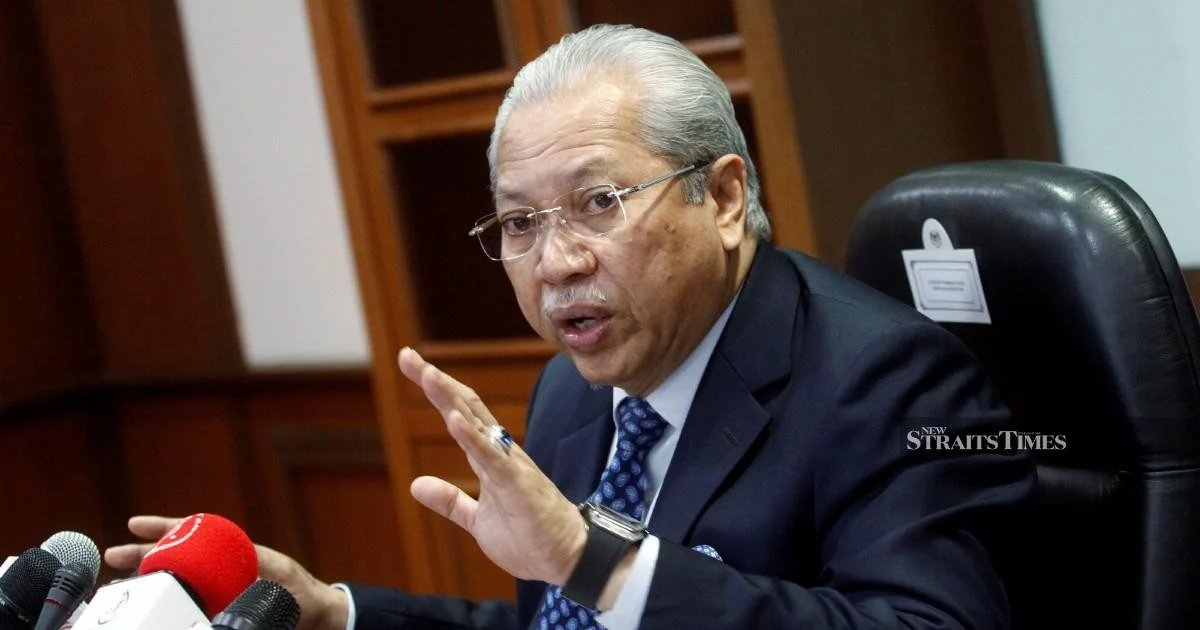
Pas president Datuk Seri Hamzah Zainudin moved swiftly to dispel mounting speculation about internal fractures within Perikatan Nasional by stating unequivocally that his party has neither attempted nor harboured intentions to expel Bersatu from the coalition. His comments, delivered in Kota Baru, represent an attempt to stabilise a partnership that has faced considerable scrutiny following reports of disagreement among its constituent parties.
The public clarification becomes particularly significant given the visible deterioration in party relations that observers have documented over recent months. While the leadership of both Pas and Bersatu have sought to maintain a facade of unity at the coalition level, friction over candidate selection, campaign strategy, and resource allocation has become increasingly difficult to conceal. By directly addressing the matter, Hamzah appears intent on preventing further erosion of confidence in the PN structure among grassroots supporters and coalition partners alike.
The Perikatan Nasional arrangement, which emerged as a reorganisation of opposition politics following the 2022 general election, depends fundamentally on the goodwill and compromise of its members. Pas and Bersatu form the primary anchors of this coalition, and any severance between them would substantially diminish PN's credibility as a viable alternative government. The Malaysian political landscape has demonstrated repeatedly that opposition coalitions lacking internal coherence struggle to present themselves as competent administrators to undecided voters.
Hamzah's intervention reflects broader concerns about cohesion within PN structures. The coalition has attempted to position itself as a reformist alternative to the government-supporting Barisan Nasional and the ruling Pakatan Harapan alliance, yet internal contradictions have frequently undermined this messaging. Tensions between Pas's Islamic governance emphasis and Bersatu's pragmatic multi-racial positioning have created philosophical differences that occasionally translate into operational conflict.
The situation reflects a common challenge in Malaysian opposition politics, where ideological compatibility rarely translates seamlessly into cooperative governance structures. Pas brings substantial grassroots organisation, particularly in rural and semi-urban constituencies, while Bersatu contributes experienced administrators and institutional memory from recent federal government involvement. Neither party can easily replace the other's contribution without substantially weakening the overall coalition proposition.
For Malaysian voters observing from the sidelines, these internal coalition dynamics matter considerably. They signal whether opposition parties can subordinate immediate competitive interests to broader strategic objectives. In the lead-up to potential electoral contests, such public reassurances become essential for maintaining supporter enthusiasm and managing expectations about post-election governance arrangements.
The international dimension adds another layer to these calculations. Observers within the region monitor Malaysian political stability closely, and prolonged questions about opposition coalition durability can influence investor confidence and regional assessments of institutional robustness. While such considerations rarely dominate domestic political discourse, they nonetheless inform the calculus of major political actors who recognise Malaysia's significance within Southeast Asian economic and security architecture.
Historically, Malaysian political coalitions have frequently fractured under pressure, sometimes within remarkably short timeframes following electoral results. The relatively recent experience of Pakatan Harapan's collapse in 2020, merely two years after forming a federal government, remains a cautionary reference point for current participants in multi-party arrangements. All coalition partners now understand viscerally that partnership declarations require continuous maintenance and transparent communication to avoid misunderstandings that escalate into permanent ruptures.
The Perikatan Nasional leadership has invested considerable effort in developing institutional mechanisms to resolve disputes and coordinate positions before they metastasise into public conflicts. Hamzah's statement should be understood partly as reinforcement of these mechanisms and a signal to party members that established dispute-resolution channels remain functional. The appearance of stability in coalition structures typically matters more than perfect harmony; voters become alarmed primarily when they witness open hostility rather than occasional disagreement managed through proper procedures.
Looking forward, the sustainability of Pas-Bersatu cooperation will depend on their capacity to identify compelling shared objectives that transcend tactical partisan advantage. Whether these involve specific policy commitments, electoral pacts in particular constituencies, or institutional reforms, cooperation requires constant reinforcement through senior leadership engagement and visible collaborative achievement. Hamzah's remarks represent one such reinforcement, though observers will rightfully assess the durability of such statements through monitoring subsequent interparty interactions and coordination effectiveness.
For Malaysian political analysts, this episode illustrates the perpetual tension between coalition building and intra-coalition competition inherent to multi-party democracies. While Hamzah's denial may temporarily reduce speculation about Bersatu's future in Perikatan Nasional, more fundamental questions about the coalition's long-term coherence and programmatic clarity will continue demanding attention from party strategists and potential supporters evaluating which coalition deserves their political commitment.