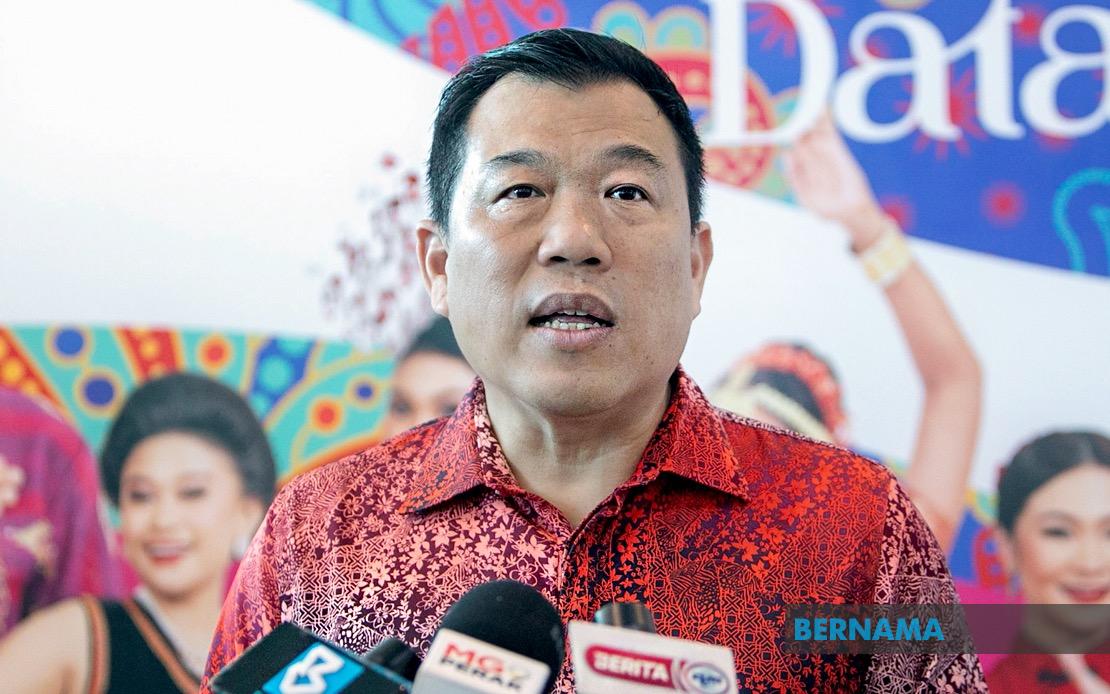
Perak's tourism sector is demonstrating resilience in the domestic market even as international visitor flows decline, signalling a broader trend reshaping travel patterns across Malaysia. State Tourism, Industry, Investment and Corridor Development Committee chairman Loh Sze Yee announced during the Pantai Timur Fest 2026 in Ipoh this week that overnight domestic tourist arrivals grew modestly from 10.2 million in 2024 to 10.4 million in the following year. The marginal increase of 200,000 visitors reflects steady local confidence in the state as a regional getaway destination, a pattern increasingly important given headwinds facing international tourism.
Contrasting sharply with this domestic growth, Perak's international tourist arrivals contracted by approximately 1.5 per cent during the same period. This decline underscores the vulnerability of Malaysia's tourism sector to external shocks and structural challenges. Loh attributed the drop primarily to the withdrawal of direct flight services on the Singapore-Ipoh route, a critical gateway that historically channelled Southeast Asian visitors northward into Peninsular Malaysia. The loss of this connectivity represents a significant competitive disadvantage for Perak, which competes with established destinations such as Kuala Lumpur and Selangor for premium international leisure and business travellers.
Beyond flight disruptions, the global oil crisis and its cascading effect on aviation economics have compressed demand among price-sensitive and discretionary travellers. Rising ticket costs and operational pressures on carriers have made regional routes less financially viable, forcing airlines to consolidate services on high-volume corridors. For Perak, a state positioned as an emerging destination rather than an established hub, this rebalancing of airline networks translates into diminished accessibility and reduced visibility in source markets such as Singapore, Thailand, and beyond.
Within the broader Malaysian tourism landscape, Perak occupies the third position nationally in domestic visitation, trailing Selangor's dominant 36.4 million overnight arrivals and Kuala Lumpur's 35.1 million, according to data from Chief Statistician Datuk Seri Dr Mohd Uzir Mahidin. With 23.6 million domestic visitors, Perak commands a substantial but secondary share of Malaysia's internal leisure and business travel. This ranking reflects the state's established attractions, from Ipoh's colonial heritage and limestone formations to natural reserves and food tourism, yet the gap between Perak and the leading destinations suggests untapped potential for deepening market penetration.
The strategic decision to host the Pantai Timur Fest 2026 in Ipoh addresses both the immediate challenge of re-energising regional visitation and the longer-term objective of repositioning Perak within Malaysia's tourism ecosystem. Tourism Malaysia's director-general Mohd Amirul Rizal Abdul Rahim articulated the rationale clearly: Ipoh's northern location serves as an optimal hub for promoting the East Coast's unique cultural and natural assets to visitors across the northern, central, and southern regions of Peninsular Malaysia. This geographic logic reflects a deliberate attempt to convert Perak's transit appeal into extended-stay tourism, leveraging the state as a springboard for discovering Kelantan, Terengganu, and Pahang.
The festival's structure, featuring thirty exhibition booths operated by tourism businesses from the three East Coast states, demonstrates an evolving regional marketing approach that bundles destination offerings across political boundaries. Rather than promoting Perak in isolation, the exercise positions the state within a larger narrative of East Coast discovery, appealing to diverse traveller segments including families seeking heritage experiences, adventure tourists exploring natural landscapes, and cultural enthusiasts interested in traditional craftsmanship and cuisine. This collaborative framework acknowledges that modern tourism demand, particularly among domestic travellers with limited vacation time, increasingly demands variety and experiential depth rather than single-destination focus.
The programming diversity—spanning cultural performances, traditional craft demonstrations, heritage food exhibitions, and interactive activities—reflects understanding that contemporary domestic tourism is experience-driven. Malaysian travellers, particularly from urban centres and younger demographics, seek authentic encounters with local culture, artisanal products, and regional cuisine. The emphasis on heritage food promotions and craft demonstrations thus serves both immediate commercial objectives and longer-term destination branding, establishing emotional and cultural connections that encourage repeat visitation and word-of-mouth advocacy.
Special travel package offers and discounts presented during the festival align with the Visit Malaysia 2026 campaign, a national initiative designed to capitalise on Malaysia's positioning within post-pandemic leisure recovery and increased regional travel activity. By embedding Perak and East Coast offerings within this broader national campaign, organisers create price-competitive opportunities for budget-conscious domestic travellers while building momentum toward anticipated year-end tourism peaks. The discount strategy becomes particularly potent during economic uncertainty, when Malaysian consumers require tangible incentives to commit to leisure spending.
The divergence between Perak's domestic and international tourism trajectories reflects systemic vulnerabilities in Malaysia's tourism infrastructure. Flight connectivity remains foundational to international visitation; the Singapore-Ipoh route closure symbolises how airline network decisions, often driven by global fuel prices and yield management algorithms, can rapidly disrupt carefully developed destination brands. For Perak's policymakers, this dependency suggests necessity for economic diversification beyond tourism, while simultaneously reinforcing the strategic importance of maintaining competitive ground transportation options and accommodation quality.
Domestic tourism's relative resilience during this period also highlights the importance of the local market in underpinning economic activity across regions. With Malaysian travel patterns increasingly oriented toward domestic destinations, Perak's ability to attract these travellers—whether for weekend escapes, extended holidays, or business events—becomes economically critical. The 200,000 additional overnight visitors between 2024 and 2025 represent direct revenue flowing into accommodation, hospitality, retail, and attractions, generating employment and supporting small and medium enterprises throughout the state.
Moving forward, Perak's tourism strategy must address the structural challenge of international connectivity while maximising domestic market penetration. Enhanced digital marketing targeting urban Malaysian audiences, strategic partnerships with domestic airlines and travel platforms, and consistent investment in attraction development and service quality form the foundation for sustainable growth. The Pantai Timur Fest 2026 represents one tactical initiative within this broader repositioning, demonstrating awareness that regional collaboration and experience-focused tourism offer viable pathways to resilience even as global aviation dynamics remain volatile.
The emerging picture of Perak's tourism sector ultimately reflects Malaysia's post-pandemic reorientation toward domestic strength while confronting the realities of international market competition. Success will require balancing pragmatic acceptance of current flight limitations with strategic advocacy for restored connectivity, while simultaneously deepening the domestic market relationships that currently sustain the sector's momentum and economic contribution.
%22%2F%3E%3C%2Fpattern%3E%3C%2Fdefs%3E%3Crect%20width%3D%22100%25%22%20height%3D%22100%25%22%20fill%3D%22url(%23phaey7g)%22%2F%3E%3Crect%20width%3D%22100%25%22%20height%3D%22100%25%22%20fill%3D%22url(%23phaey7p)%22%2F%3E%3Ctext%20x%3D%2250%25%22%20y%3D%2250%25%22%20text-anchor%3D%22middle%22%20dominant-baseline%3D%22central%22%20fill%3D%22rgba(255%2C255%2C255%2C0.95)%22%20font-family%3D%22Georgia%2C%20'Times%20New%20Roman'%2C%20serif%22%20font-weight%3D%22700%22%20font-size%3D%22170%22%20letter-spacing%3D%22-0.02em%22%3EKelantan%3C%2Ftext%3E%3C%2Fsvg%3E)