Perikatan Nasional has established a formal requirement that no meetings or events organized under the coalition's banner may proceed without the express consent of its chairman, according to a statement from the political alliance's secretary-general. The announcement effectively centralizes decision-making authority and raises questions about internal governance structures within the opposition bloc that has been positioning itself as an alternative federal government.
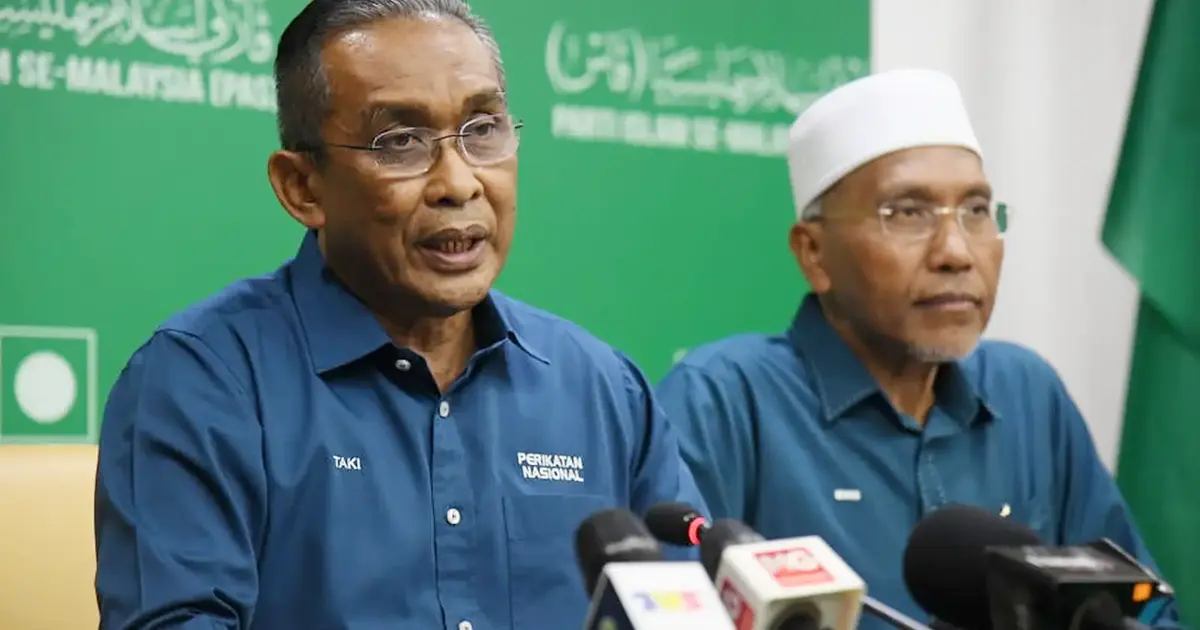
Takiyuddin Hassan, who holds the secretariat position, issued this clarification in response to media reports suggesting that Bersatu president Muhyiddin Yassin had taken steps to schedule a PN Supreme Council gathering for the current day. The timing of this assertion underscores tensions within Perikatan Nasional, which comprises multiple political parties with occasionally divergent strategic interests despite their stated coalition commitments.
The new protocol represents a significant consolidation of chairmanship powers within the coalition structure. By requiring advance authorization for any formal assembly or gathering conducted under the PN umbrella, the leadership has established a gatekeeping mechanism that fundamentally alters how member parties can coordinate their activities. This approach contrasts with more decentralized coalition models where individual parties retain greater autonomy over calling internal meetings.
For Malaysian observers and political analysts, the development illuminates the delicate balancing act required to maintain coalition cohesion among parties with distinct organizational cultures and political agendas. Perikatan Nasional has always been somewhat loosely structured compared to Barisan Nasional, reflecting its origins as a more informal alliance that coalesced in recent years around shared opposition to the previous federal government's policies.
Muhyiddin Yassin's position as Bersatu president carries particular weight within PN, given Bersatu's role as a founding member and the fact that Muhyiddin himself chairs the coalition. The apparent attempt to convene a Supreme Council session without formal coordination through secretariat channels suggests either a procedural miscommunication or a deliberate move to exercise independent authority—a distinction with significant implications for coalition stability.
The secretary-general's statement can be interpreted as either clarifying existing procedures or establishing new ones, depending on how strictly previous protocols were enforced. In Malaysian political practice, such announcements often serve dual purposes: they may address immediate disputes while also reshaping expectations going forward. The formality with which Takiyuddin issued this directive suggests the matter was deemed sufficiently consequential to warrant public clarification rather than private resolution.
For member parties within Perikatan Nasional, particularly those with smaller grassroots organizations than Bersatu, this requirement creates additional bureaucratic hurdles when attempting to mobilize coalition resources or coordinate party activities with PN branding. It also raises practical questions about emergency procedures—whether extraordinary meetings can be called during genuine crises or whether even urgent matters require advance chairmanship authorization.
The governance question extends beyond internal procedure into the realm of political communication and public perception. A coalition that appears unable to convene its top decision-making body without careful coordination risks appearing fractious or poorly managed to voters evaluating its readiness to govern. Conversely, tight centralized control, while maintaining coherence, might signal that individual component parties lack meaningful influence over coalition direction.
Regionally, Perikatan Nasional's internal dynamics hold significance for opposition politics throughout Southeast Asia, where coalition-building remains essential for challenging entrenched ruling parties. How PN manages internal differences while maintaining public unity offers a template—whether successful or cautionary—for similar blocs elsewhere in the region grappling with comparable organizational challenges.
The incident also reflects broader tensions within Malaysian opposition politics about power distribution and decision-making authority. As PN positions itself as a credible government alternative, questions about how power would be exercised if the coalition reached federal office naturally intensify. Internal governance patterns often prove predictive of how parties exercise authority once they attain power, making these procedural battles more than mere administrative matters.
Muhyiddin Yassin's reported attempt to convene the Supreme Council independently may have reflected either his judgment that such action fell within his prerogatives as PN chairman or a strategic move to demonstrate independence from Takiyuddin's secretariat. The secretary-general's response, by contrast, emphasizes coordination through established channels and hierarchical approval processes. How these two figures navigate similar situations in future will significantly shape whether Perikatan Nasional maintains functional unity or devolves into open factional conflict.
Going forward, this requirement will likely become a standard reference point in PN internal governance, cited by either those seeking to legitimize or challenge various meetings and announcements. The precedent established through this exchange will inform how subsequent disputes over coalition authority are resolved, potentially setting patterns that could persist should PN ever transition from opposition to governmental roles.