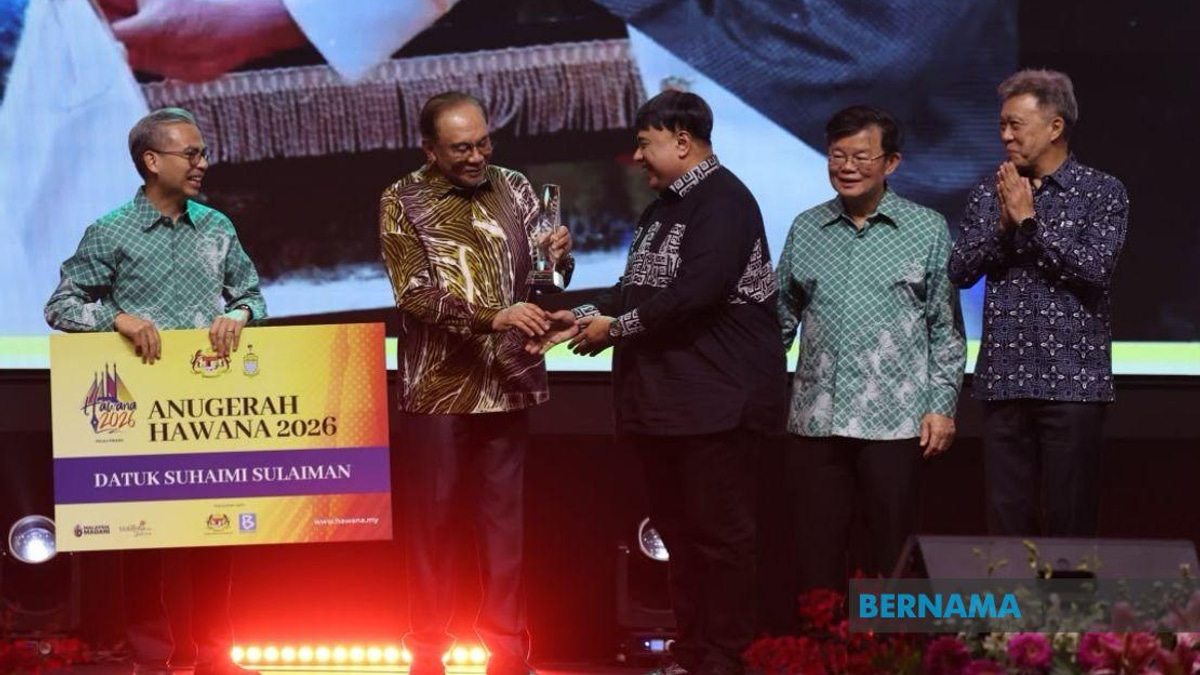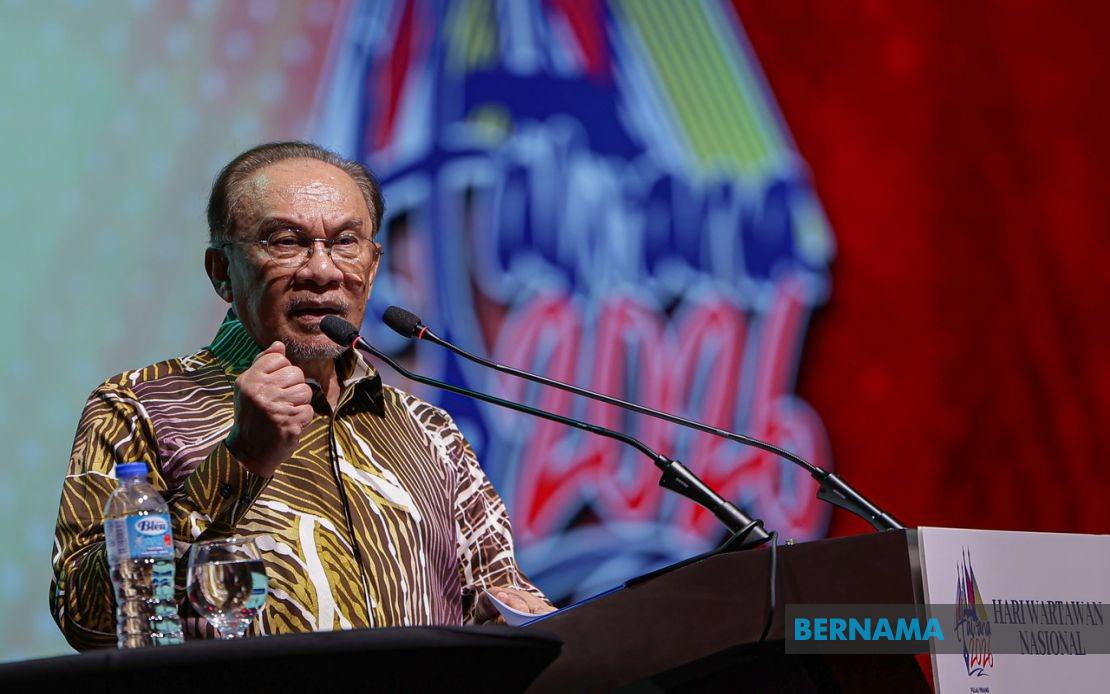
Prime Minister Datuk Seri Anwar Ibrahim has publicly endorsed the appointment of former Federal Court judge Tan Sri Nallini Pathmanathan as chairman of the Malaysian Media Council, viewing the move as instrumental in rehabilitating the regulator's reputation and restoring confidence among the public and media industry. Speaking at the National Journalists' Day (HAWANA) 2026 event in Butterworth on June 20, Anwar emphasised that Nallini's distinguished judicial background and established integrity made her uniquely positioned to lead the council through a critical period of institutional renewal.
The Prime Minister's vocal backing of Nallini reflects the government's recognition that the MMC, a relatively young self-regulatory body established under the Malaysian Media Council Act 2025, requires robust leadership to navigate the complex relationship between press freedom and ethical journalism standards. By elevating a figure with impeccable credentials from the bench, Anwar signalled that the administration intends to insulate the council from political interference while demonstrating genuine commitment to media governance reform. This approach carries particular significance in Southeast Asia, where questions about media independence remain contentious and where regulatory bodies often struggle with perceptions of partisan bias.
Nallini's appointment followed a considered deliberation process within the MMC board, which unanimously endorsed her candidacy during a meeting on May 26. The consensus among board members underscores the absence of internal dissent regarding her suitability, though her elevation from the judiciary to media regulation represents a notable career transition. Her appointment marks the first substantive leadership change since the MMC's formal establishment and comes at a time when the council is tasked with developing operational frameworks that balance the protection of journalistic standards with the preservation of editorial independence.
The Malaysian Media Council operates as the country's primary self-regulatory institution for the media industry, charged with a mandate that extends across several interconnected responsibilities. These include elevating and maintaining journalistic standards across news organisations, processing and adjudicating public complaints related to media conduct, promoting ethical practices throughout the sector, and functioning as an institutional guardian of media freedom within the broader democratic framework. For a nation where media pluralism coexists with ongoing debates about responsible journalism, the council's effectiveness directly impacts both industry credibility and public discourse quality.
Anwar's emphasis on Nallini's credentials speaks to a deliberate strategy of appointing individuals with established institutional authority rather than ideological alignment. Drawing on judicial experience implies a commitment to impartial decision-making, reasoned interpretation of standards, and resistance to political pressure—qualities that Malaysian media stakeholders have frequently cited as essential for effective self-regulation. The Prime Minister's public statement thus functions partly as reassurance to journalists and news organisations that the council will operate with genuine independence rather than serve as an instrument of state control.
The event itself, held in Penang with the attendance of Communications Minister Datuk Fahmi Fadzil and Penang Chief Minister Chow Kon Yeow, highlighted the alignment between federal and state-level leadership on media governance priorities. Such visible coordination suggests a broader understanding across government that media regulation requires stable, well-resourced institutions capable of commanding respect from industry stakeholders. The participation of senior civil servants, including Communications Ministry officials and Bernama leadership, further reinforced the seriousness with which the administration views the MMC's institutional development.
For Malaysian journalists and news organisations, Nallini's appointment carries practical implications beyond symbolism. A chairman with judicial temperament and experience with complex statutory interpretation may bring greater transparency to complaint adjudication processes and develop more coherent jurisprudence regarding ethical breaches. This consistency matters particularly in a diverse media landscape where outlets range from major newspapers and broadcasters to digital-native organisations operating under different resource constraints and editorial models. Establishing clear, defensible standards applicable across this spectrum has long posed interpretive challenges for media regulators.
The timing of this appointment also reflects Malaysia's positioning within regional media governance debates. Several Southeast Asian nations have faced international criticism for media regulations perceived as restrictive, while others have struggled with the opposite problem—insufficient industry standards leading to misinformation and public distrust. By appointing a respected judicial figure to lead its self-regulatory council, Malaysia seeks to demonstrate commitment to a middle path: robust standards maintained through industry self-regulation rather than state control. This positioning carries diplomatic and soft-power implications beyond domestic media relations.
Looking forward, Nallini's leadership will be tested through her handling of several high-stakes issues likely to cross the MMC's desk. These include complaints about coverage of contentious political developments, disputes over reporting standards during election periods, concerns about digital media regulation, and questions about how traditional ethical frameworks apply to newer media formats. Her judicial background may prove valuable in these contexts, though it also means she will need to develop familiarity with media industry operations and dynamics that courtroom experience does not necessarily provide.
The broader institutional challenge facing the MMC concerns its legitimacy among three distinct constituencies: the media industry itself, which must comply with council determinations; the public, which expects the council to act as an effective complaint mechanism; and the government, which created the regulatory framework but purportedly respects the council's independence. Balancing these interests requires leadership that commands respect across all three domains—precisely the profile Nallini's appointment appears designed to achieve. Her success in this role will substantially influence perceptions of whether self-regulation can function effectively in Malaysia's media ecosystem.