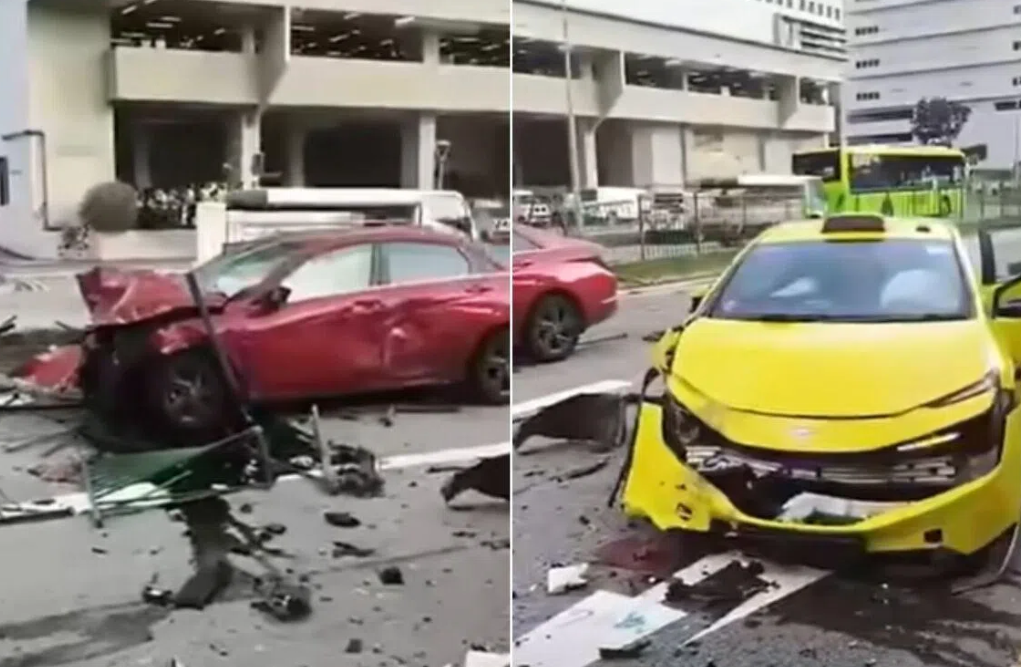
A 36-year-old Singapore man has been formally charged with multiple offences stemming from a serious traffic incident in Kallang on June 17, in which his vehicle collided with a taxi, leaving two occupants injured. Mohamed Firdouz Mohamed Akram appeared in court on June 19 to answer to charges that carry significant penalties, including allegations of operating a motor vehicle while impaired by methamphetamine, commonly known as Ice, and driving without proper licensing.
The incident unfolded in the early morning hours along Kallang Bahru at approximately 8 am when Firdouz allegedly lost control of his vehicle after consuming Ice. The collision caused substantial harm to two innocent people: the 60-year-old taxi driver sustained chest pain injuries from the impact, while his 43-year-old passenger complained of tailbone trauma. The severity of these injuries underscores the genuine danger posed by drug-impaired driving, a growing concern across Southeast Asia as methamphetamine abuse continues to rise in the region.
According to court documents, Firdouz's behaviour following the crash raised further alarm among authorities. Rather than remaining at the scene to assist the injured or cooperate with emergency responders, he abandoned his vehicle and fled the location before police arrived. This hit-and-run component of the incident demonstrates a deliberate attempt to evade accountability and is itself a serious criminal matter that reflects poorly on a driver's sense of responsibility.
The subsequent police investigation proved swift and productive. Officers discovered Firdouz's identity within hours and located him within five hours of the initial report. Upon examination of the abandoned vehicle, police uncovered an extensive collection of contraband items that painted a troubling picture of his circumstances. Suspected drugs, drug paraphernalia, vaporisers, and a knuckleduster were seized as evidence. The presence of these items suggests a pattern of substance abuse and possible involvement in criminal activity extending beyond the driving incident alone.
Further evidence emerged when court documents revealed that Firdouz allegedly possessed two knives in his possession while occupying a room at the Village Hotel Katong on Marine Parade Road at around 1 pm on the same day. This discovery led to two additional weapons possession charges being filed against him, adding layers of complexity to the prosecution's case and raising questions about the circumstances surrounding his activities that day.
The absence of a valid Class 3 licence constitutes another serious breach, indicating that Firdouz should not have been operating the vehicle at all. This violation transforms what might otherwise be categorized as a driving error into a matter of operating an unregistered or improperly licensed vehicle, a distinction that Singapore authorities take seriously as it undermines road safety frameworks.
The legal consequences Firdouz now faces are substantial. Singapore's traffic and drug-driving laws impose severe penalties designed to deter such behaviour. For driving under the influence of drugs, an offender faces potential imprisonment for up to one year, a fine of up to S$10,000, or both. Additionally, causing injuries to others while driving in a dangerous manner carries separate penalties of up to one year imprisonment and fines ranging from S$2,000 to S$10,000. These cumulative charges suggest that the prosecution intends to take a comprehensive approach to the offence.
The case highlights the intersection of drug abuse and road safety, a critical issue for Malaysian and other Southeast Asian authorities. The methamphetamine problem in the region has significant implications for driving safety and public welfare. Police data across the region consistently demonstrate that drug-impaired driving contributes disproportionately to serious and fatal accidents, yet enforcement and sentencing vary considerably across jurisdictions.
Singapore's approach reflects a zero-tolerance policy toward drug-driving, consistent with its broader stance on substance abuse. The swift apprehension and serious charges indicate authorities' determination to tackle this problem, setting a benchmark for regional enforcement efforts. For Malaysian law enforcement and judiciary, such cases serve as instructive examples of how comprehensive investigation and appropriate charging can address the multi-faceted dangers presented by individuals operating vehicles while impaired and armed.
The victims in this case—an elderly taxi driver and a middle-aged passenger—represent the often-forgotten human dimension of traffic law enforcement. Their injuries, though not described as life-threatening, disrupted their lives and serve as concrete reminders of why driving regulations exist. Both individuals were simply going about their daily business when they became victims of another person's recklessness and substance abuse.
Firdouz's case will return to court on July 17 for further mention, allowing time for the compilation of additional evidence and witness statements. The interim period may also see plea negotiations, though the severity of charges suggests the prosecution is prepared for trial. As the case progresses, it will likely attract attention from traffic safety advocates and substance abuse prevention organizations across Singapore and the broader Southeast Asian region.