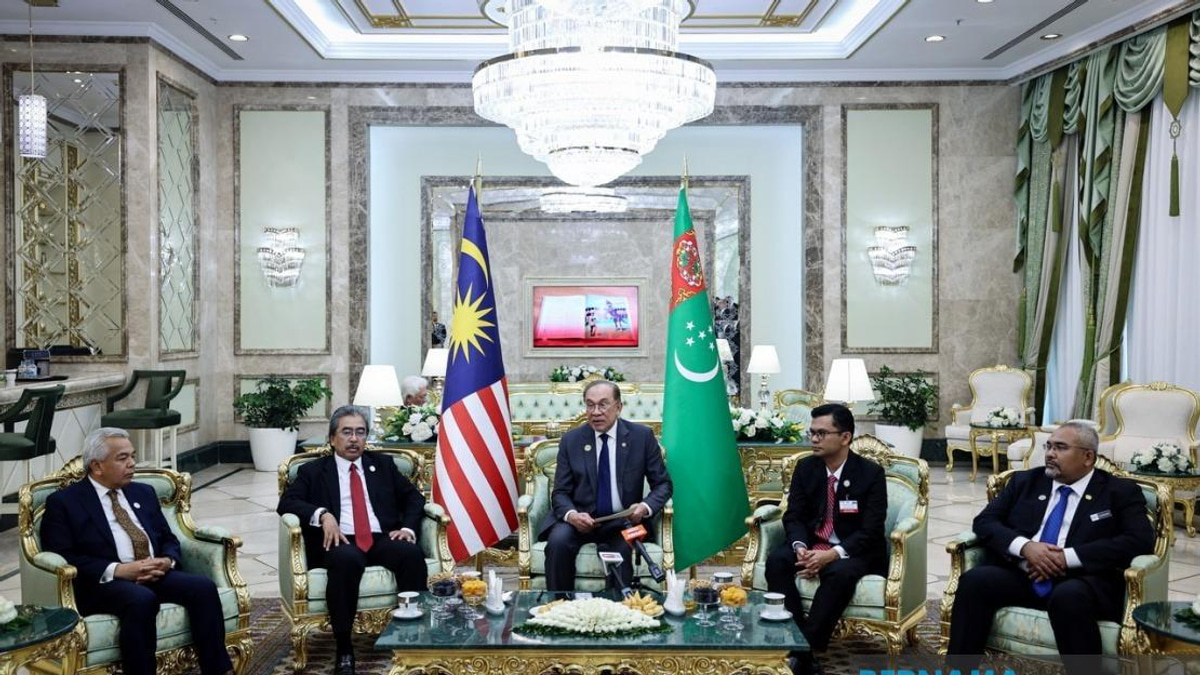
The Sultan of Perak, Sultan Nazrin Shah, has received a comprehensive briefing from the federal government on its strategic initiatives to bolster communication infrastructure development across the state and widen the reach of digital services to underserved communities.
During a formal audience with Communications Minister Datuk Fahmi Fadzil, the Perak ruler was updated on the broader vision for telecommunications expansion in the state, a development underscoring the monarchy's continued engagement with ministerial-level policymaking on matters affecting their territories. The timing of such briefings reflects the customary protocol of keeping state rulers informed on major federal projects with local ramifications, particularly in sectors as critical as digital connectivity.
Beyond infrastructure expansion alone, the discussion between Fahmi and Sultan Nazrin also encompassed the equally pressing dimension of online safety, a concern that has gained prominence across Southeast Asia as digital adoption accelerates. The inclusion of this topic suggests a recognition that simply expanding network reach without addressing the security and welfare dimensions of digital access creates incomplete policy outcomes. This dual focus aligns with global best practices where connectivity and safety are treated as inseparable components of digital transformation.
The Communications Ministry's engagement with the Perak palace signals the importance stakeholders attach to state-level buy-in for infrastructure projects. Perak, as a state with significant rural and semi-urban areas, presents the typical challenges of bridging digital divides that characterise much of Malaysia outside the Klang Valley. Infrastructure investments in such regions frequently require coordination between federal authorities and state leadership, making such briefings a necessary step in the project pipeline.
For Perak specifically, improved communication infrastructure holds implications extending beyond mere convenience. Enhanced broadband penetration can unlock economic opportunities in agriculture, tourism, and small business sectors that rely on digital tools for market access and operational efficiency. The state's positioning as a gateway region between the northern and central corridors also means that telecommunications quality directly affects logistics and supply chain competitiveness.
The minister's public acknowledgment of the audience, conveyed through social media, underscores the political value of demonstrating that the Communications Ministry is actively advancing its mandate with stakeholder engagement. Such transparency helps build confidence among the public and state governments that federal agencies are delivering on their mandates, though it also reflects the modern governance practice of using digital platforms to communicate substantive policy work.
Online safety, which emerged as a focus point during the discussion, represents a growing policy challenge across Malaysia. As internet penetration deepens, concerns about cyber fraud, digital privacy, child exploitation, and misinformation have escalated correspondingly. State rulers, increasingly aware of their subjects' digital vulnerabilities, have become more receptive to safety-focused briefings from federal agencies, recognising that their traditional duty of care extends into the digital domain.
The briefing also contextualises the broader telecommunications landscape in Malaysia, where achieving universal service obligations remains an ongoing challenge. While urban centres have largely achieved competitive broadband markets with multiple service providers, rural Perak still relies substantially on government-supported programmes to ensure connectivity. Infrastructure investments in such areas often require subsidisation or public-private partnerships to be financially viable, making clear communication with state leadership essential for securing cooperation.
Looking forward, such high-level engagements between ministries and state rulers are likely to increase as digital transformation becomes ever more central to socio-economic development. The inclusion of online safety in the discussion reflects an emerging consensus that responsible digital expansion requires simultaneous attention to safeguarding, education, and regulatory frameworks. For Perak residents and businesses, the outcomes of such policy discussions will ultimately determine whether the state can fully capitalise on digital opportunities while protecting its population from evolving cyber threats.
The minister's expression of goodwill towards the Perak royal family at the conclusion of his statement follows conventional courtesy, yet it also serves to reinforce the collaborative spirit between federal and state authorities that these infrastructure initiatives require. In the context of Malaysia's federal system, such cordial engagement between national government representatives and state rulers remains instrumental to successful policy implementation, particularly in infrastructure sectors where state support facilitates smooth project execution and public acceptance.
%22%2F%3E%3C%2Fpattern%3E%3C%2Fdefs%3E%3Crect%20width%3D%22100%25%22%20height%3D%22100%25%22%20fill%3D%22url(%23ph3sm85g)%22%2F%3E%3Crect%20width%3D%22100%25%22%20height%3D%22100%25%22%20fill%3D%22url(%23ph3sm85p)%22%2F%3E%3Ctext%20x%3D%2250%25%22%20y%3D%2250%25%22%20text-anchor%3D%22middle%22%20dominant-baseline%3D%22central%22%20fill%3D%22rgba(255%2C255%2C255%2C0.95)%22%20font-family%3D%22Georgia%2C%20'Times%20New%20Roman'%2C%20serif%22%20font-weight%3D%22700%22%20font-size%3D%22226%22%20letter-spacing%3D%22-0.02em%22%3ERussia%3C%2Ftext%3E%3C%2Fsvg%3E)