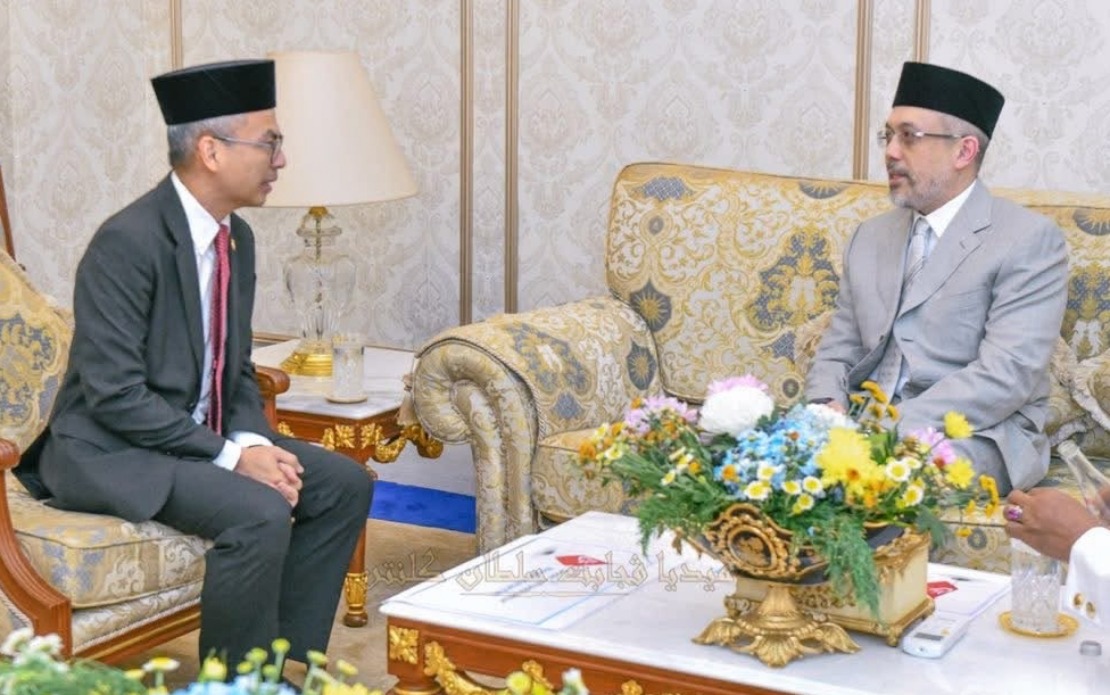
The Crown Prince of Kelantan, Tengku Muhammad Fakhry Petra, received Communications Minister Datuk Fahmi Fadzil at Kota Lama Palace in Kota Bharu on June 16, marking a formal engagement between the royal institution and the communications ministry over pressing digital governance matters. The hour-long audience, which commenced at 5 pm, provided an opportunity to brief the Crown Prince on the ministry's operational scope and current policy priorities, underscoring the significance of royal engagement in addressing contemporary governance challenges.
The meeting focused substantively on the proliferation of fraudulent social media accounts and coordinated disinformation campaigns, matters of growing concern across Malaysia's digital landscape. These fake accounts have become vectors for spreading false narratives and inflammatory content deliberately targeting the Malaysian Royal Institution—an especially sensitive issue given the constitutional role and symbolic importance of the monarchy in Malaysia's political and social fabric. The briefing reflected the ministry's recognition that safeguarding institutional integrity in the digital sphere requires dialogue with state-level leadership and royal patronage.
The fake account problem has accelerated dramatically across major social platforms, exploiting algorithmic weaknesses and the difficulty platforms face in verifying user authenticity. Bad actors leverage these accounts to amplify divisive content, manipulate public discourse, and undermine trust in institutions. Malaysia, like other Southeast Asian democracies, has grappled with this challenge; false claims can spread faster than corrections and often target sensitive subjects including royalty, religion, and ethnicity. The ministry's engagement with Kelantan's royalty signals a coordinated approach to combating these threats at multiple governance levels.
For Malaysian communications policy, the encounter demonstrates an emergent recognition that addressing digital misinformation demands partnership beyond federal structures. Kelantan, as one of Malaysia's sultanates, wields significant cultural and political influence, particularly in its home state. Securing royal backing for communications ministry initiatives strengthens the legitimacy and reach of counter-misinformation efforts. The Crown Prince's willingness to engage directly with the minister indicates receptiveness to collaborative governance frameworks aimed at protecting institutional reputations and maintaining social cohesion.
The issue of false news targeting the Royal Institution carries particular weight in Malaysia's constitutional context. Under the Federal Constitution, the institution enjoys protection and reverence as a unifying symbol. Coordinated campaigns to diminish respect for the monarchy or spread false allegations about royal actions therefore pose risks to national harmony. The ministry's emphasis on this theme during the audience suggests a strategic focus on distinguishing between legitimate criticism and malicious disinformation designed to erode public confidence in foundational institutions.
From a regional perspective, Malaysia's struggle with fake accounts mirrors challenges facing neighbouring democracies including Indonesia, Thailand, and the Philippines, where social media misinformation has fuelled political instability, communal tensions, and institutional crises. The Malaysian approach—engaging royal and ministerial leadership in dialogue—offers a distinctive model grounded in Malaysia's particular constitutional arrangements and cultural values. However, it also highlights the tension between protecting institutions from malicious attack and preserving space for legitimate political discourse and free expression.
The Communications Ministry has increasingly positioned itself as the lead agency for addressing digital governance concerns, from data protection to misinformation control. This audience with Tengku Muhammad Fakhry reflects broader institutional efforts to build consensus among Malaysia's power centres regarding digital policy priorities. By securing royal acknowledgment of the fake account problem, the ministry gains a valuable ally in framing public discussion around the urgency of platform accountability and user verification mechanisms.
Practically, the discussion likely touched on potential collaboration between the ministry and Kelantan's royal administration on digital literacy initiatives, platform reporting mechanisms, and coordinated responses to specific disinformation campaigns. Royal institutions command significant social media following and cultural authority; leveraging these assets for public education about fake accounts and verification practices could meaningfully influence citizen behaviour. The gift presentation to Minister Fahmi—a ceremonial token—symbolised the formal nature of the partnership and mutual respect between the two institutions.
The attendance by senior officials from both the Communications Ministry and Kelantan's Sultan's Office, followed by informal interaction, underscored the collaborative intent behind the meeting. Such engagement, conducted with appropriate ceremonial formality, signals to the broader public service and to the digital platforms themselves that government and royal institutions are taking coordinated action. This unified messaging can incentivise platform compliance with Malaysian regulations and encourage users to report suspicious accounts more readily.
Moving forward, this dialogue may catalyse wider state-level engagement with communications policy, particularly regarding how local and federal authorities can coordinate responses to misinformation. Kelantan's demonstrated concern provides a template for the ministry to build similar partnerships with other sultanates, each facing unique digital governance challenges but sharing common interests in protecting institutions and ensuring accurate public information. For Malaysian citizens and regional observers, the meeting illustrates how traditional institutions and modern governance frameworks are being brought into conversation around digital age challenges that transcend conventional political boundaries and require sophisticated, multi-institutional responses.