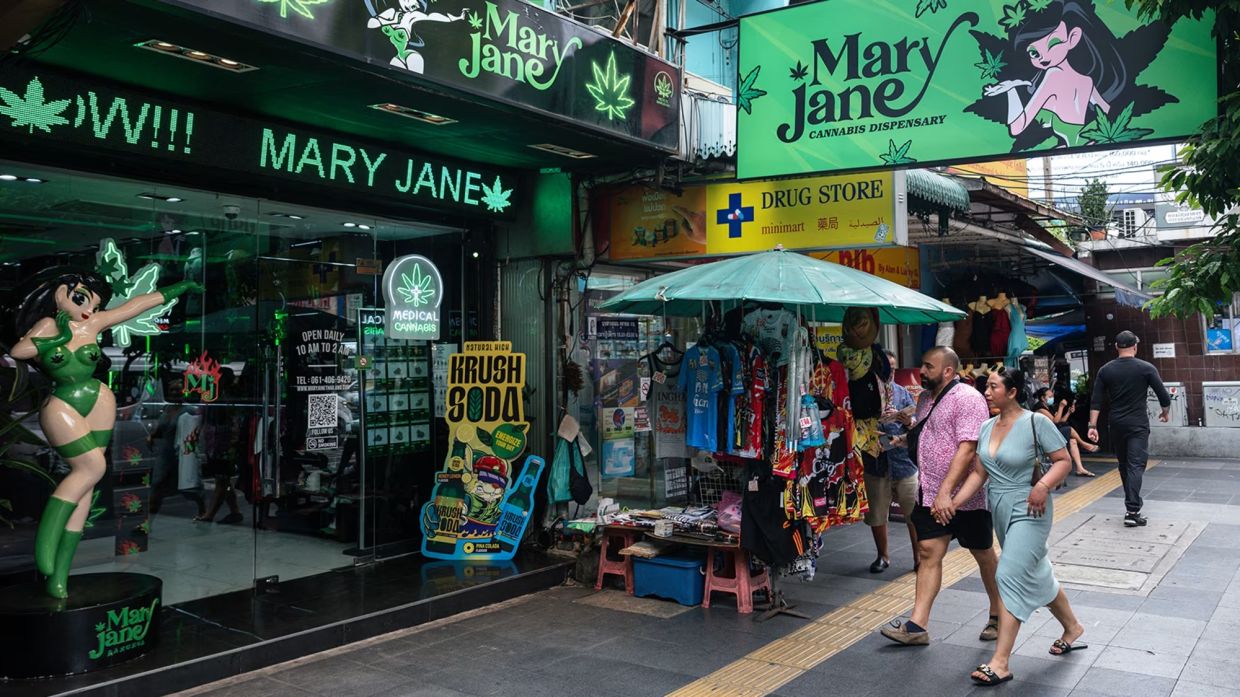
Thailand's approach to cannabis regulation is under intense pressure as lawmakers grapple with the consequences of legalisation that has spawned a chaotic marketplace filled with legal grey areas. The House Public Health Committee convened on June 18 to deliberate a fundamental question: should the kingdom return cannabis to its narcotics list while a comprehensive regulatory framework is being developed? The tension at that meeting crystallised a deeper conflict between those prioritising public health protection and those championing economic opportunity and farmers' livelihoods in a sector that has grown rapidly since liberalisation in June 2022.
Thailand's cannabis journey began with optimism when the government removed the plant from narcotics control nearly three years ago, positioning it as a potential agricultural product and source of traditional medicine. Yet the intervening period has revealed the perils of liberalisation without adequate legal scaffolding. Dr Tewan Thaneerat, deputy director-general of the Department of Thai Traditional and Alternative Medicine, acknowledged persistent concerns since that pivotal shift, noting that the government has been scrambling to establish order through regulations issued in June 2025. These rules were designed to govern research, cultivation, sales, processing and international commerce in alignment with global standards. However, piecemeal regulations have proven insufficient to prevent the mushrooming of uncontrolled operations and informal trading networks that undermine legitimate businesses and consumer safety.
The regulatory vacuum has created opportunities for exploitation that authorities struggle to contain. Ekkapop Sittiwantana, deputy chairman of the House Public Health Committee representing the People's Party, painted a picture of widespread unregistered cultivation and direct sales operating outside formal channels. He warned that these loopholes provide cover for grey-market enterprises that profit from minimal oversight while legitimate operators face mounting compliance costs. His proposal to temporarily return cannabis to narcotics control while a dedicated law is drafted reflects a pragmatic recognition that Thailand's current patchwork of regulations—overseen by multiple agencies including the Food and Drug Administration and the Department of Health Service Support—lacks the coherence needed to prevent abuse.
Medical professionals and public health advocates amplified these concerns during the committee hearing. Associate Professor Dr Smith Srisont, representing networks of doctors, academics and civic organisations focused on drug harm prevention, underscored the gap between legal classification and real-world impact. Although cannabis extracts containing more than 0.2 percent THC remain classified as narcotics, the availability of cannabis flowers—categorised merely as a controlled herb—has already demonstrably affected Thai communities. His perspective reflects a growing unease among health professionals about teenage exposure and consumption patterns that may be accelerating alongside rising accessibility. The argument for temporary re-listing cannabis as a narcotic before introducing a purpose-built regulatory regime has gained traction because it offers a circuit-breaker allowing time for comprehensive legislation without sacrificing commerce entirely.
The proposed regulatory blueprint, developed collaboratively by the Department of Thai Traditional and Alternative Medicine, the FDA, the Department of Health Service Support and the Office of the Permanent Secretary for Public Health, represents an attempt to create order where chaos currently reigns. A draft cannabis and hemp bill has undergone a tortuous path through Thailand's political system, first submitted to the Cabinet under a previous administration that dissolved before parliamentary consideration. The current public health minister remains committed to advancing this legislation, with public consultation periods scheduled to conclude by late July before Cabinet resubmission. The deliberate pace reflects recognition that cannabis law touches multiple constituencies with divergent interests, from traditional medicine practitioners to agribusiness investors to concerned parents worried about youth access.
The FDA has attempted to demonstrate that existing oversight mechanisms function adequately within their limited scope. The agency maintains strict supervision of cannabis-derived herbal medicines intended for disease prevention and treatment, with licensing protocols covering production facilities, processing plants, imports and retail outlets in certified shops. Inspections revealed that most tested products met required standards, including proper labelling and material quality. Yet the FDA's own testimony inadvertently exposed the central problem: enforcement capacity terminates where sales channels operate outside the formalised system. For every licensed shop subject to inspection, multiple unregistered vendors peddle cannabis products through social media, informal networks and street-level transactions that escape regulatory detection or intervention.
Those operating cannabis businesses legally presented a starkly different narrative to the committee, one emphasising the precariousness of their position rather than the threat they pose. The Thai Cannabis Future Network argued that licensed operators are being outcompeted by black-market suppliers, illegal imports and the fundamental instability created by legislative uncertainty. They raised serious allegations regarding official pressure, including suggestions that some authorities leverage licensing decisions to extract unofficial benefits from operators. The network further highlighted the practical barriers facing farmers seeking to transition into legitimate medical applications, noting that prescriptions required for certain pathways prove prohibitively expensive and are allegedly being diverted to non-healthcare settings where they command value primarily as regulatory authorisation rather than genuine medical instruments.
The cannabis industry advocates insisted that the plant's value extends beyond mainstream medical applications into traditional therapeutic practices and agricultural economics that foreign investors and large conglomerates may not appreciate or protect. Their call for law-making grounded in public participation rather than designed to entrench incumbent advantages reflects frustration that legitimacy has been granted without genuine inclusion of farming communities or small-scale operators in crafting the rules governing their livelihoods. This perspective highlights a structural tension in Thailand's regulatory development: how can authorities prevent illicit commerce and protect public health while ensuring that economic opportunities benefit intended stakeholders rather than concentrating wealth and privilege among large-scale operations and connected enterprises?
The committee's immediate directive to compile a comprehensive inventory of all licensed cannabis retailers in Bangkok and FDA-certified cannabis products signals a recognition that granular data precedes effective governance. Chairman Sakoltee Phattiyakul's emphasis on establishing mandatory distance thresholds between cannabis shops and educational institutions demonstrates concern about youth accessibility that transcends ideological positioning. Both medical advocates and industry representatives acknowledge that young people's access to cannabis has expanded notably since liberalisation, though they diverge sharply on whether this represents a public health crisis or a symptom of inadequate information and education rather than availability per se.
The debate now proceeding through the committee will test Thailand's capacity for balanced regulation in an evolving landscape. Officials are preparing to consider alternative draft laws from multiple sectors, including both the Public Health Ministry's proposed legislation and bills potentially originating from the broader public sector. This pluralistic approach—welcoming competing regulatory visions rather than imposing a single ministry-drafted template—reflects parliamentary recognition that no single entity has captured all the relevant expertise, values and interests that cannabis regulation must accommodate. The outcome will shape whether Thailand models itself on strict prohibition frameworks, regulated legal markets akin to Canada or Uruguay, or maintains hybrid approaches that some Southeast Asian neighbours have attempted.
The underlying challenge confronting Thai policymakers mirrors struggles unfolding across Asia as cannabis laws liberalise incrementally. Thailand's experience demonstrates that simply removing plants from narcotics lists without simultaneously establishing comprehensive legal frameworks creates spaces where informal economies flourish, official corruption finds purchase and public health protection erodes beneath the weight of competing agendas. The next months, as public consultations conclude and the Cabinet considers new legislation, will reveal whether Thailand's political system can craft rules sophisticated enough to prevent abuse while flexible enough to accommodate legitimate agricultural and medicinal applications. For Malaysia and neighbouring jurisdictions watching Thailand's regulatory evolution, the stakes extend beyond Thailand's borders, influencing regional drug policy trends and setting precedents that may inform Southeast Asia's collective approach to cannabis in coming years.

%22%2F%3E%3C%2Fpattern%3E%3C%2Fdefs%3E%3Crect%20width%3D%22100%25%22%20height%3D%22100%25%22%20fill%3D%22url(%23ph49t16g)%22%2F%3E%3Crect%20width%3D%22100%25%22%20height%3D%22100%25%22%20fill%3D%22url(%23ph49t16p)%22%2F%3E%3Ctext%20x%3D%2250%25%22%20y%3D%2250%25%22%20text-anchor%3D%22middle%22%20dominant-baseline%3D%22central%22%20fill%3D%22rgba(255%2C255%2C255%2C0.95)%22%20font-family%3D%22Georgia%2C%20'Times%20New%20Roman'%2C%20serif%22%20font-weight%3D%22700%22%20font-size%3D%22272%22%20letter-spacing%3D%22-0.02em%22%3EAnwar%3C%2Ftext%3E%3C%2Fsvg%3E)