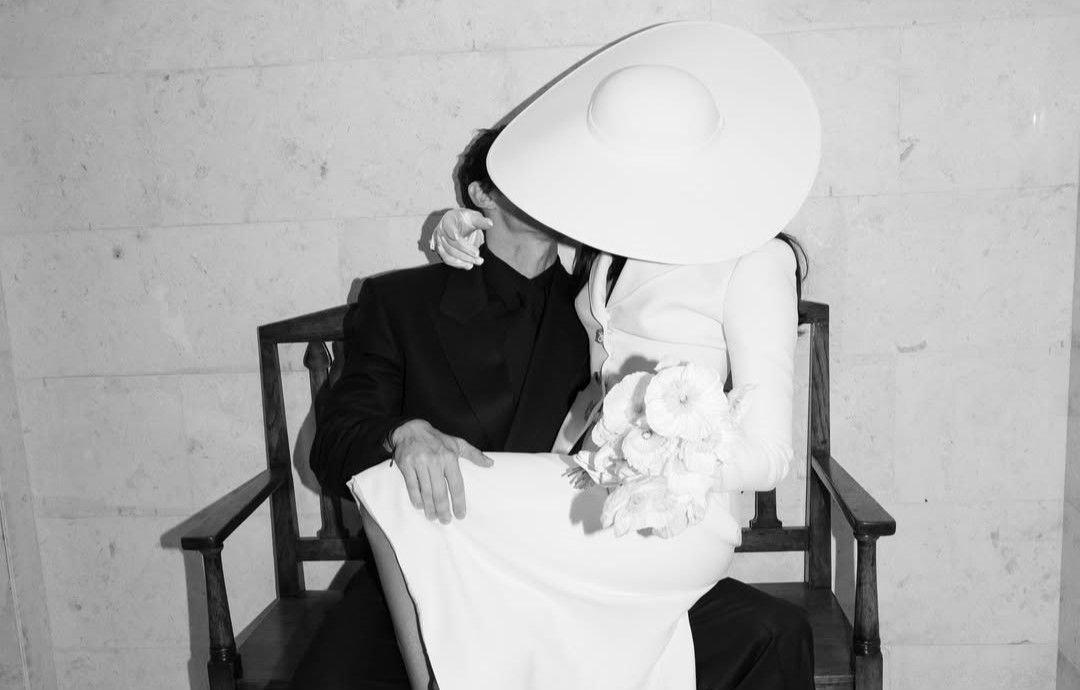
Dua Lipa's recent wedding to actor Callum Turner captured fashion headlines not merely for the surprise ceremony itself, but for the bride's bold sartorial choice: a custom ivory Schiaparelli skirt suit that deliberately eschewed traditional bridal conventions. The ensemble deliberately referenced Bianca Jagger's iconic 1971 wedding attire while asserting its own distinctly modern sensibility. This high-profile moment signalled something quietly significant within the fashion industry—the skirt suit, once relegated to corporate boardrooms and royal appearances, is experiencing a genuine stylistic renaissance.
The garment has undergone a fundamental transformation over recent seasons. What was once firmly associated with rigid dress codes and formal institutional settings has evolved into a vehicle for creative expression and contemporary style. Designers are now approaching the two-piece with renewed artistic ambition, experimenting with proportion, fabric weight, and silhouette in ways that would have seemed unthinkable a decade ago. The traditional skirt suit, which promised conformity and restraint, is being completely reimagined as a platform for individual expression and fashion-forward thinking.
Proenza Schouler has emerged as one of the driving forces behind this aesthetic revolution. The brand's recent collections pair streamlined blazers with flowing midi skirts, prioritising ease and movement over the stiff formality that characterised office-wear conventions. This approach represents a fundamental philosophical shift—tailoring that breathes rather than constrains, proportions that suggest sophistication without insisting upon it. The result feels refreshingly modern, stripping away the stuffiness that previously burdened the silhouette while preserving its inherent elegance and structural integrity.
Vivienne Westwood's interpretation of the skirt suit reveals how the same garment can be filtered through entirely different aesthetic sensibilities. The British house has long channelled the two-piece through its signature vocabulary of rebellion and romance, offsetting carefully constructed jackets with asymmetrical hemlines, draped fabrics, and unconventional proportions. This design philosophy demonstrates that the skirt suit need not adhere to any single vision—it is fundamentally flexible enough to accommodate multiple creative interpretations simultaneously.
The fundamental appeal of the contemporary skirt suit lies in its occupancy of a uniquely valuable middle ground within modern wardrobes. More structured and polished than a simple dress, yet considerably less formal and restrictive than traditional trouser suits, the skirt suit manages to project authority and professionalism without sacrificing femininity or personal style. This balance represents something increasingly precious in fashion—a garment that functions equally well in diverse contexts, from professional meetings to creative environments to social occasions.
The styling possibilities reflect this versatility admirably. A skirt suit can be anchored with sharp pointed-toe pumps for maximum formality, rendered more approachable through pairing with comfortable loafers, or deliberately disrupted by clean white trainers for a deliberately contemporary edge. These variations suggest a broader cultural shift toward wardrobes built on adaptability and longevity rather than rigid category thinking. Individual pieces must now justify their existence through their ability to perform multiple functions and integrate seamlessly across different contexts.
Celebrity endorsements have amplified the skirt suit's momentum considerably. Actress Zendaya's appearance at this year's CinemaCon wearing a sharply tailored skirt suit demonstrated how the silhouette can read as fashion-forward and contemporary when styled with confidence and conviction. The ensemble avoided any hint of corporate dullness or conservative timidity, instead projecting an aesthetic authority entirely distinct from institutional dress codes.
Melania Trump's sustained embrace of the skirt suit throughout her tenure as First Lady has similarly reinforced the garment's cultural significance. Her frequent appearances in meticulously tailored skirt suits from luxury fashion houses have helped cement the two-piece's association with power and authority while simultaneously demonstrating its ability to remain relevant across different generations and individual style philosophies. The consistency of her approach has inadvertently become a masterclass in how to wear the silhouette with absolute conviction.
The skirt suit's resurgence reflects larger conversations within contemporary fashion about what constitutes genuine style versus mere conformity. The silhouette has shed much of the stuffiness that made it feel obligatory rather than desirable, embracing instead a more playful and experimental aesthetic. Designers are increasingly recognising that authority and femininity need not exist in opposition—the skirt suit becomes a vehicle for exploring how these qualities might instead complement and enhance one another.
What distinguishes this current revival from previous iterations is the deliberate emphasis on personal choice and expression. The skirt suit is no longer something women feel compelled to wear as professional armor, but rather something they might select because it genuinely aligns with their aesthetic vision and practical needs. This fundamental psychological shift transforms the garment from obligatory uniform into genuine fashion choice, a distinction with considerable significance for how contemporary dressing is understood and practised.
For Malaysian and Southeast Asian fashion audiences, the skirt suit's revival carries particular relevance given the region's professional culture and climate considerations. The adaptability of modern skirt suits—their ability to transition between formal and informal contexts, their compatibility with varied styling approaches—makes them especially valuable within multicultural professional environments where dressing appropriately while maintaining personal style remains an ongoing negotiation.
The enduring strength of the contemporary skirt suit ultimately derives from its fundamental practicality combined with its aesthetic flexibility. It successfully bridges professional necessity with personal expression, offers real versatility across multiple contexts, and communicates authority without demanding uniformity. In fashion's latest evolution, the skirt suit proves that you need not abandon trousers to project confidence and competence—provided the two-piece in question has been thoughtfully designed for a genuinely modern world.