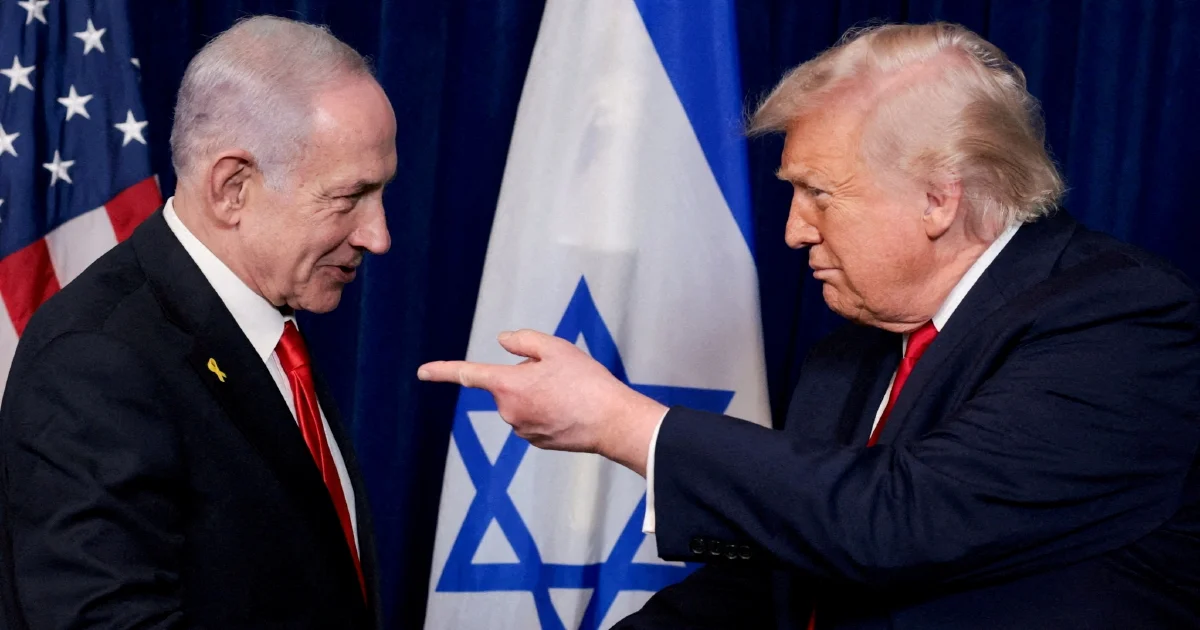
In a significant departure from his administration's typical public alignment with Israel, US President Donald Trump on Tuesday openly questioned the military strategy Israel has deployed in Lebanon against Hizbollah, expressing concern that the approach is causing excessive civilian harm. Trump suggested that levelling entire residential buildings was a disproportionate response to tracking down individual fighters, indicating a tension in the allied relationship that seldom surfaces in public discourse.
The criticism marks an unusual moment in the US-Israel partnership, where disagreements over military tactics have traditionally been aired privately rather than in public statements. By voicing these concerns openly, Trump has highlighted a mounting humanitarian crisis in Lebanon, where extensive Israeli bombardment campaigns have displaced hundreds of thousands of civilians and destroyed neighbourhoods across the country's southern regions and wider areas.
Lebanon has been devastated by the escalating conflict with Hizbollah, a militant group designated as a terrorist organisation by the United States and several other nations. The militarised group has fired rockets into northern Israel for months, prompting Israeli military responses that have progressively intensified into a comprehensive air campaign and ground operations. The civilian toll has become increasingly difficult to ignore as medical facilities report mounting casualties and international organisations document the scope of displacement.
For Malaysian observers and those throughout Southeast Asia, this public rupture between Washington and Tel Aviv carries particular significance. The region has historically avoided taking sides in Middle Eastern disputes, preferring a pragmatic approach to international relations. Yet Trump's remarks suggest that even staunch US allies face pressure when military operations result in civilian deaths at this scale, a principle with potential implications for regional security partnerships and international law discussions in forums like the UN and ASEAN.
The timing of Trump's statement coincides with intensifying diplomatic efforts by various parties to establish ceasefires and humanitarian corridors. International humanitarian organisations have warned that the current pace of destruction threatens to create a prolonged refugee crisis affecting neighbouring countries, particularly Syria, which already hosts millions of Palestinians and Syrians displaced by previous conflicts. This regional dimension underscores why even Washington cannot afford to remain silent on the humanitarian dimension of the conflict.
Israel's military has traditionally defended its approach as necessary to protect civilians on its side of the border from rocket attacks. The Israeli government argues that Hizbollah deliberately embeds itself within civilian infrastructure, complicating targeting decisions. However, Trump's public criticism suggests that the international tolerance for this justification—even from the United States—has limits when civilian casualties mount into the thousands.
The Lebanese government, already fragile and facing economic collapse, has been essentially powerless throughout the escalation. State institutions have minimal capacity to respond to humanitarian needs or assert control over Hizbollah in southern areas where the group maintains significant presence. This governance vacuum complicates any diplomatic resolution, as there is no clear Lebanese state authority with whom Israel can negotiate and who could enforce any agreement regarding Hizbollah's military activities.
Trump's intervention also reflects domestic American political considerations. His statement allows the administration to demonstrate concern for civilian welfare while maintaining overall support for Israel's security interests—a delicate balance required to manage domestic constituencies with varying perspectives on Middle Eastern policy. The comment suggests that even in an administration generally supportive of Israel, the visual evidence of civilian suffering captured by international media cannot be entirely dismissed in public messaging.
For the broader Asia-Pacific region, this episode reinforces an important lesson about military power and international opinion. Countries pursuing military objectives must increasingly account for civilian protection standards that transcend borders and political alliances. Malaysian policymakers and those throughout Southeast Asia who may face security challenges themselves will likely note that overwhelming military force, however effective tactically, carries reputational and diplomatic costs that can strain international relationships.
The Lebanese crisis represents one of the region's most urgent humanitarian emergencies, yet it remains somewhat overshadowed in global media by other conflicts. Trump's public criticism may raise its profile, potentially prompting greater international engagement on diplomatic solutions. Whether the comment translates into actual pressure on Israeli military strategy or remains primarily a public relations adjustment remains uncertain, but it signals that the international community's patience with civilian casualties has measurable limits.
Moving forward, the comment may influence how Israel calibrates its operations, though the fundamental security dilemma driving the conflict—Israeli civilians under rocket fire and Hizbollah's continued military threat—remains unresolved. Any sustainable solution will likely require diplomatic initiatives that address the security concerns of all parties while establishing firmer protections for civilian populations in contested areas. For now, Trump's criticism has at least created space in international discourse for acknowledging that military effectiveness and civilian protection need not be mutually exclusive considerations.