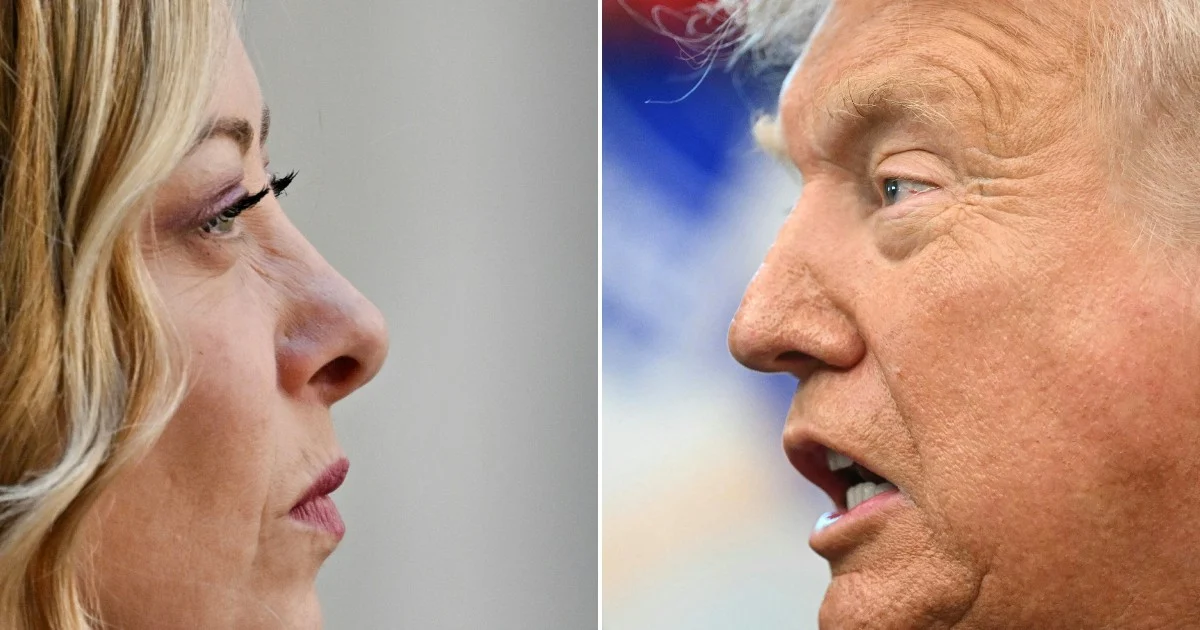
United States President Donald Trump has deepened an emerging diplomatic rift with Italian Prime Minister Giorgia Meloni, publicly asserting that she has repeatedly attempted to secure photographs with him—a claim he has now tied to broader disagreements spanning international security concerns and alliance management. The escalation, which unfolded during interactions on Saturday, marks a notable moment of tension between two leaders whose nations maintain close economic and security ties through NATO and transatlantic partnerships.
The specificity of Trump's accusation—centring on photographic opportunities—represents an unusual focal point for international diplomatic friction, yet reflects the modern reality of political communication where visual imagery carries significant weight in domestic and global perception. Within the context of high-level bilateral relations, requests for official photography are typically routine diplomatic protocol rather than contentious matters. That Trump has chosen to elevate and publicize such an interaction suggests underlying tensions that extend considerably beyond superficial courtesies between heads of state.
The broader disagreement between Washington and Rome encompasses substantive policy differences regarding Iran and NATO, two areas where the United States has sought to maintain particular leverage and direction within its alliance structures. Trump's administration has historically taken hawkish stances on Iranian affairs and has frequently contested NATO spending commitments from European member states, including Italy. These doctrinal differences create friction even between traditionally aligned partners, as different capitals weigh strategic priorities and regional concerns through distinct national interest frameworks.
Italy's position within these debates reflects both its commitment to Western alliances and its own geographical and economic considerations, particularly regarding energy security and Mediterranean regional dynamics. Prime Minister Meloni, leading a centre-right government, has generally aligned with traditional NATO positions while also navigating Italy's domestic political landscape, where diverse constituencies hold varying views on transatlantic relations and engagement with countries like Iran. This balancing act occasionally creates apparent inconsistencies that can frustrate Washington's expectations of unified allied messaging.
The photographic dispute, while initially appearing trivial, likely serves as a symbolic marker for deeper frustrations on both sides. From Trump's perspective, the alleged photograph-seeking may represent what he views as attempts by Meloni to boost her domestic political standing through association with the American president. From the Italian perspective, such requests are standard diplomatic practice designed to document high-level meetings and demonstrate international standing to domestic audiences. The clash reflects differing understandings of what constitutes appropriate engagement between allied leaders.
For regional observers across Southeast Asia and beyond, this tension between Washington and a key European ally illustrates the fragility of international relationships even among established partners. Nations in this region that depend on security arrangements and trade relationships with both the United States and European powers may find themselves navigating increasingly complex diplomatic waters should tensions between these actors intensify. The unpredictability demonstrated by such disputes can complicate long-term strategic planning and alliance coordination.
The timing of this escalation during what appeared to be a Group of Seven forum—a gathering of leading industrialized democracies—underscores how disagreements can surface and accelerate during multilateral meetings where leaders convene physically. Such settings both facilitate direct dialogue and create opportunities for personal friction to manifest publicly, affecting broader diplomatic atmospheres. Italy's role within the G7, as Europe's third-largest economy and a founding member of the alliance, makes such friction diplomatically significant within broader Western coordination efforts.
Trump's linking of the photograph dispute to substantive policy disagreements over Iran and NATO reflects a negotiating pattern he has employed throughout his political career, wherein personal grievances become entangled with policy objectives. This approach can prove effective in certain contexts by creating psychological pressure, yet it equally risks damaging relationships necessary for effective alliance management. European leaders, including Meloni, are generally unaccustomed to such publicly aired personal tensions and may struggle to calibrate appropriate responses that maintain diplomatic dignity while addressing underlying policy disputes.
The implications for transatlantic coordination extend beyond bilateral Italian-American relations. Other European capitals will closely observe how this situation develops, potentially becoming more cautious in their own engagements with the Trump administration or reassessing assumptions about allied cohesion. Such uncertainty can weaken the collective position of Western democracies when facing challenges from adversarial powers or navigating complex multilateral negotiations on trade, security, and global governance matters.
Moving forward, managing this disagreement will require careful diplomatic work from both sides to prevent symbolic disputes from undermining substantive collaboration. Italy's government faces the delicate task of defending its institutional dignity while maintaining the transatlantic relationship that underpins European security architecture. Similarly, the Trump administration must balance legitimate policy concerns with the diplomatic costs of personalizing international relations in ways that erode the trust necessary for effective long-term alliance management.
%22%2F%3E%3C%2Fpattern%3E%3C%2Fdefs%3E%3Crect%20width%3D%22100%25%22%20height%3D%22100%25%22%20fill%3D%22url(%23phaey7g)%22%2F%3E%3Crect%20width%3D%22100%25%22%20height%3D%22100%25%22%20fill%3D%22url(%23phaey7p)%22%2F%3E%3Ctext%20x%3D%2250%25%22%20y%3D%2250%25%22%20text-anchor%3D%22middle%22%20dominant-baseline%3D%22central%22%20fill%3D%22rgba(255%2C255%2C255%2C0.95)%22%20font-family%3D%22Georgia%2C%20'Times%20New%20Roman'%2C%20serif%22%20font-weight%3D%22700%22%20font-size%3D%22170%22%20letter-spacing%3D%22-0.02em%22%3EKelantan%3C%2Ftext%3E%3C%2Fsvg%3E)