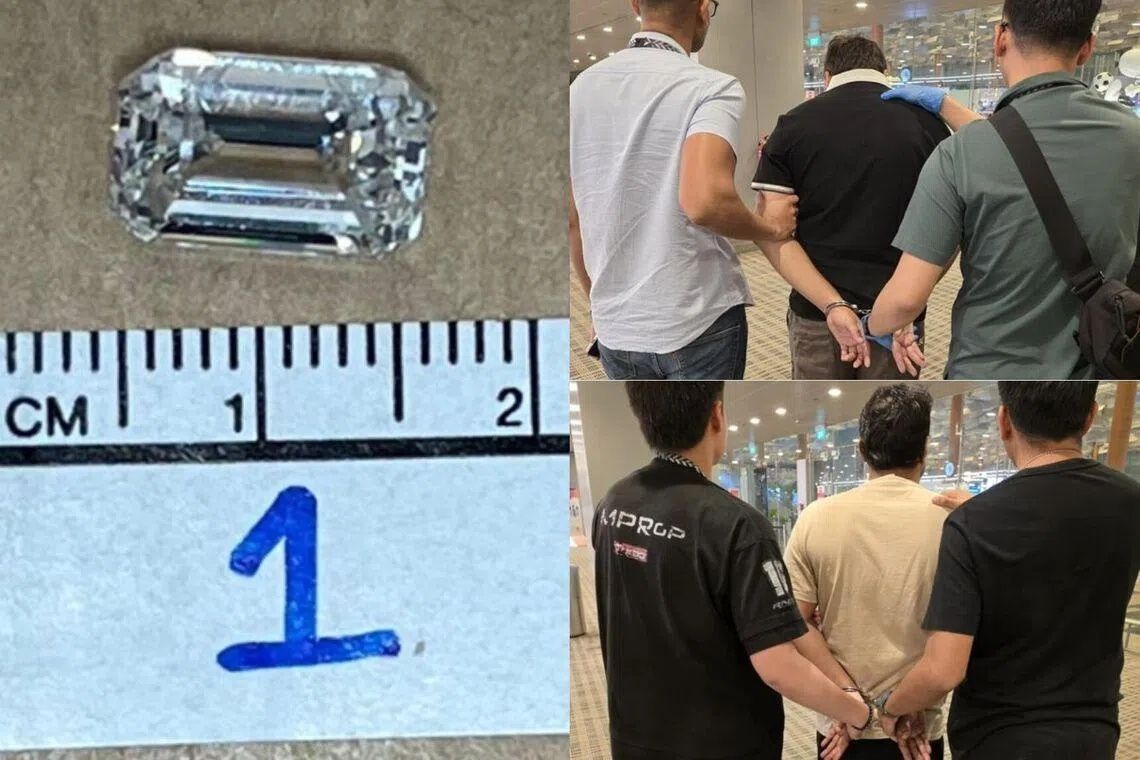
Singapore authorities have arrested two men aged 30 and 42 following the theft of a diamond valued at more than S$235,000 from a jewellery store in Chinatown. Police received an alert at 3.40pm on June 19 after staff at the outlet on Kreta Ayer Road discovered the heist during routine checks. The rapid apprehension of the suspects, who were detained at Changi Airport Terminal 3 on the same day, demonstrates the effectiveness of modern surveillance and investigative techniques in combating high-value retail crime in the region.
The theft employed a sophisticated switching method that has become increasingly common in luxury retail environments across Southeast Asia. According to preliminary investigations, the two suspects visited the jewellery store and expressed genuine interest in purchasing the diamond, thereby establishing a plausible reason for handling the valuable stone. While staff allowed them to examine the piece up close, the men executed a careful substitution, replacing the authentic diamond with a counterfeit version of sufficient quality to avoid immediate detection. This technique exploits the brief moments when retail staff are distracted or when multiple items are being shown simultaneously.
The discovery came swiftly when a shop assistant, following standard operating procedures, conducted a verification check after the men departed without completing a purchase. The abrupt departure without buying anything—despite their apparent interest and extensive examination of the merchandise—triggered suspicion that ultimately led to the discovery of the swap. This case underscores the critical importance of staff training and post-transaction verification protocols in luxury retail settings, particularly in high-traffic shopping districts where transaction volumes can create operational blind spots.
The investigation that led to the arrests combined multiple investigative tools now standard in Singapore's law enforcement arsenal. Officers from the Central Police Division and Police Operations Command Centre worked together, utilising closed-circuit television footage from the store, police camera networks, and conventional ground enquiries to identify and locate the suspects. The identification process occurred rapidly enough to intercept the men before they could leave the country, suggesting they may have been attempting to flee via air travel or that their movements were tracked in real time through coordinated agency efforts.
The recovery of the stolen diamond and its seizure as evidence represents a significant success in asset recovery, a challenge that often frustrates investigations into high-value theft cases. In many jurisdictions, stolen jewellery and gems are quickly fenced through underground networks or smuggled across borders, making recovery rare. Singapore's ability to retrieve the diamond intact increases the prospects for successful prosecution and demonstrates coordinated institutional responses to organised retail theft.
The suspects now face charges under Singapore law related to theft in dwelling with common intention, reflecting the legal framework that applies when multiple individuals collaborate in stealing property. Conviction carries potential sentences of up to seven years imprisonment and financial penalties for each accused. The involvement of two perpetrators suggests a degree of planning and division of labour—typical of professional retail theft operations that target high-value items in shopping districts frequented by affluent customers.
Police statements accompanying the announcement reveal awareness that such theft methods represent an evolving criminal threat. Authorities specifically warned jewellery store owners and other luxury retailers to remain vigilant against similar sleight-of-hand techniques, recognising that this particular modus operandi may be replicated by other criminal actors across Singapore and potentially throughout the region. This public messaging serves both as a deterrent and as a form of community notification that helps retail operators understand contemporary security challenges.
For Malaysian retailers and security professionals, the incident carries instructive value. Luxury goods markets in Kuala Lumpur, Penang, and other major Malaysian cities operate within the broader Southeast Asian economy and frequently experience similar professional theft operations. The sophistication demonstrated in this Chinatown heist—the preliminary shopping visit to establish legitimacy, the careful substitution during handling, and the strategic departure timing—reflects operational patterns that Malaysian law enforcement and retail security teams should understand and prepare to counter.
The case also highlights the interconnected nature of crime in the region's financial centres. The attempt to depart Singapore via Changi Airport suggests the suspects may have planned to move stolen goods through international networks, potentially involving Malaysia as a transit point or final destination. Regional cooperation in law enforcement, particularly regarding border surveillance and asset tracking, remains essential for disrupting transnational theft and fencing operations that exploit the relative ease of movement within ASEAN nations.
From a broader security perspective, this incident demonstrates that even in developed metropolitan centres with advanced surveillance infrastructure, determined criminals continue to exploit the fundamental vulnerability of human attention. No amount of technology can entirely eliminate the moments when trained staff handle valuable items at close quarters. Therefore, operational security measures—including requiring two-person verification for high-value transactions, limiting the time items spend in customer hands, and employing modern authentication techniques—must complement technological safeguards. Retailers throughout Malaysia and Singapore should review whether their current protocols would have detected this type of substitution and respond by implementing layered security approaches that reduce reliance on single-point verification.