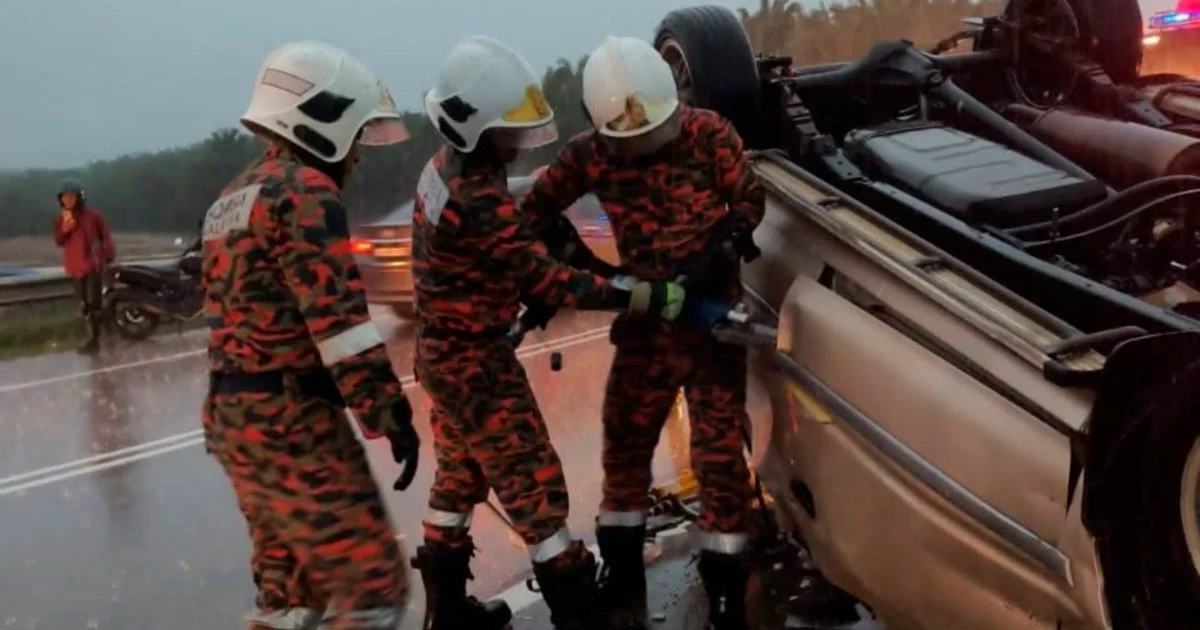
A tragic series of events unfolded across Pahang today as two separate traffic accidents within the span of less than an hour claimed four lives, including two sisters who perished in one of the collisions. The incidents occurred in the districts of Maran and Pekan, underscoring the persistent dangers on Malaysian roads and raising fresh concerns about traffic safety in the eastern corridor of Peninsular Malaysia.
The loss of two sisters in a single accident represents a particularly devastating blow to one family unit, adding an emotional dimension to what is already a statistical tragedy in terms of Malaysia's ongoing battle with road fatalities. Such incidents involving multiple family members in a single collision are tragic reminders of how quickly ordinary journeys can turn catastrophic, often with minimal warning to those involved.
The occurrence of two fatal accidents so close together—both geographically within the same state and temporally within an hour—suggests a concerning cluster that demands immediate investigation into whether common factors such as weather conditions, road hazards, or traffic congestion contributed to both incidents. Authorities typically examine accident scenes methodically to determine causative factors, which may include vehicle defects, driver fatigue, or infrastructure issues that could potentially have affected multiple incidents.
Maran and Pekan are both significant areas in Pahang's landscape. Maran, situated in the northern part of the district, serves as a junction point for various routes, while Pekan, as the royal town and administrative centre of the state, experiences considerable traffic flow. Both locations have witnessed traffic incidents in the past, and today's accidents add to a growing list of concerns about road safety in these corridors.
Road accidents of this severity invariably trigger broader discussions within Malaysia about the effectiveness of current traffic enforcement mechanisms, the adequacy of road infrastructure, and public awareness campaigns regarding safe driving practices. The Malaysian Institute of Road Safety Research and the Road Transport Department will likely conduct thorough investigations to establish whether systemic issues contributed to these particular incidents.
For families affected by these tragedies, the immediate aftermath involves not only the profound grief of losing loved ones but also the practical challenges of navigating legal procedures, insurance claims, and the psychological trauma that accompanies such sudden losses. Support systems and counselling services become crucial during these periods of acute distress.
The circumstances surrounding each accident—including whether they involved vehicles colliding with each other, with fixed objects, or resulted from single-vehicle incidents—will inform the investigative process and potentially reveal patterns that authorities can address through targeted interventions. Weather conditions, particularly given Pahang's exposure to monsoon patterns and occasional flooding, are always considered in such investigations.
These incidents serve as sobering reminders for Malaysian road users about the importance of defensive driving, maintaining vehicles in proper working condition, and respecting speed limits and traffic regulations. The high concentration of fatalities in a short timeframe demonstrates that complacency on the road can have catastrophic consequences regardless of familiarity with particular routes.
The broader context of road safety in Malaysia shows that annual fatalities remain a significant public health concern, with traffic accidents consistently ranking among leading causes of death for certain age groups. Interventions ranging from infrastructure improvements to enhanced law enforcement and public education campaigns have been implemented with varying degrees of success across different states.
For the Pahang community and beyond, today's accidents represent a collective tragedy that transcends the immediate statistics. Each fatality represents a disrupted family, unrealised dreams, and permanent absences that will be felt acutely by those left behind. The particular poignancy of two sisters dying together adds a layer of human complexity to what might otherwise be reduced to mere numbers in accident reports.
As emergency responders concluded their work at both accident scenes and investigators began their systematic examination of the evidence, the focus shifted to understanding what series of circumstances converged to create these two tragedies. These findings will eventually inform policy discussions and potentially lead to concrete measures designed to prevent similar incidents in the future, though for those directly affected, such measures offer little comfort.