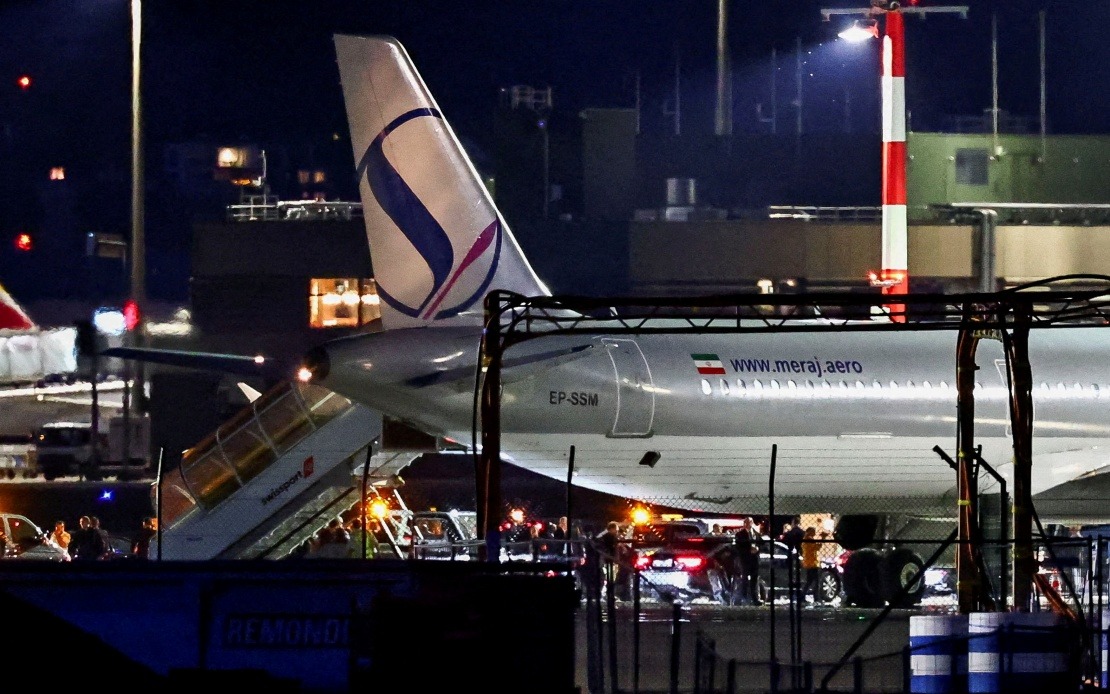
Delegations from the United States and Iran touched down in Switzerland on Sunday to begin technical negotiations designed to implement the recently signed Islamabad Memorandum of Understanding. The accord, electronically signed by US President Donald Trump and Iranian President Masoud Pezeshkian on Wednesday, represents an ambitious attempt to end months of escalating regional hostilities that have destabilized West Asia and threatened critical maritime commerce through the Strait of Hormuz.
The negotiations are taking place in Burgenstock, a location chosen apparently for its neutrality and established diplomatic infrastructure. The US contingent is being headed by Vice President JD Vance, while the Iranian side includes Parliament Speaker Mohammad Bagher Ghalibaf and Foreign Minister Abbas Araghchi. Pakistan, a neighbouring nation with significant regional influence, is playing a crucial mediation role, with Prime Minister Muhammad Shehbaz Sharif and Chief of Army Staff Field Marshal Syed Asim Munir present to shepherd discussions between the two delegations.
Before departing for the talks, Vance indicated that the groundwork had already commenced, with US envoys Jared Kushner and Steve Witkoff having arrived ahead of the main delegation to tackle the intricate technical elements that typically bog down international agreements. Vance expressed confidence that the ceasefire provisions contained in the Islamabad Memorandum could be preserved through these negotiations, suggesting the US administration views the agreement as sufficiently robust to withstand detailed scrutiny.
Ghalibaf's arrival in Switzerland carried symbolic weight. In a social media post upon reaching the Swiss venue, the Iranian Parliament Speaker invoked the memory of those killed during the conflict, particularly referencing more than 160 children who died in a bombing attack at a primary school in Minab, southern Iran on February 28. His framing suggested Iran is approaching these negotiations with the weight of civilian casualties in mind, positioning the talks not merely as diplomatic transactions but as acts of accountability to the Iranian public.
The conflict that prompted these negotiations began on February 28 when a military offensive was launched against Iran, with Israel playing a significant role in the campaign. The humanitarian toll has been substantial, with tens of thousands of casualties reported across multiple theatres of conflict. The reopening of the Strait of Hormuz carries particular significance for global energy markets and Southeast Asian economies reliant on stable Persian Gulf shipping; disruptions to this critical waterway reverberate across Asian supply chains and inflation dynamics.
Adding urgency to the talks is an expanding security crisis in Lebanon that apparently caught the delegations' attention immediately. An emergency agenda item addressing the conflict between Israel and the Lebanese militant group Hezbollah was reportedly added to Sunday's discussions. According to diplomatic sources cited by US broadcaster CBS News, this Lebanon crisis is expected to dominate the opening day's deliberations, indicating that regional conflicts have become sufficiently interconnected that resolving one flashpoint requires addressing others simultaneously.
The Lebanon situation has created a humanitarian emergency of alarming proportions. Since Israel's military operations commenced in March, the official death toll has exceeded 4,000 people, with more than 11,800 injured and over one million residents displaced from their homes. These figures represent one of the largest displacement crises in the region in recent years and rival some of the worst humanitarian disasters of the past decade globally. Israeli forces have advanced more than ten kilometres into Lebanese territory, establishing new military positions while simultaneously holding onto areas in southern Lebanon that some Israeli settlements have occupied for decades.
Notably, the primary parties to the Lebanon conflict are absent from the Switzerland discussions. Neither Israel, Hezbollah, nor the Lebanese government has sent representatives to Burgenstock, raising questions about how substantive progress can be achieved on Lebanese issues without direct participation from those most directly affected. This arrangement suggests the talks are functioning more as US-Iranian negotiations that tangentially address regional matters rather than as comprehensive multilateral conflict resolution forums.
For Malaysia and Southeast Asian nations, these developments carry several implications worth monitoring closely. The region's economic prosperity depends significantly on unobstructed access to Middle Eastern energy resources and open shipping lanes through the Persian Gulf and surrounding waters. Any prolonged conflict threatens to spike oil prices and disrupt containerized trade that passes through these strategic corridors. Malaysia's substantial petrochemical and manufacturing sectors are particularly vulnerable to energy price shocks, while the nation's bustling port operations depend on predictable maritime conditions across these routes.
Moreover, the Islamabad Memorandum signals Pakistan's growing role as a regional power-broker willing to mediate between major international actors. This elevation of Pakistan's diplomatic standing could reshape the regional balance in South Asia and influence how regional disputes are negotiated going forward. For Southeast Asian nations navigating the complex geopolitical environment created by great power competition between Washington and Beijing, Pakistan's emerging diplomatic prominence adds another variable to calculations about regional stability and alignment.
The success or failure of these technical negotiations will likely determine whether the ceasefire holds or whether the region faces renewed escalation. Given the complexity of implementing a comprehensive agreement between parties with deeply entrenched interests and grievances, the meticulous technical work now underway in Switzerland may prove decisive in determining whether this diplomatic opening produces lasting regional de-escalation or merely delays renewed conflict.