Cambodian Prime Minister Hun Manet has signalled a strategic pivot toward prioritising girls' education as a cornerstone of the nation's economic development strategy. Speaking at the 39th World Conference of the World Association of Girl Guides and Girl Scouts in Phnom Penh on Tuesday, June 16, Manet underscored that quality education for girls transcends classroom benefits—it reshapes family circumstances, strengthens communities, and ultimately accelerates national progress. His remarks reflect growing recognition across Southeast Asia that education gaps constrain economic potential in societies where women constitute nearly half the population, with the majority under thirty years old.
The Prime Minister's emphasis represents a decisive challenge to entrenched perceptions that have long confined Cambodian women to passive economic roles. Contemporary reality paints a starkly different picture. Young women increasingly occupy seats at corporate boardrooms, establish thriving ventures, champion policy innovation, and catalyse social transformation. This transition from societal periphery to nation-building centrality marks a fundamental recalibration of Cambodia's human capital landscape. Manet framed gender equality not as a charitable imperative but as an economic necessity—a recognition that unlocking female potential directly strengthens Cambodia's competitive position in regional and global markets.
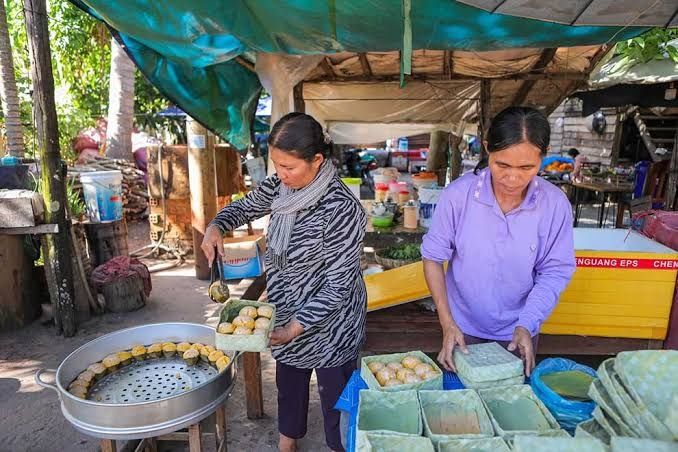
The statistical evidence supporting this policy direction proves compelling. Cambodia's female literacy rate has surpassed 80 per cent according to World Bank measurements, whilst girls' school enrolment reached 100 per cent in 2021—benchmarks reflecting substantial progress from previous decades. These educational achievements translate directly into economic participation. Women now own approximately 60 per cent of Cambodia's micro, small, and medium enterprises, the sector that forms the economy's backbone and generates employment across rural and urban areas. Female entrepreneurs span diverse industries, from artisanal food production and agricultural export operations to café and hospitality ventures that serve both domestic and tourist markets.
At the corporate tier, Cambodian women have established commanding positions managing professional services firms. Accounting practices, law offices, private medical facilities, dental clinics, and independent educational institutions increasingly operate under female leadership. This penetration across high-skill, high-value sectors demonstrates that educational investment yields tangible returns in professional advancement and wealth creation. The garment, textile, and footwear industries epitomise this pattern most vividly—over 700,000 women labour in these sectors, which collectively generate approximately US$16 billion annually for the national economy. This single industry cluster underscores how female workforce participation directly correlates with export competitiveness and foreign exchange earnings.
Despite these considerable achievements, formidable obstacles continue impeding many girls from completing foundational education. Civil society organisations document persistent barriers rooted in social convention and structural disadvantage. Early marriage disproportionately affects rural populations, removing adolescent girls from classrooms before secondary completion. Gender-based violence and safety concerns discourage school attendance in certain communities. Economic pressures force some families to prioritise sons' education over daughters', despite mounting evidence that female education delivers superior household return on investment. Cultural stereotypes that emphasise girls' domestic roles over intellectual development remain entrenched in pockets throughout Cambodia, perpetuating cycles where educational opportunity remains constrained by tradition rather than capability.
Manet pledged that the Royal Government would intensify financial commitments to gender equality initiatives and women's empowerment programmes, positioning these investments as essential infrastructure for sustainable development. The government has identified women's participation as indispensable for Cambodia's declared ambition to graduate from Least Developed Country classification by 2029 and achieve upper-middle-income status by 2030. These targets cannot materialise if half the population remains educationally or economically underutilised. Female workforce participation, particularly in high-productivity sectors, directly correlates with productivity growth rates and sustained GDP expansion. Furthermore, educated women demonstrate higher earnings potential, which increases household consumption and tax revenue generation—multiplier effects that strengthen macroeconomic fundamentals.
Beyond economic metrics, the Prime Minister articulated that women function as peace-builders and stability anchors across family, community, national, and international dimensions. This framing transcends conventional development discourse by recognising that gender equity investments strengthen social cohesion and institutional resilience. When women exercise decision-making authority within households and communities, resource allocation patterns shift toward health, education, and nutrition—outcomes with intergenerational benefits. The statement implicitly acknowledges that Cambodia's experience with conflict and reconstruction makes gender-inclusive development not merely advantageous but foundational to preventing cycles of instability.
For Malaysia and other Southeast Asian economies monitoring Cambodia's trajectory, these policy announcements carry strategic significance. Regional integration through frameworks like the ASEAN Economic Community increasingly hinges on labour mobility and skills standardisation. Countries maximising female educational attainment and economic participation gain competitive advantage in attracting investment and retaining high-value industries. Cambodia's emphasis on girls' education signals recognition that demographic dividends require deliberate cultivation—passive population growth without corresponding human capital development yields diminishing returns. Malaysian policymakers observing Cambodia's strategy might note that competitors investing systematically in female education create pressure to maintain Malaysia's own gender inclusion metrics.
The nexus between girls' education, female entrepreneurship, and sectoral competitiveness extends beyond Cambodia's borders, suggesting broader Southeast Asian economic patterns. Countries where women lead significant enterprise and employment cohorts demonstrate greater macroeconomic resilience and innovation capacity. Cambodia's garment sector, though labour-intensive, increasingly incorporates design and quality control functions requiring higher educational attainment. Similar upgrades across industries demand workforces that transcend demographic limitations. By prioritising girls' education now, Cambodia positions itself to capture higher-value activities in global supply chains as manufacturing automises and advanced economies relocate specialist functions to lower-cost jurisdictions with educated workforces.
Implementing these aspirations demands coordinated effort spanning education infrastructure, safety mechanisms, family support programmes, and cultural engagement. Investments in school facilities require complementary initiatives addressing transportation safety and violence prevention. Economic incentives—scholarships, conditional cash transfers, skills training—can counteract poverty-driven dropouts. Community dialogue programmes addressing traditional gender roles require sustained engagement with religious and cultural leaders, gradually shifting norms without appearing to impose external values. International experience suggests that such multifaceted approaches yield returns exceeding education spending alone, as they address demand-side barriers alongside supply-side constraints.
Cambodia's pivot toward girls' education represents strategic recalibration informed by both moral imperative and economic pragmatism. The nation's experience demonstrates that women constitute economically productive agents capable of driving sectoral competitiveness and national prosperity. Removing educational barriers and safety obstacles multiplies this potential. As Cambodia pursues upper-middle-income aspirations, educated women will increasingly concentrate in high-skill occupations commanding premium compensation. This occupational upgrading strengthens household incomes, reduces poverty-driven vulnerability, and increases tax revenues available for public investment. The virtuous cycle triggered by prioritising girls' education extends far beyond individual advancement to reshape Cambodia's development trajectory across the next decade.