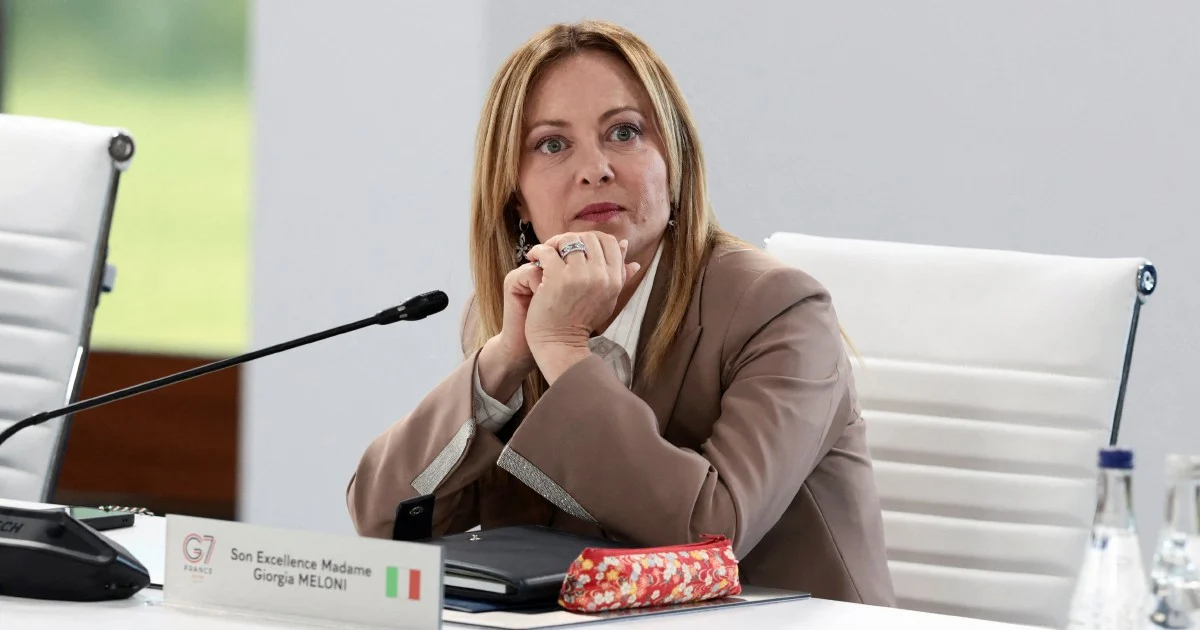
When Donald Trump took the oath of office for his second presidential term in 2025, Italian Prime Minister Giorgia Meloni enjoyed a status few European leaders could claim: she was the sole head of a European government invited to attend the inauguration ceremony. That singular honour appeared to mark the beginning of an exceptionally warm relationship between Rome and Washington, suggesting a period of unprecedented alignment between Italy and the Trump administration on matters ranging from trade to security concerns.
Meloni's presence at Trump's inauguration was widely interpreted as a signal of her government's alignment with Washington's policy direction, distinguishing Italy from fellow European Union members who maintained more cautious stances toward the returning American president. Her attendance implied not merely diplomatic courtesy but a strategic choice to position Italy as Trump's most reliable European partner. The invitation itself represented rare political capital, one that Meloni appeared eager to deploy across the continent's corridors of power. For observers of European politics, the moment seemed to crystallise a new axis within transatlantic relations, with Rome occupying privileged ground.
However, the trajectory of this relationship has undergone a marked transformation. In the months following the inauguration, the Italian Prime Minister has increasingly emerged as a vocal critic of Trump policies and pronouncements. This pivot represents more than simple political opportunism or fluctuating diplomatic language; it reflects substantive disagreements that have surfaced on multiple policy fronts, from trade measures to security arrangements affecting European interests.
The reversal carries significant implications for Southeast Asian readers and Malaysian observers monitoring regional geopolitics. Italy's repositioning within the transatlantic landscape signals broader instability in Western alliances that shape global trade patterns, security frameworks, and diplomatic alignments. When a leader once positioned as Trump's European whisperer becomes openly critical, it suggests fractures widening within the Western coalition that Southeast Asia must navigate in its foreign policy calculations.
Meloni's initial cultivation of close ties with Trump reflected her government's broader ideological alignment with conservative and nationalist currents reshaping Western politics. Both leaders represented responses to establishment politics and immigration-centred anxieties, providing superficial common ground. Yet ideology and personal rapport often prove insufficient foundations for sustained diplomatic relationships when concrete policy interests diverge.
The transformation also illustrates the precarious position of European leaders caught between maintaining transatlantic unity and protecting European interests that may diverge from Washington's priorities. Meloni's journey from Trump ally to critic encapsulates the tension endemic to contemporary European diplomacy: how to balance reliance on American security guarantees and market access against the need to assert independent policy positions that resonate with domestic constituencies and EU obligations.
For Malaysian policymakers, Meloni's shifting approach offers instructive lessons about the volatility inherent in alignment with any single major power. The Italian case demonstrates that even carefully cultivated relationships between ideologically compatible leaders can fracture when institutional interests, domestic political pressures, or policy disagreements accumulate. Southeast Asian nations, similarly balancing relationships with multiple great powers, must recognise that diplomatic partnerships require continuous renegotiation rather than assuming stability based on favourable inaugural moments.
The substance of disagreement between Meloni and Trump likely encompasses economic protectionism that threatens European exporters, strategic decisions affecting NATO's eastern flank, and broader questions about the future of rules-based international order. These are not marginal disputes but fundamental questions about how power operates in the contemporary international system. Italy, as the eurozone's third-largest economy and a NATO member with significant geopolitical importance, cannot indefinitely sustain policies contradicting those of its American ally without consequences.
Meloni's journey also reflects domestic Italian politics, where European constituencies within her coalition demand stronger assertion of Italian interests against American pressure. Coalition partners and electorate segments may have constrained her ability to maintain the degree of accommodation toward Trump that the initial invitation suggested. This interplay between international positioning and domestic constraints shapes every leader's foreign policy, yet manifests with particular intensity in Italy, where European identity competes with national interest advocacy.
The broader European context amplifies these tensions. Other EU member states have maintained more sceptical approaches toward Trump from his inauguration, creating diplomatic pressure on leaders like Meloni who initially appeared to embrace closer alignment. France, Germany, and smaller EU nations have publicly articulated concerns about American trade threats and security commitments. Meloni's shift toward criticism aligns her more closely with broader European positions, reducing her isolation within the bloc but potentially undermining the special relationship with Washington she initially cultivated.
Looking forward, the question remains whether Meloni can maintain critical distance from Trump without sacrificing the tangible benefits that Italian-American alignment might provide. This balancing act mirrors challenges facing leaders across Europe and beyond, including in Southeast Asia, where countries must assert interests while managing relationships with powers on which they depend for security and trade access.
The transformation of Meloni from Trump supporter to critic ultimately reflects the difficulty of sustaining foreign policy alignment based primarily on personal rapport and ideological affinity. Sustainable diplomatic relationships require alignment of institutional interests, compatible security concerns, and mutually beneficial economic arrangements. When these foundations prove weaker than anticipated, even carefully cultivated relationships can shift with surprising speed, leaving leaders and their nations recalibrating strategies in response to changed diplomatic terrain.
For regional observers monitoring great power competition and alliance dynamics, Meloni's journey serves as reminder that contemporary international politics remains fluid, unpredictable, and dependent on factors beyond any single leader's control. In this environment, flexible diplomacy that protects core interests while maintaining multiple partnerships offers greater resilience than exclusive reliance on any single relationship, however promising its initial prospects.