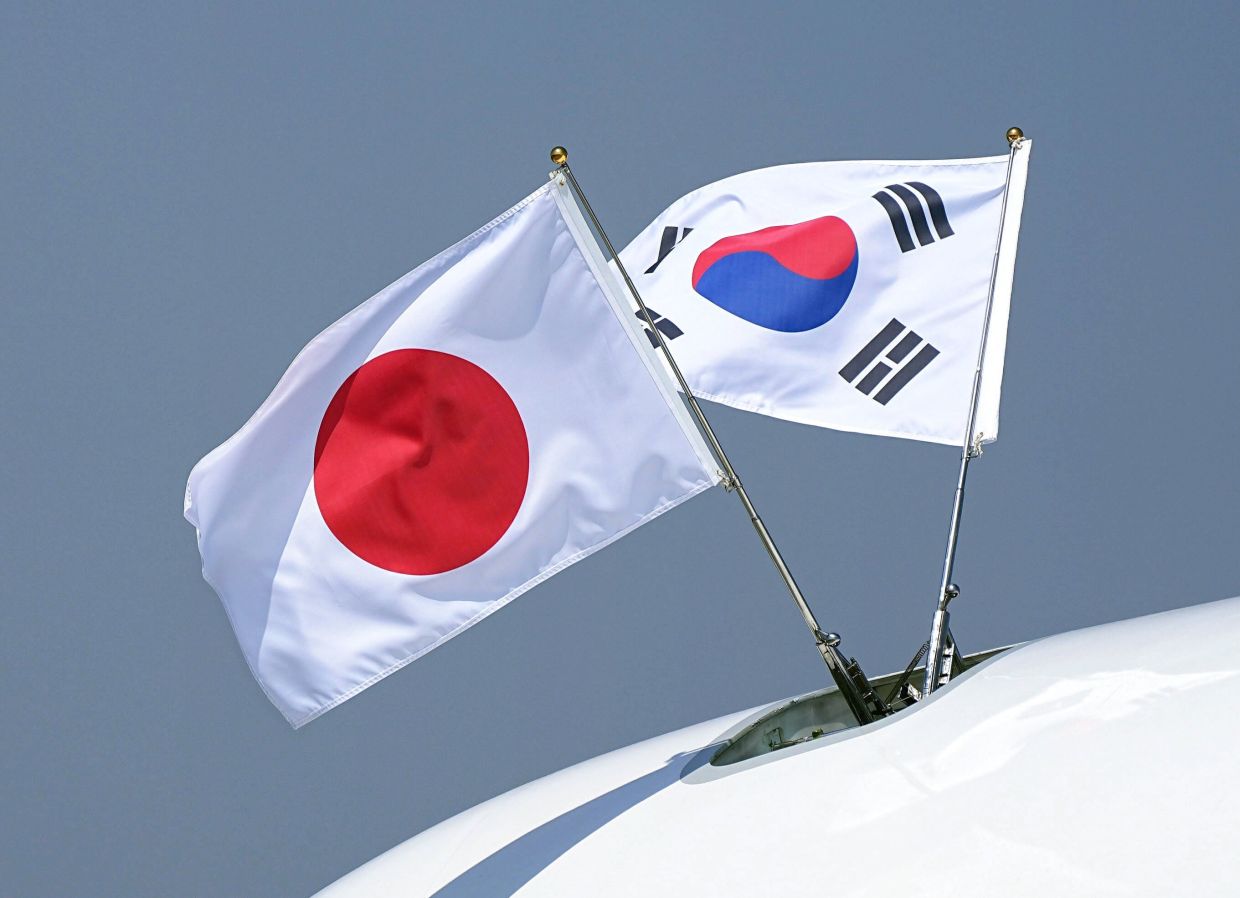
The prospect of nuclear weapons in northeast Asia remains relatively distant, yet fragile. A comprehensive survey of strategic decision-makers in Japan and South Korea, released this week by the Washington-based Center for Strategic and International Studies, found that roughly three-quarters of elites in both nations currently oppose or express uncertainty about their countries acquiring nuclear arsenals. However, researchers caution that this consensus could evaporate almost overnight if either Tokyo or Seoul chooses to cross the nuclear threshold, potentially triggering a cascading effect that would reshape security architecture across the region far more profoundly than any reduction in American military presence.
The survey, conducted by CSIS scholars Victor Cha and Kristi Govella and completed at the end of October, polled a broad cross-section of influence-wielders: sitting and former government officials, lawmakers, university professors, policy institute researchers, and business leaders. The findings paint a curious picture of elite restraint that contrasts sharply with public sentiment, particularly in South Korea. When Gallup pollsters surveyed ordinary South Koreans in 2024 on behalf of the Chey Institute for Advanced Studies, they found that more than 72 per cent of respondents backed their country's development of nuclear weapons. This disconnect between elite caution and popular appetite suggests that domestic political pressures could eventually override current strategic thinking if security circumstances deteriorate.
In Japan, the gap between elite and public opinion narrows considerably. Existing polling indicates that approximately 80 per cent of the Japanese population opposes nuclear armament, broadly aligning with the preferences of strategic elites. Kristi Govella noted that international media coverage has often overstated the momentum among Japanese policymakers toward nuclear weapons development, painting a more hawkish picture than the data supports. Yet even this seemingly stable Japanese consensus carries conditional language—support depends on continued confidence in America's extended nuclear deterrent.
The survey identifies markedly different drivers of support among those who do favour nuclear acquisition. In South Korea, respondents backing nuclearisation concentrate almost exclusively on the North Korean threat, viewing indigenous weapons as the ultimate hedge against Pyongyang's missile and nuclear capabilities. Japanese proponents, by contrast, focus less on any specific adversary and more on a fundamental anxiety: the fear that the United States may eventually reduce or withdraw its nuclear umbrella. This distinction matters because it suggests that different reassurance strategies would be needed to maintain each country's restraint going forward.
What most concerns CSIS experts is not current sentiment but the possibility of rapid reversal. The research indicates that should Japan or South Korea undertake even preliminary steps toward weaponisation, support in the other country could spike dramatically. Such a shift would represent not merely a bilateral disagreement but a potential unravelling of the entire security order in one of the world's most economically vital regions. The CSIS team argued that the regional destabilising impact of one nation going nuclear could dwarf the consequences of a significant reduction in American force deployments—itself a major strategic concern.
These findings arrive amid intensifying great-power competition and visible American efforts to reassure its Asian allies. Washington conducted bilateral talks with Seoul earlier this month focused on nuclear cooperation initiatives, followed by extended deterrence consultations with Tokyo. These engagements reflect American recognition that alliance cohesion and confidence in the U.S. security commitment remain essential to preventing the kind of arms race scenario that the survey documents. Yet Beijing has escalated its own rhetoric, repeatedly accusing Japan of seeking remilitarisation and pursuing nuclear weapons capacity, rhetoric that itself could catalyse the very domestic political shifts in Tokyo or Seoul that Washington seeks to prevent.
Meanwhile, American policymakers are grappling with their own nuclear modernisation challenges. Brandon Williams, the Department of Energy's under secretary for nuclear security and administrator of the National Nuclear Security Administration, declared at the Hudson Institute that the United States must accelerate nuclear weapons production to maintain strategic advantage. His agency plans to invest 600 million dollars this year in artificial intelligence systems designed to speed up the digitalisation of weapons design and manufacturing, aiming to compress the traditional decade-to-fifteen-year timeline for deploying new systems.
At the same CSIS event, American experts ventured into more contentious territory, arguing that Washington should reconsider its self-imposed restriction against arming hypersonic missiles with nuclear warheads. Heather Williams, director of CSIS's project on nuclear issues, contended that nuclear-equipped hypersonics belong in the American arsenal to expand strike options and complicate adversary calculations about potential responses. She argued that a more credible and diversified nuclear force would simultaneously reassure allies, citing the paradox that nations confident in their security guarantees prove less inclined to pursue independent nuclear programmes—precisely the logic reflected in the Japan and South Korea survey.
This interconnection between reassurance and restraint carries particular weight for Malaysia and other Southeast Asian nations. Although Japan and South Korea lie outside the region proper, their strategic choices ripple through the entire Indo-Pacific. A nuclear arms competition in northeast Asia would consume diplomatic bandwidth, military resources, and strategic attention that the region desperately needs focused on conventional maritime security, economic interdependence, and the management of great-power competition. It would also create technological and security spillovers that affect everyone from Taiwan to the Philippines to Australia.
The deeper challenge revealed by the CSIS work is that elite consensus on nuclear restraint, though currently holding in Tokyo and Seoul, rests on a foundation of assumptions about American commitment and regional stability that remain under stress. These assumptions cannot be taken for granted indefinitely. The survey essentially identifies a critical vulnerability in the regional security architecture: the existence of a tipping point beyond which the careful strategic equilibrium that has held since the end of the Cold War could collapse with surprising speed. Policymakers in Washington, Tokyo, Seoul, and indeed throughout the region would be wise to treat this warning seriously and to invest in the kinds of alliance management and strategic communication that might prevent the dominoes from falling.